Home › Golf Guides
Golf Tees: Which Length to Buy, How High to Tee It, and the 4-Inch Limit in the Rules
Golf tees are the cheapest thing in your bag and the one you think about least, but the length you carry decides how high you can tee the ball, and tee height changes the strike more than most club golfers realise. The Rules set a hard limit: a tee must be no longer than 4 inches (101.6mm). Within that, the right choice depends on the size of your driver head, whether you tee up irons and hybrids, and how firm the ground is. Here is how to choose and use them.

What the Rules allow
The R&A and USGA Equipment Rules define a tee as a device designed to raise the ball off the ground. It must not be longer than 4 inches (101.6mm), and it must not be designed or made to indicate the line of play or to influence the movement of the ball. There is no limit on the diameter of the head or the material. A tee longer than 4 inches is non-conforming, so the extra-long novelty tees sold online cannot be used in a round played under the Rules, and that includes a qualifying competition at your club.
You may only use a tee when you play from the teeing area at the start of a hole. Once the ball is in play, a tee cannot be used to lift the ball, even under winter rules or preferred lies; those let you place the ball, not tee it. If your ball falls off the tee before you have made a stroke, you can simply re-tee it without penalty.
Which length for which club
Tees are usually sold in a handful of standard lengths. The exact sizes vary a little by brand, but these are the common ones and what they suit:
| Tee length | Roughly | Best for |
|---|---|---|
| Short | about 1.5 to 2.1 inches (38 to 54mm) | Irons and hybrids on par 3s, fairway woods off the tee |
| Standard | about 2.75 inches (70mm) | Fairway woods; drivers with smaller heads, or for a lower flight |
| Long | about 3.25 inches (83mm) | Modern 460cc drivers for most golfers |
| Maximum | 4 inches (101.6mm) | Players who like the ball very high, or on soft ground where more of the tee goes in |
The practical answer for most club golfers is to carry two lengths: long tees for the driver and short ones for everything else. A 460cc driver head, the maximum volume the Rules allow, has a deep face, and a 2.75-inch tee pushed into the ground often leaves the ball too low for it.
How high to tee the ball
Driver
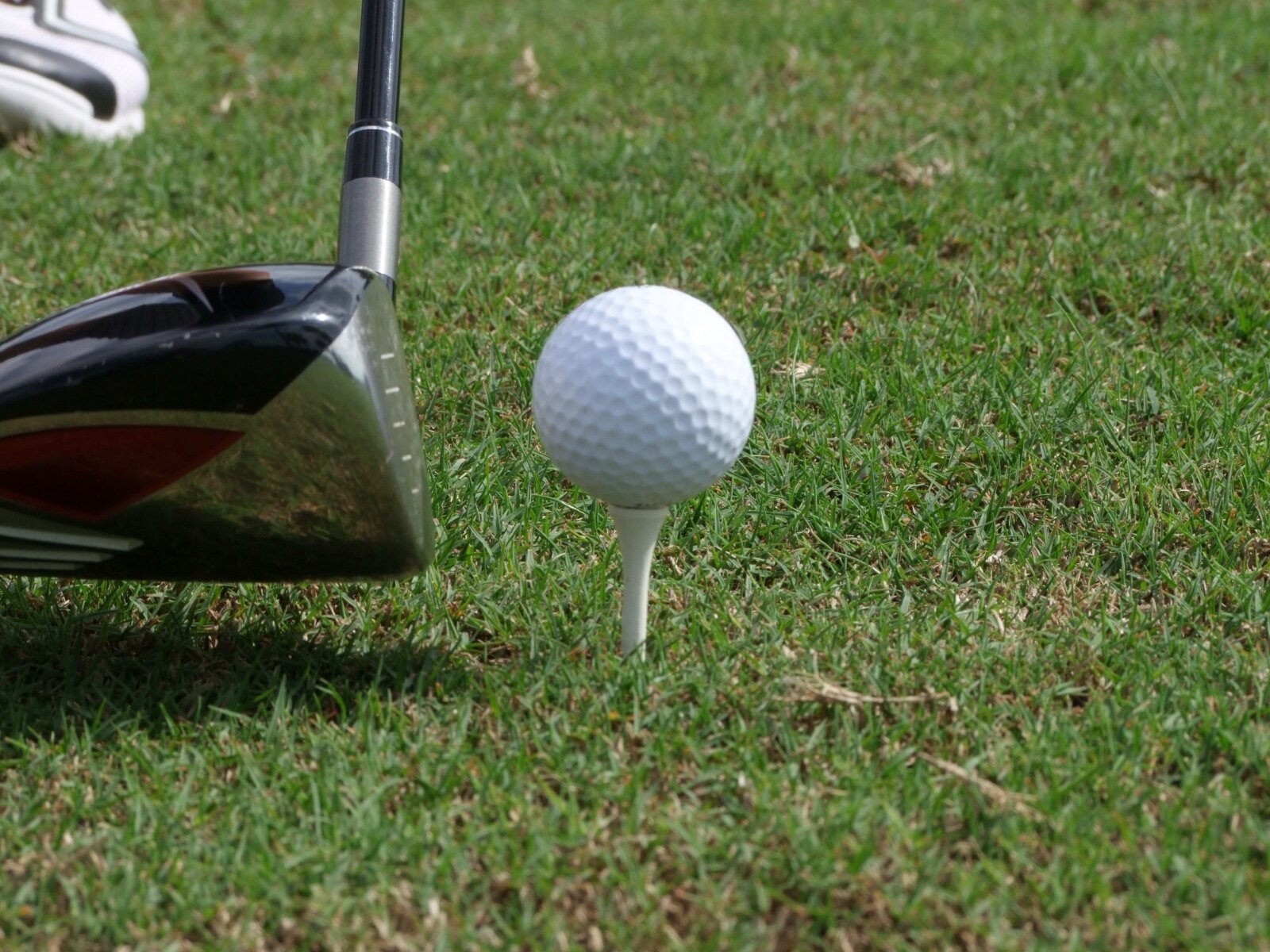
The common starting point is to have about half the ball above the top edge of the driver face when the club rests behind it. Teeing higher encourages an upward strike, which is what launches a modern driver with less spin. If you keep skying the ball, with marks on the crown of the club, tee a little lower. If you top it or hit it thin and low, tee a little higher and move the ball forward in your stance, opposite your lead heel.
Fairway woods and hybrids
Tee them low, with the ball just off the turf, so you can sweep it. A tee that leaves the ball a centimetre or so above the grass is plenty.
Irons on par 3s
Always tee up an iron if you are allowed to; there is no advantage in playing it off the ground. Push the tee almost all the way in, so the ball sits roughly where it would on a perfect lie. That removes any chance of grass between the club and the ball.
Wood, bamboo, plastic or biodegradable
- Wooden tees are cheap and traditional. They break often, especially with irons, and the broken pieces end up on the teeing area. Most are made from birch or similar hardwood.
- Bamboo tees are stronger than standard wood and still break down over time, which is why many clubs prefer them.
- Plastic tees last far longer, and some have a stepped or castle design that sets the same height every time. Lost plastic tees do not rot, and broken pieces can damage mower blades, so some courses discourage them.
- Brush and low-friction tees have bristles or prongs instead of a cup. Claims of extra distance are largely marketing, but they are conforming as long as they are within 4 inches and do not indicate a line.
Tees in a British winter
On firm frosty ground a wooden tee may snap before it goes in; push a hole first with a broken tee or use a sturdier plastic one. On waterlogged ground the opposite problem applies: the tee sinks further than you meant, so the ball sits lower. Many courses also use winter or mat tees for part of the year. If your club has artificial mats, rubber tees made for mats, or a tee that fits the mat's holes, are the answer. At Lullingstone Park, read the winter golf rules guide for how preferred lies work, which is not the same thing as teeing up.
Course care
Pick up broken tees and drop them in the box on the tee if there is one. They are small, but hundreds of shards a day make teeing areas harder to mow. Never tee up on the putting green apron or anywhere outside the teeing area markers: the teeing area is two club-lengths deep from the front of the markers, and playing from outside it is a two-stroke penalty in stroke play, with the stroke replayed from inside.
Buying tees
Tees are sold in bags of 50 to 100 for a few pounds. Buy a bag of long tees for the driver and a bag of short ones, rather than a mixed pack where half the lengths will sit unused. If you want consistency, a step-height plastic tee for the driver takes away one variable. For the rest of the bag, see our guides to golf drivers, golf balls and how many clubs to carry.
Sources: R&A Equipment Rules, Part 6: devices and other equipment; R&A Rules of Golf.
Frequently Asked Questions
What is the maximum length of a golf tee?
4 inches, or 101.6mm. A longer tee is non-conforming under the R&A and USGA Equipment Rules and cannot be used in a round played under the Rules.
What length golf tee should I use for a driver?
For a modern 460cc driver, most golfers want a long tee of about 3.25 inches, set so roughly half the ball sits above the top of the face.
Should you tee up an iron on a par 3?
Yes. Teeing the ball very low, with the tee pushed almost all the way in, gives you a perfect lie every time, and it is allowed whenever you play from the teeing area.
Can you use a tee on the fairway in winter?
No. Preferred lies let you lift, clean and place the ball, but a tee can only be used when playing from the teeing area at the start of a hole.
Are plastic or wooden golf tees better?
Plastic tees last longer and some set a consistent height. Wooden and bamboo tees break more but rot away, which is why many clubs prefer them.