Winter Golf Rules Explained: Preferred Lies, Mats and Temporary Greens
What a committee can and cannot do to the course in winter, and what it does to your card
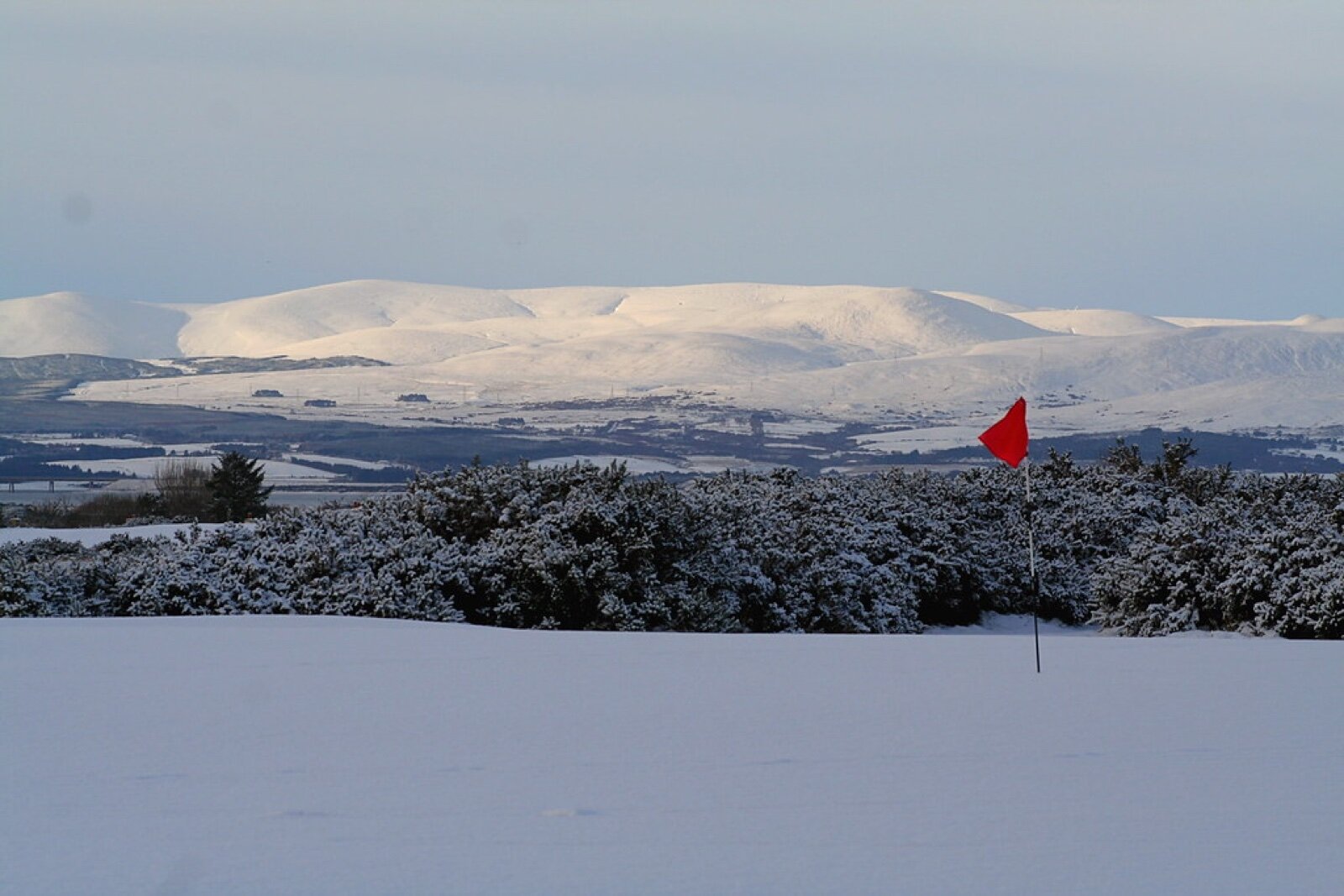
The phrase winter golf rules is misleading, because there is no winter rulebook. What changes between October and March is not the Rules of Golf but the set of Local Rules your club's committee has decided to switch on, and the single most important of those is preferred lies. That one has just changed in a way that catches out even experienced players: it no longer has a season attached to it.
This page sets out what a committee can and cannot do to the course in winter, what each Local Rule actually permits, and where the line sits between a round that counts for handicap and one that does not.
The change worth knowing about
Preferred lies sit in the R&A and USGA's list of Model Local Rules as Model Local Rule E-3. For years the convention in Britain and Ireland was that clubs adopted it on 1 October and dropped it on 30 April, which is where the term "winter rules" came from in the first place.
That fixed period has gone. E-3 now has no defined dates, and a committee may adopt it at any point in the year when adverse weather has left poor ground conditions widespread across the course, either to allow fair play or to protect the fairways from divot damage while the grass is not growing. The R&A's own guidance adds the balancing condition: the Local Rule should be withdrawn as soon as conditions improve.
The practical effect is that the noticeboard, not the calendar, tells you whether preferred lies are in play. A wet August week can now legitimately carry them. A dry, firm January often will not.
What preferred lies actually allow
The Local Rule lets you mark the spot of your ball, lift it, clean it, and place it in a relief area. Three limits come with that, and all three are where scores get lost.
- Where the ball lies. Relief is normally restricted to the part of the general area cut to fairway height or less. That means the fairway, and at many clubs the closely mown surrounds and paths through the rough. It does not mean the rough, a bunker or a penalty area.
- The size of the relief area. The committee has to specify it, and the wording on your scorecard is what governs. Six inches, a scorecard length and one club length are all common. Guessing at one club length when the card says six inches is a wrong place.
- Not nearer the hole. The relief area is measured from the original spot and never runs closer to the hole.
You place the ball, you do not drop it. Set it down in the relief area and it has to stay there. If it rolls away, place it again on the same spot; if it will not stay on the second attempt, use the nearest spot where it will come to rest that is no nearer the hole. Dropping a ball that should have been placed is playing from a wrong place, and in stroke play that is the general penalty of two strokes.
The rest of the Rules do not soften in winter. If you are unsure how the basics fit together, our plain-English guide to the rules that decide your score covers them.
Fairway mats: the committee's other option
Where a committee is more worried about the turf than about your lie, it can require the use of mats rather than allowing preferred lies. Cold soil means no grass growth, so a divot taken in December is still a scar in March, and mats stop that.
A mat Local Rule can apply to every fairway or to named holes only, and it is compulsory when it is in force: playing off the turf when the card says mats is a breach. The mechanics are the same as preferred lies, in that you lift, clean and place the ball on the mat, and the mat itself is treated as part of the ground.
Temporary greens, and the point where your card stops counting
Temporary greens are the winter measure players resent most, and the one with the clearest handicap consequences. Greenkeepers use them to protect frozen or waterlogged putting surfaces, where a footprint left at 7am sets hard and is still there in spring.
Under the World Handicap System, England Golf's adverse weather guidance draws the line in two places:
- Two temporary greens on an 18-hole round, or one on a nine-hole round. Play more than that and the score is not acceptable for handicap purposes.
- A hundred yards of course length. If the overall measured length of the course has been altered by more than 100 yards from its rated length, the club needs to apply to England Golf rather than simply carry on, and no single tee should sit more than 10 yards from its fixed measurement point.
There is a route for longer disruption. Where drainage or construction work changes the course for a spell, a club can apply for a temporary Course Rating covering a bigger change, up to a year at a time, but that has to be submitted to and approved by England Golf. It is not something a committee can decide on its own on a Friday afternoon.
Our page on how course condition changes through the seasons covers what winter greens, drainage and low light actually do to a parkland course like Lullingstone Park, which sits on the Darent Valley floor and its slopes.
Standing water, mud and plugged balls
Two Rules do most of the work in a wet winter, and neither of them is a Local Rule.
- Temporary water, Rule 16.1. Any temporary accumulation of water on the surface that you can see before or after taking your stance is an abnormal course condition, and you get free relief from it in the general area. In a bunker you can take free relief within the bunker, or take back-on-the-line relief outside it for one penalty stroke.
- Embedded ball, Rule 16.3. A ball plugged in its own pitch mark anywhere in the general area gets free relief, dropped within one club length of the spot right behind where it was embedded. That covers a soft fairway and soft rough alike, which is a change many golfers still have not absorbed.
Mud on the ball is a different matter. Unless preferred lies are in force, you have no right to clean it, and the ball is played as it lies with the mud on it. That is the single best argument for checking the noticeboard before you tee off.
Playing well in it
Winter golf punishes the same three things every year: carry distance, spin and expectations. Cold, dense air and a heavy ball cut carry, so club up rather than swing harder. Wet fairways give no roll, which turns a 400-yard hole into a genuine three-shotter for most players. And a ball landing on a soft green stops fast, so an approach that would run on in July stays where it pitches.
The compensations are real. Tee times are easy to get, the course is quiet, and green fees are at their lowest, which our page on the cheapest times to play covers in detail. A round in early January is also the best short-game practice available: soft ground, tight lies and slow greens force you to hit proper chips instead of skidding wedges, and our chipping and pitching guide is worth a read before you go out.
Before travelling, check the club's own notices for course status, and check the card for which Local Rules are in force that day. Green fees and booking for Lullingstone Park are on our visitor guide, and everything else is on the Lullingstone Park homepage. The R&A publishes its 2025/2026 winter rules FAQs, which is the source to check if your committee's wording is unclear.
Frequently Asked Questions
Are winter rules part of the Rules of Golf?
No. There is no separate winter rulebook. What golfers call winter rules are Local Rules that a club's committee chooses to adopt from the R&A and USGA's list of Model Local Rules, most often Model Local Rule E-3, preferred lies. If the committee has not adopted it and put it on the noticeboard or the scorecard, it does not apply, however wet the course is.
When do preferred lies apply now?
Whenever the committee says so. The old convention in Britain and Ireland was 1 October to 30 April, but Model Local Rule E-3 no longer carries a fixed season, so a club can use it at any time of year when poor ground conditions are widespread. The R&A's guidance is that the Local Rule should end as soon as conditions improve.
Where can you take preferred lies?
Only where the Local Rule says, and that is normally the part of the general area cut to fairway height or less. A ball in the rough, in a bunker or in a penalty area gets nothing. The relief area has to be stated too, commonly six inches, a scorecard length or one club length, and never nearer the hole.
Do you drop or place the ball under preferred lies?
You place it. Lift the ball, clean it if you want to, and set it down in the relief area. If it will not stay put you place it again on the same spot, and if it still will not stay you use the nearest spot where it will. Dropping instead of placing is playing from a wrong place and costs two strokes in stroke play.
Can you return a score for handicap when temporary greens are in play?
Usually yes, within limits. England Golf's adverse weather guidance allows no more than two temporary greens on an 18-hole score, and no more than one on a nine-hole score. Beyond that the round is not acceptable for handicap. Overall course length also has to stay within 100 yards of the rated measurement.
What relief do you get from casual water in a bunker?
Two options. Free relief inside the bunker, dropping in the nearest spot of complete relief that is no nearer the hole, or, if there is no such spot, the maximum available relief. If neither works, or you would rather be on grass, you can take back-on-the-line relief outside the bunker for one penalty stroke.