Home › Golf Guides
Golf Bags Explained: Which Type Suits the Way You Play
A golf bag is the one piece of kit you carry on every shot of every round, and the wrong type quietly spoils the walk. The choice is not really about brand or colour. It is about whether you carry, push, ride or hand the bag to somebody else, because each of those four habits wants a different bag.
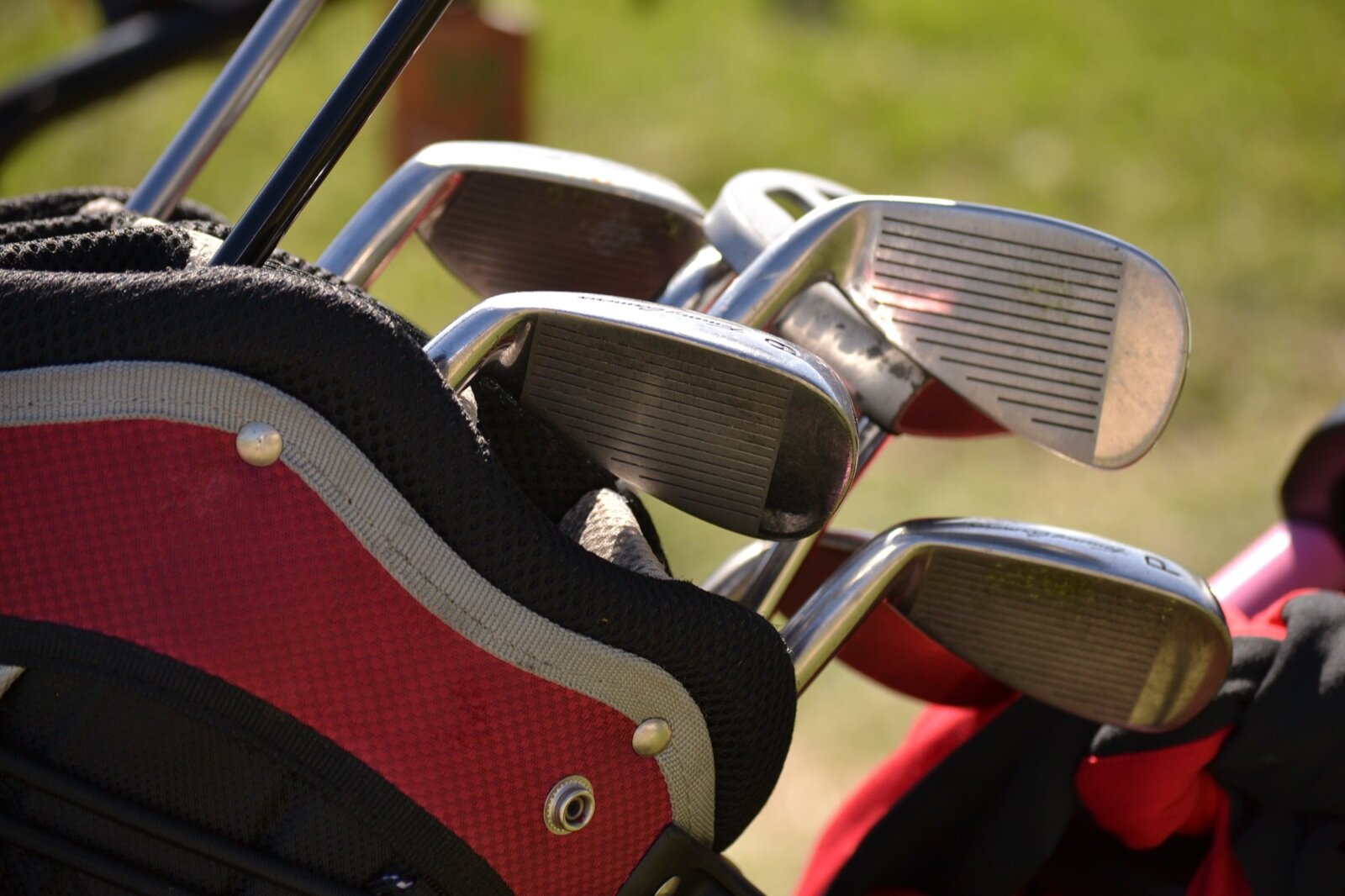

Start with the 14-club limit, not the bag
Rule 4.1b of the Rules of Golf says a player must not start a round with more than 14 clubs, and must not have more than 14 during the round. Break it in stroke play and it is two strokes per hole where the breach happened, capped at four; in match play it is loss of hole, capped at two holes. You can read the wording on the R&A's own page for Rule 4.
That number is why bag capacity is a solved problem. Any full-size bag holds 14 clubs. What differs is how they are separated, how the bag is carried, and how much it weighs before you put anything in it. If you are still building a set, our guide to the clubs a beginner actually needs covers what to buy first, and how many clubs go in a golf bag deals with the rule in more detail.
The five types, and who each one is for
Carry bag
The lightest option, usually around 1.5 to 2 kg, with a single or double strap and a handful of dividers. No legs, so it lies flat on the ground. Suits a player walking nine holes with a half set, or anyone who wants the least possible weight.
Stand bag
A carry bag with two spring-loaded legs and, almost always, a double shoulder strap that spreads the load like a rucksack. It stands upright on the tee and beside the green, which saves bending and keeps the grips dry on wet ground. This is the default for walkers and the most popular type sold in the UK.
Cart bag
Built to be strapped to a trolley or a buggy rather than carried. No legs, a flat rubberised base that grips the trolley bracket, and the pockets angled forward so they are still reachable when the bag is clamped in. Heavier than a stand bag, typically 2.5 to 3.5 kg, but it holds far more and the weight does not matter if you never lift it.
Trolley-specific and electric-trolley bags
A subset of cart bags shaped for a particular trolley, with a base cut-out and strap channels that match the frame. Worth checking if you own an electric trolley, because a generic bag can sit proud of the bracket and rock on uneven ground. If you hire rather than own, this is not a concern: see buggy and trolley hire at Lullingstone Park.
Tour or staff bag
The large-diameter bag you see on television, with a six-way top and a leather-look finish. Empty weight is often 4 to 5 kg and full weight well over 15 kg, which is why the professionals have someone else carrying it. For a club golfer it is a statement rather than a tool, and it will not fit most trolley brackets.
What actually matters when you choose
- Empty weight, if you walk. A stand bag at 2 kg versus one at 3 kg is a kilogram you lift on every shot for four hours. Weigh the bag, not the marketing.
- Divider count and depth. Full-length dividers stop shafts rubbing and stop the grips twisting; short dividers that only line the top let the clubs tangle at the bottom.
- Strap system. A double strap that sits on both shoulders is noticeably kinder over 18 holes than a single strap, and most shoulder pain from golf bags comes from a single strap worn too long.
- Waterproof versus water-resistant. These are different claims. Water-resistant fabric with ordinary zips will let water in during a long wet round; a genuinely waterproof bag has sealed or welded seams and water-resistant zips.
- Pocket layout, not pocket count. One large apparel pocket you can reach with the bag upright beats six small ones you have to unstrap the bag to open. A fleece-lined valuables pocket and an insulated bottle sleeve are the two that get daily use.
- The putter well. An external tube for the putter keeps the longest grip away from the irons. On a bag without one, the putter is the club that gets scratched.
Matching the bag to a Kent round
Course conditions decide more than people expect. Lullingstone Park sits on the Darent Valley slopes, and the Championship course walks longer than the card suggests, so weight tells. Between November and March the ground holds water, which is when a stand bag with legs and a waterproof hood earns its money, and when a cart bag on a trolley is the easier way round. Our notes on course condition through the seasons set out what to expect month by month.
A practical split for most visitors: a stand bag if you walk and carry, a cart bag if you use a trolley or a buggy more often than not, and a pencil bag kept in the boot for the range and quick nine-hole evenings. If you are planning a first visit, the first-time visitor guide covers dress code, buggies and directions, and green fees has current prices.
Looking after the bag you buy
Bags fail at the seams, the strap anchor and the base, in that order. Three habits extend the life of one considerably. Empty the pockets of wet gloves and scorecards after a round rather than leaving them to rot the lining. Dry the bag upright with the hood off instead of standing it in a warm boot. And check the strap stitching every few months, because a strap that lets go at the top of a hill takes the clubs with it.
Grips suffer more from the bag than from the swing. A bag that holds water in the bottom keeps the grip ends damp all winter, which is the usual reason grips go shiny and slick a year earlier than they should. A bag with drainage holes in the base, or simply tipped upside down in the garage, avoids it.
Frequently Asked Questions
How many clubs fit in a golf bag?
Most bags hold more than you are allowed to play with. Rule 4.1b of the Rules of Golf limits you to 14 clubs for a round, and a bag with 14 dividers is built around that limit. Carry and pencil bags often have four to six dividers, which is plenty for a half set.
What is the difference between a stand bag and a cart bag?
A stand bag has two retractable legs so it stands upright when you put it down, and lighter straps for walking. A cart bag has no legs, a flat non-slip base and its pockets arranged so they stay reachable when the bag is strapped to a trolley or buggy.
How heavy should a carry golf bag be?
A modern carry or stand bag weighs roughly 2 to 3 kg empty. Add 14 clubs, balls, a bottle and waterproofs and you are carrying somewhere between 9 and 13 kg for four hours, which is why bag weight matters more than the number of pockets.
Are waterproof golf bags worth it?
In a Kent winter, yes, if you walk. Look for the word waterproof rather than water-resistant, and check whether the zips are sealed as well as the fabric. A water-resistant bag with unsealed zips will let water into the pockets in sustained rain.
Do I need my own bag if I hire a trolley?
No. A hired trolley takes whatever bag you arrive with, so any bag that stands up to being strapped down will do. If you almost always use a trolley or a buggy, a cart bag is the more comfortable choice.
Is a pencil bag enough for a full round?
For a short course, a practice round or nine holes, a pencil bag with six or seven clubs is ideal. For a competitive 18 holes with a full set, waterproofs and food, most players find it too small.
Sources: The R&A, Rules of Golf, Rule 4: The Player's Equipment.
More kit guides: choosing a golf ball, irons, putters and shoes. Ready to play? Book a tee time.