Golf Irons Explained: Sets, Types and What Each Iron Does
What the numbers mean, why lofts have changed, and how to choose a set that fits the way you actually play
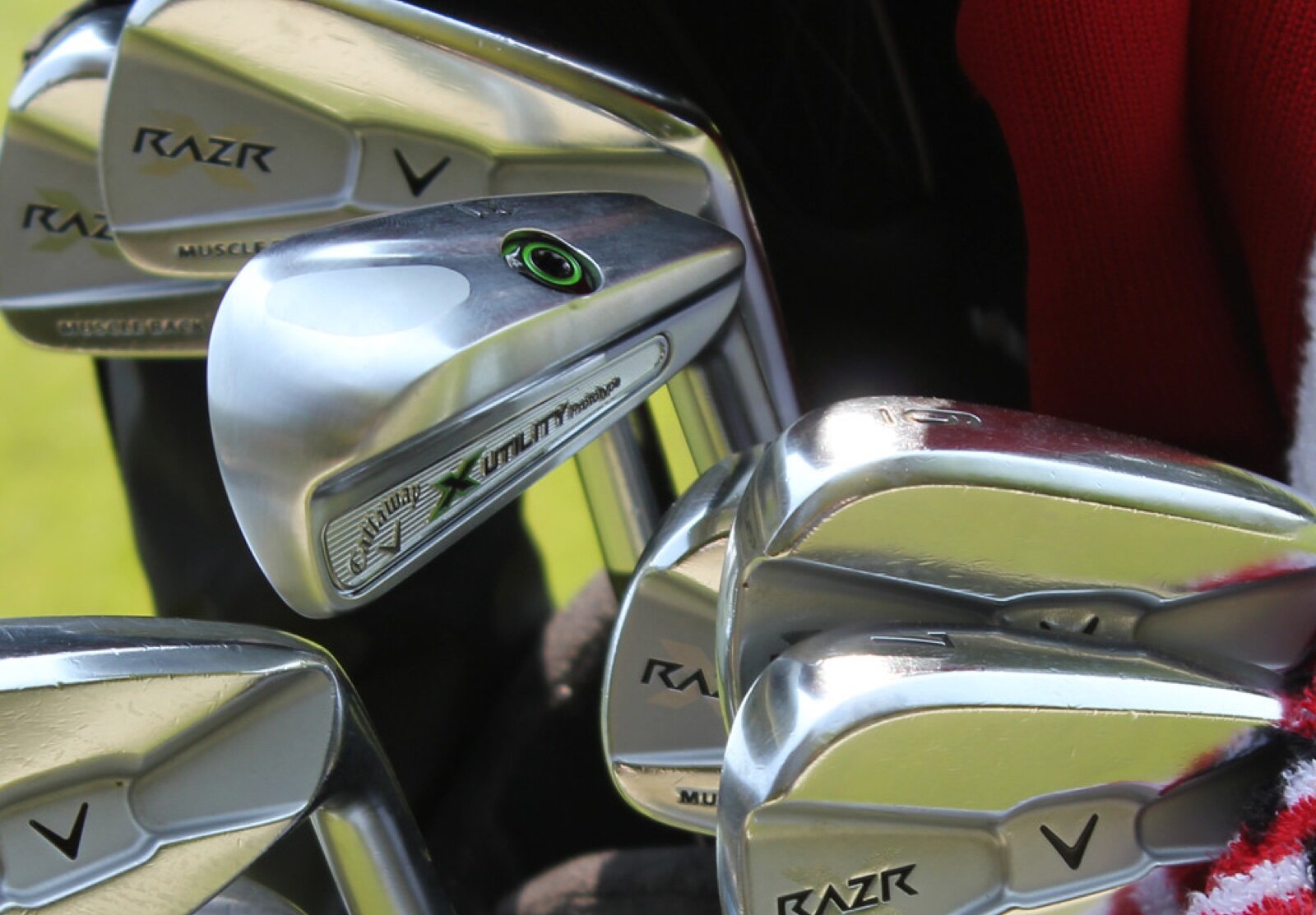
Golf irons are the part of the bag most people buy badly. The driver gets the attention and the putter gets the blame, but the seven or eight clubs in between are what you play most shots with, and the numbers stamped on them mean less than they used to. A 7-iron today can have the loft a 5-iron had a generation ago. That is not a scandal, but it changes how you should read a set, how you should gap it, and what to make of the yardages anyone quotes you.
This page covers what each iron is for, the four families of iron on sale, what has happened to lofts, how to space a set properly, and what actually matters when you buy. It is written for the sort of golfer who plays a public course like Lullingstone Park a few times a month rather than for a scratch player.
What each iron is for
Iron numbers are a shorthand for loft. The lower the number, the lower the loft, the lower and further the ball flies, and the harder the club is to hit well.
- Long irons, 3 and 4: low loft, long shaft, very little margin for error. Most club golfers are better served by a hybrid here, which launches higher from the same loft.
- Mid irons, 5, 6 and 7: the approach clubs on longer par fours, and the club you will be hitting from 150 yards more often than anything else.
- Short irons, 8 and 9: higher flight, more stopping power, the clubs you should be aiming at flags with.
- Pitching wedge: the bottom of the set, and now the awkward one, because its loft has moved a long way from where it used to sit.
A conforming iron has to meet the equipment rules the R and A and the USGA publish jointly, and the bag has to meet Rule 4.1b(1): a maximum of 14 clubs. Carry more and the penalty in stroke play is two strokes for each hole where the breach happened, capped at four strokes in the round. Our guide to how many clubs you can carry goes through what that means in practice.
The four families of iron
Every iron on sale sits somewhere on a line between control and forgiveness. The trade is always the same: mass behind the middle of the face gives feedback, mass out at the edges gives stability.
- Players irons, also called blades or musclebacks. A thin top line, almost no offset, a narrow sole and the weight concentrated behind the centre. They feel superb struck well and give you very little when you miss. They are built for people who find the middle of the face most of the time.
- Players distance irons. A compact head that hides modern technology inside it, often a hollow body with a thin, flexing face. They look like a players iron and behave more like a game-improvement one, and they carry the strongest lofts in the category.
- Game improvement irons. Wider soles, more offset, a thicker top line and weight pushed to the perimeter and low in the head. Off-centre strikes lose less ball speed and the ball launches higher. This is what most golfers should be playing.
- Super game improvement irons. Everything above, more so: very wide soles that skid rather than dig, heavy perimeter weighting, and lofts set to get the ball airborne. Genuinely useful if you struggle to get mid irons off the ground.
Two features do more work than the category names suggest. Offset, the set-back of the face from the hosel, buys you a fraction more time to square the club and helps a slice. Sole width decides what happens when you hit the ground first: a wide sole bounces and keeps going, a narrow one digs. On a parkland course in winter, sole width matters.
Why the lofts changed
This is the part that confuses people comparing a new set with the one in the garage. Iron lofts have been getting stronger for decades. A 7-iron in the 1980s and 1990s typically sat somewhere around 34 to 36 degrees. Game-improvement 7-irons now average roughly 28 to 29 degrees, which is close to where a 5-iron used to be.
The reason is not purely marketing, though marketing is part of it. Modern heads put the centre of gravity lower and further back, and thin faces flex at impact, both of which launch the ball higher. Left at old lofts, those clubs would balloon. Strengthening the loft pulls the flight back into a usable window while keeping the extra ball speed. Done well, a 30 degree modern 7-iron flies like a 34 degree old one and goes further.
What it does mean is this: your new 7-iron going ten yards further than your old one is not you improving, and the yardage gaps at the bottom of the bag have quietly opened up. Which brings us to gapping.
Gapping: the check worth doing before you buy anything
The point of a set is even spacing. You want roughly ten to fifteen yards between consecutive clubs, which is usually about four degrees of loft. Two problems are common:
- The wedge hole. Pitching wedge lofts have strengthened along with the rest of the set, but sand wedges have stayed at 54 to 56 degrees. That can leave a twenty-five yard gap between your pitching wedge and your sand wedge, right in the scoring zone. The fix is a gap or approach wedge in between, and it is the cheapest stroke you will ever buy.
- The long-iron pile-up. At the top of the set a 4-iron and a 5-iron often go the same distance, because neither is launching properly. A hybrid replacing the 4-iron usually restores a real gap.
Measure it, do not guess it. Hit ten balls with each club on the range, discard the two worst, and take the average carry. The driving range and practice facilities at Lullingstone Park are the right place to do it.
Shafts, length and lie angle
The head gets the marketing budget. The shaft and the fitting numbers change more shots.
- Material. Steel is heavier, cheaper and very consistent. Graphite is lighter, adds a little speed for some players and damps vibration, which matters if your hands, elbows or wrists complain after a round.
- Flex. Regular, stiff and the rest are not standardised between brands, so a stiff shaft from one maker can play softer than a regular from another. Judge it by ball flight, not by the letter printed on it.
- Lie angle. The angle between shaft and sole at address. Too upright and the toe sits off the ground and the ball starts left; too flat and the reverse. A degree or two here moves a shot several yards offline. It is checked in minutes with a lie board and a strip of tape.
- Length. Standard lengths assume an average height and arm length. If you are noticeably tall or short, this is the adjustment that makes the set feel like yours.
How to buy a set without wasting money
- Be honest about your strike. If you regularly find the middle, a players or players distance iron will reward you. If you do not, forgiveness will lower your scores faster than feel ever will.
- Buy the bottom of the set first. A well-gapped 7-iron to gap wedge will save more shots than a new 4-iron.
- Get fitted, even briefly. Length and lie cost little to adjust and change everything.
- Consider last season's model. Iron technology moves slowly. A set one or two generations old, fitted properly, beats this year's set off the shelf.
- Leave room for a hybrid. Most golfers should replace the 3-iron and 4-iron with one or two hybrids and use the saved slots at the other end of the bag.
If you are starting out and not sure what belongs in the bag at all, read our guide to what golf clubs a beginner actually needs and how to start playing golf. If your irons are fine and the strike is not, lessons and structured practice are the better investment, and you can book a round at Lullingstone Park to test the changes on grass rather than mats.
Frequently Asked Questions
How many irons are in a standard set?
Most sets sold today run from the 5-iron to the pitching wedge, which is six clubs, and many add a 4-iron. Sets that started at the 3-iron have largely gone, because a modern 4-iron already has the loft an old 3-iron had and most golfers hit a hybrid better than either. Whatever you buy, the Rules of Golf allow a maximum of 14 clubs in the bag.
What is the difference between a blade and a cavity back?
Where the weight sits. A blade, or muscleback, keeps the mass behind the middle of the face, which gives a skilled player feedback and control and punishes a miss. A cavity back hollows out the back and moves that weight to the perimeter, which makes the club more stable when you strike it away from the centre. For almost everyone playing a public course, the cavity back is the right answer.
Why is my new 7-iron longer than my old one?
Because it is not really a 7-iron by the old definition. Game-improvement 7-irons now average around 28 to 29 degrees of loft, where a 1980s or 1990s 7-iron was nearer 34 to 36. Lower lofts, lower centres of gravity and thinner faces all add distance, but you have not gained a club in the short game: the gap simply moves down the bag and is filled with an extra wedge.
Do I need to be fitted for irons?
It helps more than any other purchase in golf, and it is not only for good players. Length, lie angle and shaft flex change where the sole meets the turf and where the ball starts. A static fitting that takes twenty minutes is enough to avoid buying a set that is a degree or two too upright for you, which sends every shot left.
Steel or graphite shafts in irons?
Steel is heavier, cheaper and more consistent, and suits most players with moderate to fast swings. Graphite is lighter, which can add a little clubhead speed, and it damps vibration, which matters if you have sore hands, elbows or wrists. Neither is a beginner or expert choice; it is a weight and comfort choice.
How far apart should my irons go?
Roughly ten to fifteen yards between consecutive clubs, which usually means about four degrees of loft between them. Check the bottom of the bag first. The common fault is a large hole between the pitching wedge and the sand wedge, because pitching wedge lofts have strengthened while sand wedges have not.
Are my old irons still legal?
Almost certainly. The groove specification introduced in 2010 restricted groove volume and edge sharpness on clubs with 25 degrees of loft or more, and it arrived as a condition of competition at elite level rather than a ban on older clubs in ordinary play. If you are entering a county or national event, check the terms of that event; for a Saturday medal, your existing irons are fine.
Sources
- The R and A: Rule 4, the player's equipment, for the 14 club limit under Rule 4.1b(1) and the penalty for carrying more
- MyGolfSpy: iron loft chart by category, for current average lofts across the four iron categories
Checked on 14 September 2026. Lofts vary by model and by year, so treat the category averages as a guide and check the specification of any set you are considering. Competition conditions vary by club and by event.