Home › Golf Guides
How to Hit a Fairway Wood: Ball Position, the Sweeping Strike, Teeing It Low and the Fixes for Topped and Skied Shots
Learning how to hit a fairway wood is mostly about unlearning one habit. With an iron you hit down on the ball; with a fairway wood you sweep it off the turf, with the club travelling almost level at impact. Golfers who try to dig with a 3-wood sky it or hit it fat, and golfers who try to help it into the air top it. This page covers the set-up, the swing feel, how to use a fairway wood from the tee, three drills, and what each common mishit is telling you.
Everything is written for a right-handed golfer; left-handers should swap left and right. Your lead side is the one nearer the target.
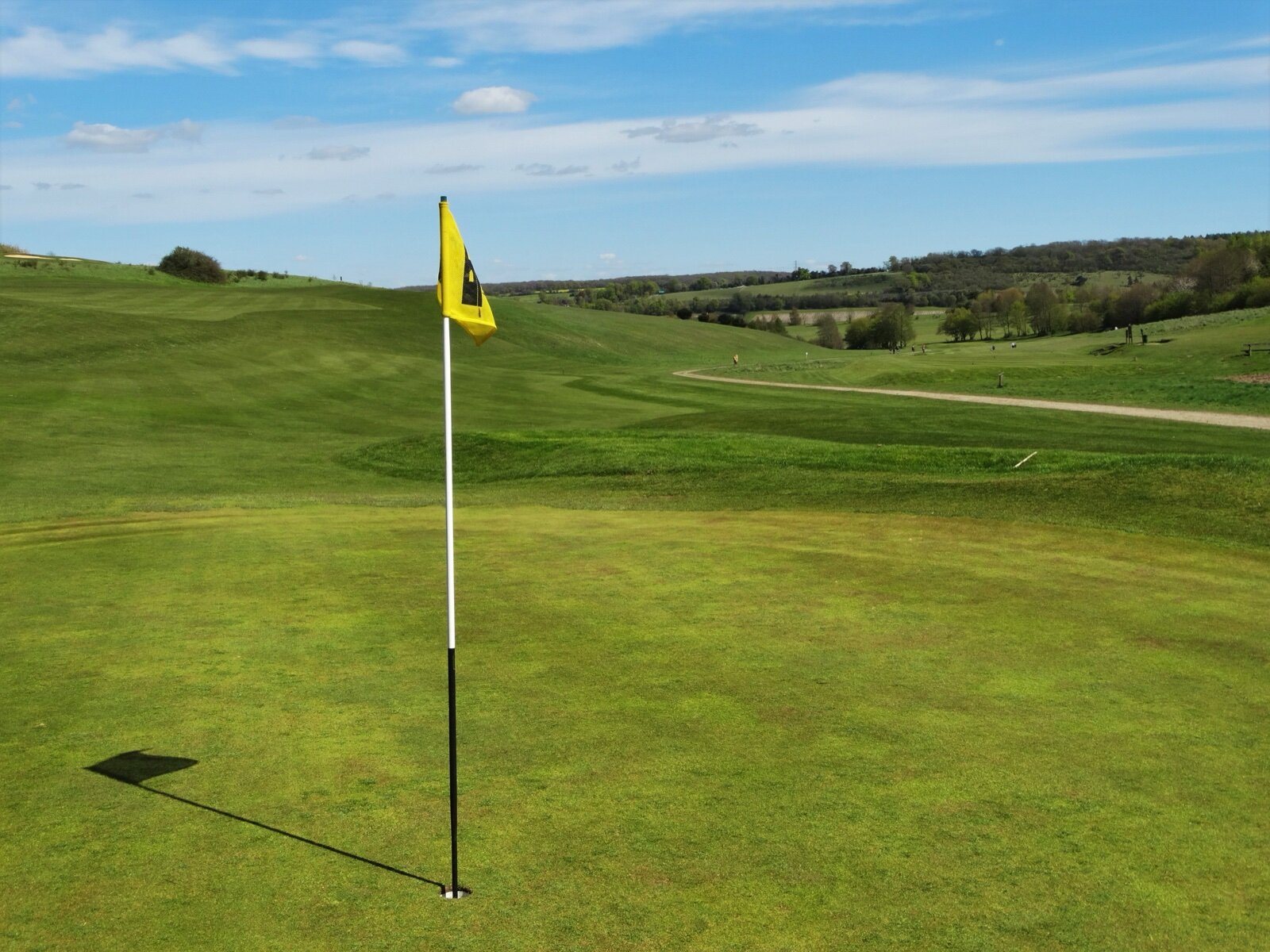
The goal: a shallow, sweeping strike, brushing the grass with little or no divot.
Ball position: forward of centre, about two balls' width inside the lead heel.
Stance: about shoulder width, a touch wider than for a mid iron.
From the tee: tee it low, with only a few millimetres of the ball above the grass.
Why a fairway wood is different from an iron and a driver
A fairway wood sits between the two. Its shaft is longer than an iron's and its face has much less loft, typically around 15 degrees for a 3-wood, 18 for a 5-wood and 21 for a 7-wood, though each maker's numbers differ. The wide, flat sole is designed to glide across the turf rather than cut into it. That is why the strike is a sweep: the club reaches the bottom of its arc at the ball, or a fraction after it, and the loft and the low, deep centre of gravity get the ball airborne.
Compare that with the two clubs either side. With a driver the ball is teed high and you catch it slightly on the way up; with an iron you strike down so the ball is squeezed between face and turf. Our pages on hitting a driver straight and how to hit irons cover those. A fairway wood needs neither: it needs a level, unhurried sweep.
The set-up
- Grip. The same neutral grip you use for every club, with two knuckles of the lead hand visible. See how to grip a golf club.
- Stance width. About shoulder width, slightly wider than a 7-iron, so you have a stable base for a longer, flatter swing.
- Ball position. Forward of centre, roughly two balls' width inside your lead heel. Too far back and you will hit down and sky it; too far forward and you will catch it thin.
- Weight. Even between the feet. Not favouring the lead side as you would for an iron, which steepens the swing.
- Hands and shaft. Hands level with the ball, or a fraction ahead. A big forward shaft lean takes loft off a club that has little to spare.
- Distance from the ball. The longer shaft means you stand a little further away. Let your arms hang naturally from your shoulders rather than reaching.
The swing feel
Make a wide, smooth takeaway, keeping the clubhead low to the ground for the first foot or so. That width is what sets up a shallow return. Turn fully, then let the lower body start the downswing and swing the club through the ball towards a full, balanced finish.
The two thoughts that help most golfers: first, sweep the grass where the ball sits, as if brushing crumbs off a tablecloth; second, swing at 80% effort. Fairway woods punish lunging more than any other club because the face has so little loft. A smooth swing that finds the centre of the face goes further than a hard swing off the toe.
A small scuff of grass or a very shallow divot after the ball is fine. A deep divot, or one that starts before the ball, means you are too steep.
Using a fairway wood from the tee
A 3-wood or 5-wood from the tee is a sensible play on tight holes, when the driver keeps finding trouble, or simply when you want the ball in play. Tee it low, so that only a few millimetres of the ball sit above the grass, and use exactly the same set-up as from the fairway. Teeing it as high as a driver encourages an upward swing that catches the ball on the crown of the club and pops it up.
Many club golfers find a 5-wood or 7-wood from the tee goes almost as far as their driver on average, because they hit it far straighter. If you are choosing between those clubs, our pages on 3-wood vs 5-wood and the 7-wood explain the trade-offs.
Three drills for the range
1. The brush drill
Without a ball, make practice swings that brush the grass or mat for several inches, with the club sliding level along the surface rather than bouncing or digging. Then put a ball in the middle of the brush mark and keep the same feel.
2. The tee drill
Peg a ball on a very low tee and hit it with your fairway wood. The goal is to clip the ball without hitting the tee much, or at all. If you keep knocking the tee out of the ground, or hitting under the ball, you are too steep. Once the strike is consistent, move the ball off the tee onto the grass.
3. Half swings with a 7-wood or 5-wood
Start with the most lofted fairway wood you have and hit ten half swings, holding the finish each time. Build up to three-quarter swings and only then a full swing. Most golfers find the 3-wood far easier once they have grooved the sweep with a more forgiving club.
Lullingstone Park has a covered driving range, which is ideal for these drills, though bear in mind that range mats forgive fat strikes. Off grass you will see quickly whether you are sweeping or digging.
Fixing the common fairway wood mishits
| Shot | What happens | Usual cause | Fix |
|---|---|---|---|
| Topped | Ball runs along the ground | Trying to lift the ball, rising up or hanging back | Keep the chest over the ball; trust the loft; brush drill |
| Thin | Low, skimming shot off the leading edge | Ball too far forward, or the arc rising before impact | Move the ball back half a ball; keep your height |
| Skied | Ball pops up high and short, often with a mark on the crown | Too steep, or tee too high | Tee lower; widen the takeaway; tee drill |
| Fat | Club hits the ground first | Weight stuck on the trail foot, or ball too far forward | Even weight at address and a full turn through to the finish |
| Slice | Ball curves right | Open face or out-to-in path, worse with long clubs | Check the grip; feel the club swing from the inside |
When to use a fairway wood on the course
From a good lie on the fairway, a fairway wood is the natural second shot on a long par 4 or a par 5. From a poor lie, a divot or thick rough, it is often the wrong club: the shallow face struggles to get under the ball, and a hybrid or mid iron is safer. Be honest about the lie before you pull the 3-wood. In winter the ground at Lullingstone is soft and lies can be tight, so our winter golf rules page is worth reading before you play. If long fairway woods still feel hard, a hybrid may suit your swing better.
A lesson with a PGA professional is the quickest way to find your own fault; our page on your first golf lesson explains what to expect. Then book a round from the Lullingstone Park homepage and try it on the course.
Frequently Asked Questions
Should you hit down on a fairway wood?
Only very slightly. A fairway wood wants a shallow, sweeping strike with the low point of the swing at or just after the ball. Hitting down hard, as you would with a short iron, tends to produce skied or fat shots.
Where should the ball be for a fairway wood?
Forward of centre, roughly two balls' width inside the lead heel. That is further forward than a mid iron but a little behind where you play the driver.
Why do I top my fairway woods?
Usually because you try to lift the ball, rising up through impact or hanging back on the trail foot. Keep your chest over the ball, trust the loft and sweep through to a full finish.
Should you tee up a fairway wood?
Yes, when you use it from the tee, but tee it low: with only a few millimetres of the ball above the grass. A high tee invites a skied shot that pops up off the top of the face.
Is a 5-wood easier to hit than a 3-wood?
For most club golfers, yes. The extra loft and shorter shaft make it easier to launch from the fairway, and the distance lost is often small because the ball flies higher and carries further than a mishit 3-wood.