Golf Putters: How to Choose the Right Putter for Your Stroke
Head shape, balance, length and the rules, in the order that actually matters when you stand over a putt
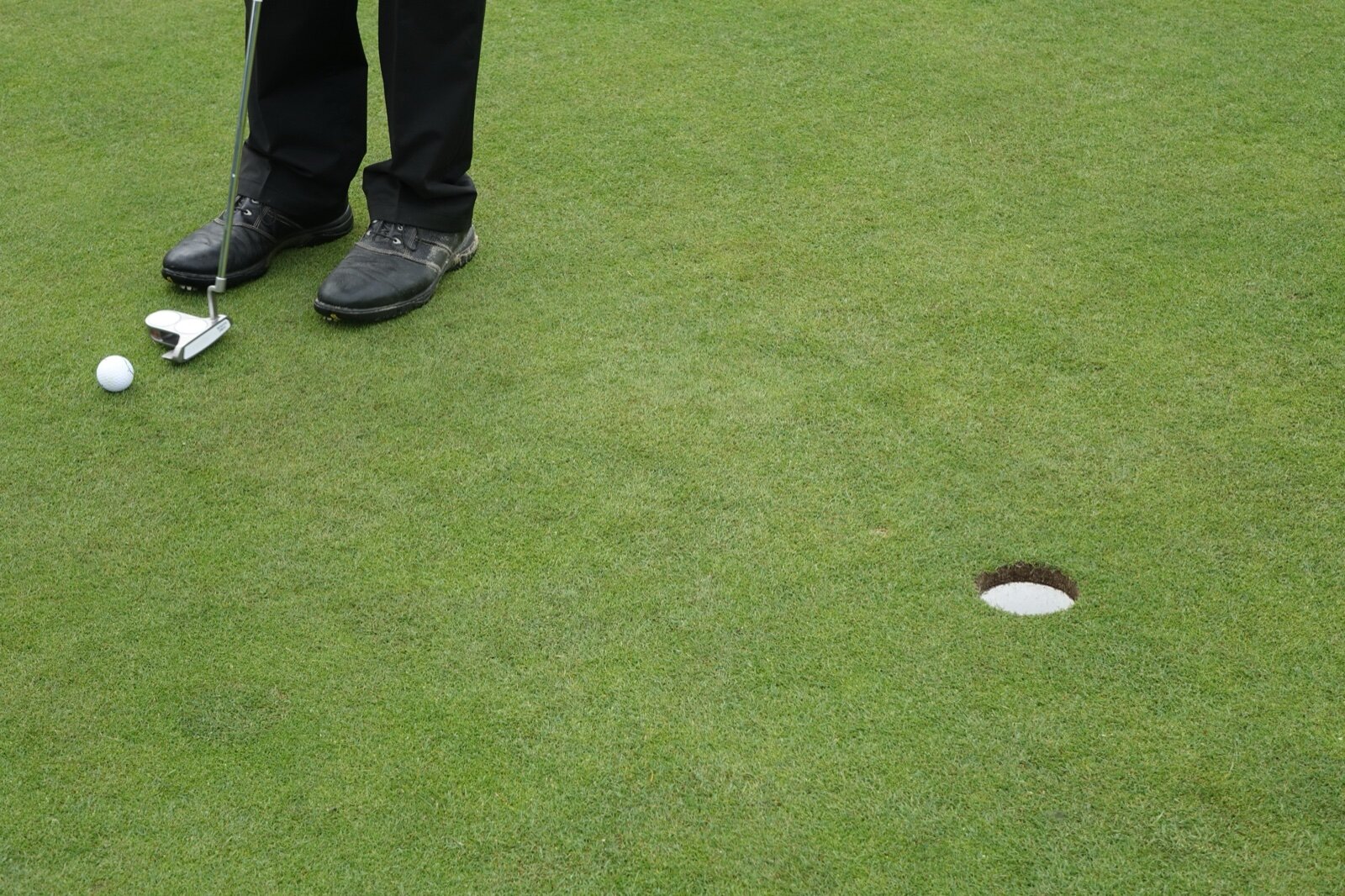
A golf putter is the club you use on almost every hole and the one most golfers choose on looks. That is backwards. The head shape matters less than how the putter is balanced, and the balance matters less than whether it is the right length for the way you stand. Get those two right and the choice between a blade and a mallet mostly comes down to what you can aim.
This page covers the parts of a putter that change how the ball rolls, how to match one to your stroke, how to check the length, and the handful of rules a putter has to meet. It is written for the golfer who plays a public course like Lullingstone Park and three-putts more often than they would like, not for a tour pro.
The quick answer
- Stroke with a noticeable arc: a blade or small mallet with some toe hang.
- Stroke that moves straight back and straight through: a face balanced mallet.
- Length: whatever lets your eyes sit over or just inside the ball with your arms hanging naturally. For most adults that lands somewhere between 33 and 35 inches, but fit it to your posture, not to that range.
- Rules: no more than 10 degrees of loft, at least 18 inches long, and you may not anchor it against your body.
Blade or mallet
A blade is the traditional shape: a narrow head, most of its weight close to the face. It gives the clearest feedback, because a putt struck off the toe feels and rolls noticeably worse. Players who like to feel the strike tend to prefer one, and it sits comfortably with an arcing stroke.
A mallet is a larger head, with weight pushed back and out towards the edges. That raises what fitters call the moment of inertia, which in practice means an off-centre strike twists the face less and loses less distance. Mallets also carry long alignment lines or shapes that some people find much easier to aim. The cost is feel: a mishit is quieter, so you learn less from it.
Between the two sit mid-mallets and wide blades, which borrow a bit of each. There is no correct answer here. The honest test is on a practice green: from six feet, which one do you line up square without fiddling?
Face balanced or toe hang
This is the part most people have never heard of and the part that should drive the decision. Balance the shaft on one finger and let the head settle.
| What you see | What it is | Suits |
|---|---|---|
| The face points straight up at the sky | Face balanced | A straight back, straight through stroke, where the face barely rotates |
| The toe drops a little, roughly a quarter of the way down | Slight or quarter toe hang | A slight arc |
| The toe points towards the ground | Strong toe hang | A strong arc, where the face opens on the way back and closes through the ball |
The logic is simple. A putter with toe hang wants to rotate, so it helps a stroke that rotates. A face balanced putter resists rotating, so it helps a stroke that does not. Most blades have some toe hang and most large mallets are face balanced, which is why the two questions tend to get answered together, but there are plenty of exceptions, so do the finger test rather than assume.
Not sure which stroke you have? Put two clubs on the practice green parallel to the target line, a little wider than the putter head, and make some strokes between them. If the head drifts inside the line on the way back and returns, you arc. If it tracks the line, you are straight.
Getting the length right
Off the shelf, most putters come at 33, 34 or 35 inches. Length is not about your height so much as your posture and arm length. Too long and you stand upright with your elbows bent and the ball drifts too far from your feet. Too short and you hunch, which tends to pull the eyes outside the ball.
- Take your normal putting stance with your arms hanging loose from the shoulders.
- Hold the putter where your hands naturally meet, without sliding up or down the grip.
- Drop a ball from the bridge of your nose. It should land on the ball you are addressing or just inside it.
- Check the sole. The putter should sit flat, not with the toe or the heel in the air.
If you are choking down an inch, the putter is probably an inch too long, and a club fitter or pro shop can cut it down. A shortened putter usually needs a little weight added back to the head to keep the same feel.
Loft, face inserts and grips
Loft. Putters are not flat-faced. Most carry a few degrees of loft to lift the ball out of the small depression it sits in and get it rolling rather than skidding. Players who push their hands well forward at impact reduce that loft and may want a little more; players who flip their wrists add it and may want less.
Inserts and milled faces. A softer insert feels muted and a milled steel face feels firmer. Neither is better. Choose by feel and by what your greens are like: on slower, shaggier autumn and winter greens a firmer response can help you get the ball to the hole.
Grips. A thicker grip quietens the small muscles in the hands and suits golfers whose stroke is wristy. A thinner grip gives more feel. Putters are the one club allowed a flat-sided, non-round grip, which is why so many putter grips have a flat front for your thumbs.
The rules every putter has to meet
A putter used in a qualifying round has to conform to the Equipment Rules. The points worth knowing are:
- Loft must not be more than 10 degrees.
- Length must be at least 18 inches. There is no maximum for a putter.
- Lie must leave the shaft at least 10 degrees away from vertical, which rules out a putter held bolt upright.
- Two grips are allowed on a putter, but both must be circular in cross-section.
- Anchoring the club against your body during the stroke is banned under Rule 10.1b, which came in on 1 January 2016. A long or belly putter is still legal; resting it against your chest or stomach is not.
The putter also counts towards the 14 club limit, a subject covered on our page about how many clubs are allowed in a golf bag.
How to test a putter before you buy
- Check aim first. Line up a six foot putt, then have someone stand behind you, or use a mirror or an alignment stick, to see where the face actually points.
- Hit ten putts from ten feet and watch the start line. A putter that suits you starts the ball on line without you steering it.
- Hit a few long ones, thirty feet or more. Distance control is where most shots are lost, and it is where a head that feels too dead or too hot shows up.
- Try a deliberate toe strike. See how much distance it gives away. That tells you how forgiving the head is.
Many clubs and golf shops let you try putters on an indoor mat, which is fine for aim and feel but says little about distance on real grass. If you can, borrow one for a round, or test on the practice green before a round at Lullingstone Park.
Common mistakes
- Buying on looks alone. A head you like looking at is worth something, but not if it does not suit your stroke.
- Never checking the length. An off-the-peg 35 inch putter is too long for a lot of golfers.
- Blaming the putter for a green-reading problem. If the ball starts on line and still misses, the read was wrong, not the club. Our guide to reading a green covers that side.
- Changing putters every few weeks. Give a new one a month of practice before judging it.
For the rest of the bag, our guide to golf irons explains lofts and gapping, and the pitch and putt course is the cheapest place at Lullingstone Park to practise distance control.
Frequently Asked Questions
What is the difference between a blade and a mallet putter?
A blade has a narrow head with its weight near the face, which gives more feedback and usually suits an arcing stroke. A mallet has a larger head with weight pushed back and outwards, so it twists less on an off-centre strike and often has bigger alignment aids. Mallets tend to be face balanced and suit a straighter stroke.
What length putter should I use?
Most off-the-shelf putters are 33, 34 or 35 inches, but the right length depends on your posture and arms. Take your stance with arms hanging naturally, hold the putter where your hands meet, and check that your eyes sit over or just inside the ball and the sole sits flat.
How do I know if a putter is face balanced?
Balance the shaft on one finger and let the head settle. If the face points straight up it is face balanced; if the toe drops towards the ground it has toe hang. Face balanced suits a straight stroke and toe hang suits an arcing one.
Is there a maximum loft for a putter?
Yes. Under the Equipment Rules a putter must not have more than 10 degrees of loft. Most putters carry only a few degrees.
Are long putters and belly putters banned?
No. The putters themselves are legal. What has been banned since 1 January 2016, under Rule 10.1b, is anchoring the club against your body during the stroke.
Can a putter have a flat grip?
Yes. A putter grip may have a non-circular cross-section, such as a flat front for the thumbs, which is not allowed on other clubs. A putter can also have two grips, provided both are circular in cross-section.
Sources
- The R and A: Equipment Rules, conformance of clubs, for the 10 degree loft limit, the 18 inch minimum length, the lie and the two-grip rule for putters
- The R and A: Rule 10, making a stroke, for the ban on anchoring the club under Rule 10.1b
Checked on 15 September 2026. Head shapes, lengths and balance vary by model, so check the specification of any putter you are considering and try it on grass where you can.