Home › Golf Guides
Golf Grips: When to Replace Them and How to Choose the Right Size
Golf grips are the only part of the club you touch, and they wear out long before the club does. A grip that has gone hard and shiny makes you squeeze harder, and a tight grip is one of the quickest ways to lose distance and direction. The good news is that new grips are a cheap upgrade compared with new clubs. This page covers when to replace golf grips, how to measure your hand for the right size, which materials suit a wet British winter, how to regrip clubs yourself, and what the Rules of Golf say about grip shape.
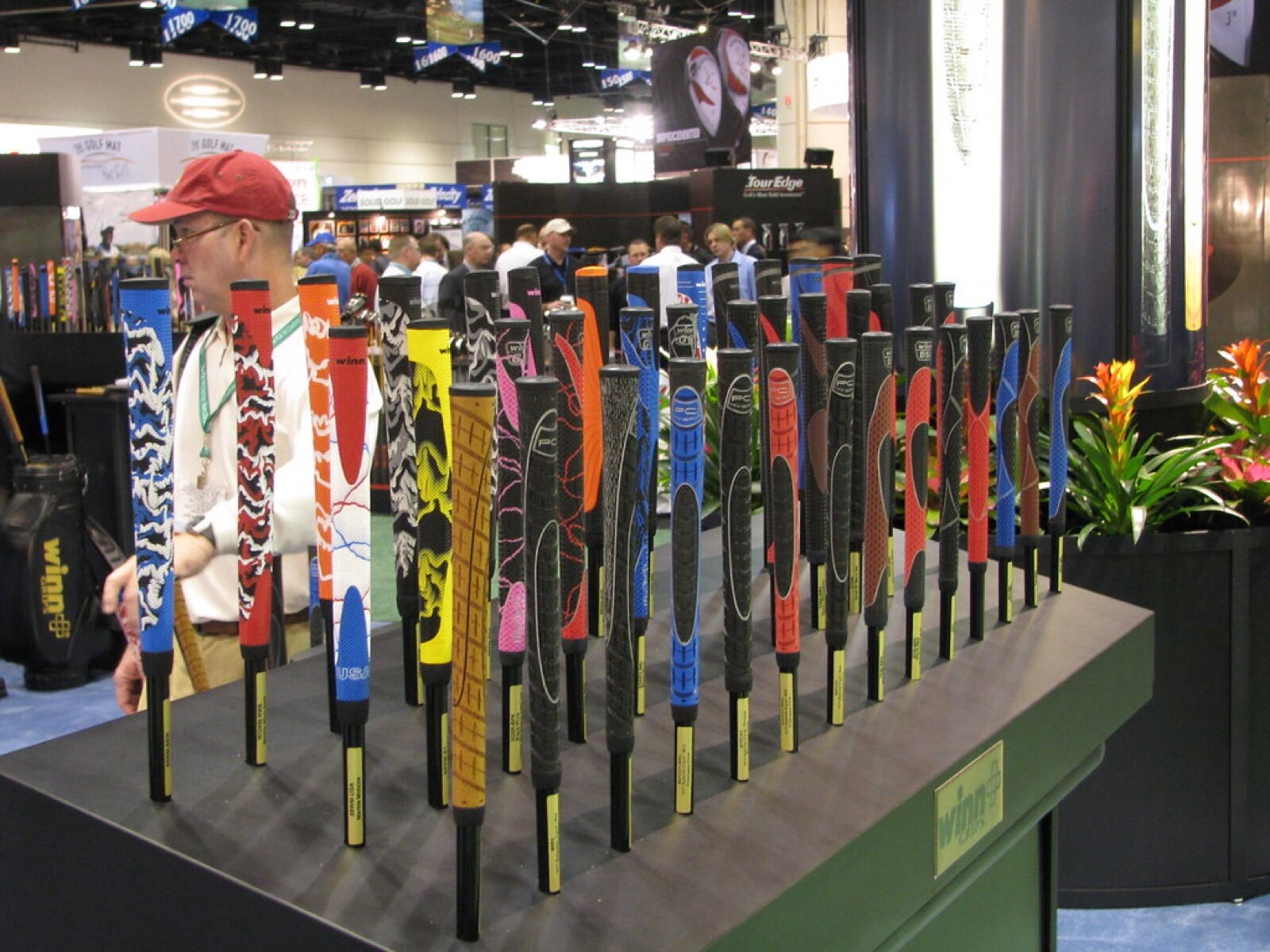
When: about once a year or every 40 rounds, whichever comes first.
Size: measure wrist crease to the tip of your middle finger. Around 7 to 8.25 inches is standard on typical charts; bigger hands go midsize or jumbo.
Rules: no grip may exceed 1.75 inches (44.45mm) across, and grips on clubs other than putters must be round in cross-section.
When to replace golf grips
Rubber grips break down with sweat, sun, heat and the oils from your hands. The common rule of thumb, repeated by grip makers and club fitters, is to regrip once a year or roughly every 40 rounds, whichever comes first. If you practise a lot, count range sessions as rounds. Clubs left in a hot car boot all summer age faster.
Signs your grips have had it:
- Shine. A glossy surface where the pattern used to be means the rubber has hardened.
- Slipping. If you find yourself squeezing to stop the club twisting at impact, the tack has gone.
- Worn patches. Smooth spots under the thumbs or the heel of the top hand.
- Cracks. Small splits near the end cap or along the top.
A quick test: grip your seven iron as you would on the tee and twist the head gently. If the grip turns under your hands before your hands move, it is time. Cleaning helps in between (warm soapy water, a soft brush, rinse and towel dry) but it will not bring back rubber that has hardened.
Golf grip size: standard, midsize or jumbo
Grip size affects how much your hands work during the swing. A grip that is too thin tends to let the hands get overactive, and a grip that is too thick can make it harder to release the club. Neither is a disaster, but the right size makes it easier to hold the club with light pressure.
The most reliable measurement is from the crease where your wrist meets your palm to the tip of your middle finger. Charts vary a little between makers, so check the one for the grip you are buying, but a typical chart looks like this:
| Wrist crease to middle fingertip | Typical grip size | Difference from standard |
|---|---|---|
| Under about 7 inches | Undersize or junior | Thinner |
| About 7 to 8.25 inches | Standard | None |
| About 8.25 to 9.25 inches | Midsize | About 1/16 inch thicker |
| Over about 9.25 inches | Jumbo or oversize | About 1/8 inch thicker |
Glove size is a rougher guide because it ignores finger length. The best check is to hold the club with your top hand: your fingertips should lightly touch the pad at the base of your thumb, not dig into it (too thin) or sit well short of it (too thick).
Two other routes to a fit. You can build up a standard grip with extra wraps of tape underneath, which a fitter will do for small adjustments. And players with arthritis or weak hands often find a midsize or jumbo grip easier to hold without squeezing, whatever the chart says.
Grip materials and wet-weather golf
For golfers playing through an English winter, the material matters as much as the size.
- Rubber. Soft, tacky and comfortable. The default on most new clubs and the best choice for most club golfers in dry or mixed weather.
- Cord. Rubber with cotton threads woven in, giving a rougher surface that holds better with wet hands or gloves. Firmer and harder on bare hands, so better suited to players with a quick tempo or who sweat a lot.
- Half-cord or hybrid. Cord under the top hand, softer rubber under the bottom hand. A good compromise if you play through the year.
- Wrap. Mimics an old leather wrapped grip, with a spiral feel. A personal preference.
On a wet day, keep grips dry before you think about anything else. A towel under the umbrella spokes, a spare glove in a sealed bag and a bag hood all help; our guide to golf umbrellas covers carrying one on a trolley so your grips stay out of the rain.
How to regrip golf clubs
Any golf shop or club professional will regrip for you, usually for a small labour charge on top of the grips. Doing it yourself is straightforward with the right kit: a hook blade, double-sided grip tape, grip solvent, a vice with a rubber shaft clamp, and the new grips.
- Cut off the old grip. Use a hook blade, cutting away from you, along the length of the grip. Never cut towards your hand, and on graphite shafts take care not to score the shaft.
- Strip the old tape. Peel or scrape off the old tape so the shaft is clean. A little solvent helps lift stubborn residue.
- Apply new tape. Run a strip of double-sided tape along the shaft, leaving a little overhanging the butt end to fold into the shaft, then peel off the backing.
- Add solvent. Cover the hole in the end of the grip, pour solvent inside, shake, then pour it over the tape so everything is wet.
- Slide the grip on. Push it on in one firm movement until the butt end sits against the end cap.
- Align it. Line up any logo or alignment marking with the clubface while the solvent is still wet. You have a minute or two.
- Leave to dry. Follow the solvent's instructions; overnight before playing is the safe choice.
A full set of 13 grips takes an hour or so once you have done the first two. Do the putter last or leave it to a professional, because putter grips are often a different shape and alignment matters more.
What the Rules of Golf say about grips
The equipment rules shared by the R&A and USGA set limits that any grip from a major maker will meet, but they matter if you are thinking about home-made build-ups or unusual shapes:
- On clubs other than putters, the grip must be circular in cross-section, except for a straight, slightly raised reminder rib along its full length, or a slightly indented spiral on a wrap-style grip.
- A grip may taper, but must not have a bulge or a waist.
- No grip may measure more than 1.75 inches (44.45mm) across in any direction.
- Putter grips may be non-circular, such as the common flat-fronted designs, as long as the cross-section has no concavity, is symmetrical and stays generally similar along the grip.
- A putter may have two grips, but both must be circular and at least 1.5 inches (38.1mm) apart.
Thick tape build-ups that create a bulge, or shaping a grip to fit your fingers, would make the club non-conforming for competitions, including club medals.
Grips and your next round at Lullingstone
Lullingstone's parkland layout is hilly and gets its share of heavy dew and winter rain, which is exactly when worn grips cost shots. If you are planning to play this autumn or winter, regripping before the season turns is time well spent. See our green fees page to book, our golf irons guide if you are thinking about new clubs instead, and more advice on the Lullingstone Park Golf Course homepage.
Frequently Asked Questions
How often should I replace my golf grips?
The usual guide is once a year or about every 40 rounds, whichever comes first, counting practice sessions too. Replace them sooner if they feel hard or shiny, have cracks, or show worn patches where your thumbs sit.
How do I know what size golf grip I need?
Measure from the crease of your wrist to the tip of your middle finger. On typical charts, about 7 to 8.25 inches suits a standard grip, 8.25 to 9.25 inches a midsize, and more than that a jumbo. Glove size is a rougher guide, and comfort when you hold the club matters more than the chart.
Can I regrip my own golf clubs?
Yes. You need a hook blade, double-sided grip tape, grip solvent, a vice with a rubber shaft clamp and new grips. Cut off the old grip and tape, wrap new tape, flood the inside of the grip and the tape with solvent, slide it on, align it, and leave it to dry before you play.
Are cord grips better in the rain?
Cord grips have cotton threads woven into the rubber, which gives a firmer, rougher surface that many golfers find holds better with wet hands or gloves. They are harder on bare hands, so some players choose a half-cord grip with cord only under the top hand.
Are oversized putter grips legal?
Yes, within limits. Putter grips may be non-circular, as long as the cross-section has no concavity, is symmetrical and stays generally similar along the grip, and no grip may exceed 1.75 inches (44.45mm) across in any direction.