Home › Golf Guides
Golf Gloves: Which Hand, What Size and Which Type for a British Winter
Golf gloves are cheap, but the wrong one is easy to buy: too big and it wrinkles in the palm, too small and it splits at the knuckle, too thin and it turns slippery in the rain. Most golfers wear one glove on the hand at the top of the grip, to stop the club twisting and to save the skin from blisters. This page covers which hand it goes on, how to get the size right, the difference between leather and synthetic, why rain and winter gloves are sold in pairs, how long a glove should last, and what the Rules of Golf say about them.
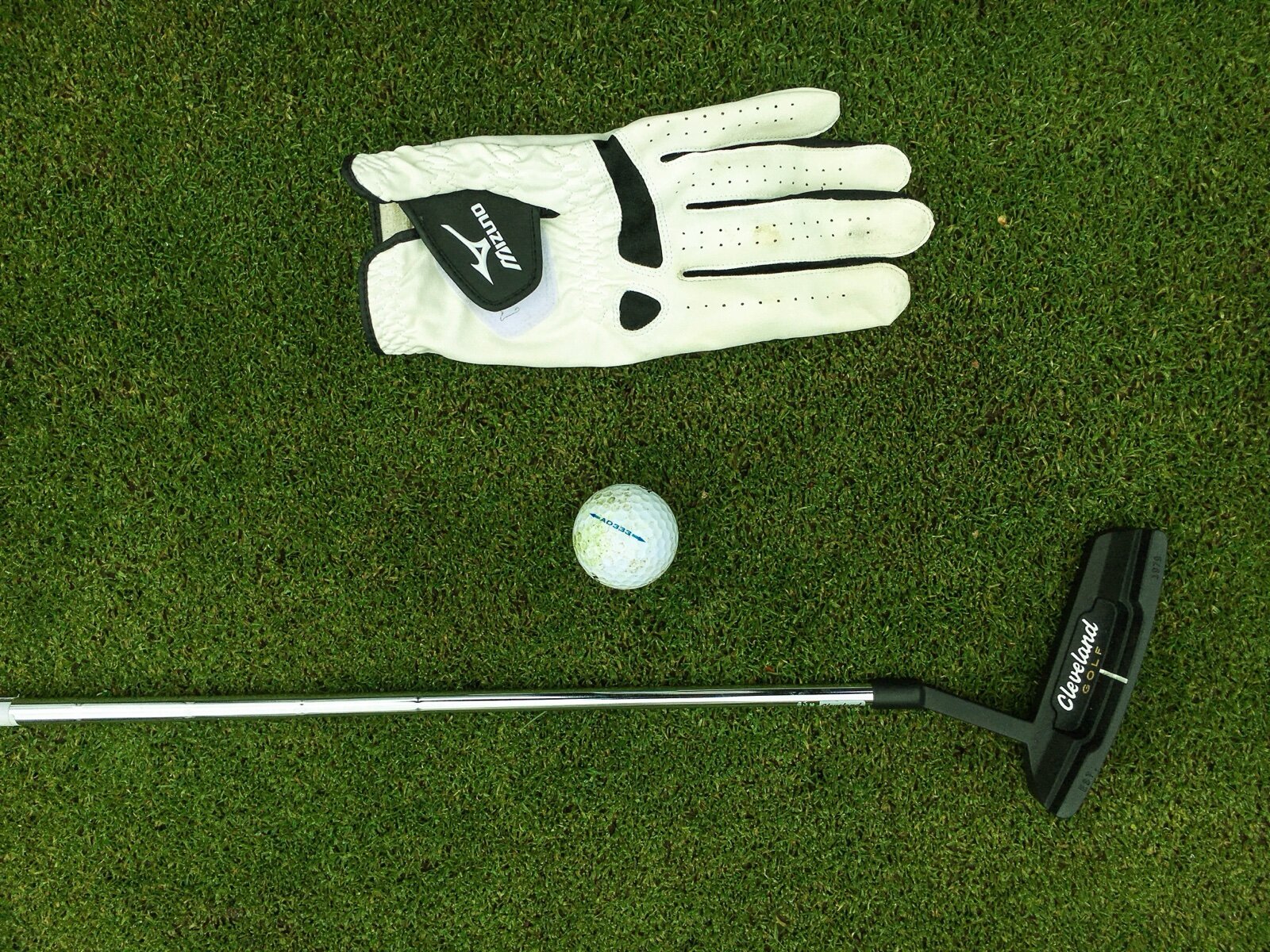

Which hand: the lead hand, the one at the top of the grip. That is the left hand for a right-handed golfer and the right hand for a left-hander.
Fit: snug across the palm and to the ends of the fingers, with no loose material when you make a fist.
Rules: gloves are allowed if they are "plain": a fitted glove with a separate sheath for each finger and thumb, a smooth palm, and no padding more than 0.635mm (0.025in) thicker than the rest of the glove.
Which hand do you wear a golf glove on?
The glove goes on your lead hand. A right-handed golfer wears it on the left hand and a left-handed golfer on the right. The lead hand sits at the top of the grip, controls the club face and takes most of the friction through the swing, so that is where a glove makes the biggest difference. The trail hand sits lower and lighter, and most golfers prefer to feel the grip with bare skin there.
Plenty of golfers take the glove off to putt, because a bare hand gives more feel for a short, gentle stroke. Some wear a glove on both hands in cold or wet weather, which is why rain and winter gloves are sold in pairs. If you play left-handed, check the label: gloves are sold by the hand you play with, so a left-handed golfer buys a "left-handed golfer" glove, which fits the right hand. Our page on left-handed golf clubs covers the rest of the kit.
Golf glove size: getting the fit right
Most brands size gloves from small to extra-extra-large, with women's gloves on a separate scale. Some, including FootJoy, also make "cadet" sizes for golfers with shorter fingers and a wider palm, which stops the glove bunching at the fingertips.
- Fingers: the ends of the fingers should touch the tips of the glove with no spare material.
- Palm: make a fist. The palm should stay smooth, without folds, and feel snug rather than tight.
- Closure: the Velcro tab should close comfortably without being pulled to its limit. If you need to stretch it all the way, go up a size; if it wraps far past the patch, go down.
- Leather stretches: a new leather glove gives a little with wear, so it should feel snug when new. Synthetic gloves stretch less.
Size charts differ between brands, so try a new make on in the shop if you can, or check the brand's own chart before ordering online.
Leather vs synthetic golf gloves
| Type | Good at | Watch out for |
|---|---|---|
| Cabretta leather | Thin, soft and close-fitting, with the most feel. Common in premium gloves such as FootJoy's StaSof and Pure Touch. | Wears faster, and can harden if it gets soaked and dries badly. |
| Synthetic | Cheaper and more durable, keeps its shape, copes better with sweat and damp. FootJoy's WeatherSof, its best seller, is a synthetic glove. | Less feel than thin leather. |
| Hybrid | Leather on the palm for grip and feel, synthetic on the back for stretch and breathability. | Price sits between the two. |
| Rain gloves (pairs) | Designed to grip better as they get wet, such as FootJoy RainGrip. | Can feel tacky and thick in the dry. |
| Winter gloves (pairs) | Thicker and warmer, often fleece-lined, such as FootJoy WinterSof. | Less feel, especially on the greens. |
For most club golfers in Kent, a synthetic or hybrid glove for the season and a pair of rain gloves in the bag covers almost every round. At UK retailers a synthetic glove costs from under £10, and premium leather gloves sell for more than £20, so it is worth trying a few before you settle on one.
Rain golf gloves and winter golf gloves
Normal gloves lose grip as they get wet; rain gloves are made the other way round, with a fabric that holds better as it soaks. Wear them on both hands, keep the pair dry in a plastic bag until the rain starts, and take them off to putt if they feel too thick. They work best alongside a good umbrella and grips that hold in the wet; see our guides to golf umbrellas and golf grips.
From November to March, winter gloves on both hands keep your fingers warm enough to feel the club. Many winter golfers also carry a pair of mitts to pull on between shots and take off to play. Our winter golf clothing page covers layers, hats and waterproofs for the same months.
What the Rules of Golf allow
Under the Equipment Rules published by The R&A and the USGA, gloves may be worn to help grip the club as long as they are "plain". A plain glove is a fitted covering of the hand with a separate sheath or opening for each finger and the thumb, made of smooth material over the full palm and the gripping surface of the fingers. It must not carry padding, defined as material more than 0.025in (0.635mm) thicker than the surrounding glove, on the gripping surface or inside. Material added for wear, moisture or another practical purpose is allowed within that limit. Any glove from a mainstream golf brand will comply; the rule matters if you are tempted by padded or webbed training aids.
How long a golf glove lasts, and how to make it last longer
A glove is worn out when the palm turns shiny and slippery, a hole opens at the heel pad or the thumb, or the Velcro stops holding. How quickly that happens depends on how often you play and practise, how hard you grip and how often the glove gets wet.
- Rotate two gloves so each has time to dry out between rounds.
- Take it off between shots on a hot day and tuck it in your pocket flat, not screwed up.
- Dry it slowly if it gets wet: smooth it flat and leave it at room temperature, not on a radiator, which hardens leather.
- Keep it in its packet in the bag so it keeps its shape.
- Check your grip pressure. A glove that wears through in one spot, usually the heel pad, often means the club is moving in your hand. Holes there can point to a grip fault or worn grips.
If you are getting ready for the winter season at Lullingstone Park, check our green fees before you book, or go back to the Lullingstone Park Golf Course home page.
Frequently Asked Questions
Which hand do you wear a golf glove on?
Your lead hand, the one at the top of the grip. A right-handed golfer wears the glove on the left hand; a left-handed golfer wears it on the right.
How should a golf glove fit?
Snugly, with the fingertips reaching the ends of the glove and no folds in the palm when you make a fist. The Velcro tab should close without being stretched to its limit. Leather gives a little with wear, so it should feel snug when new.
Is a leather or synthetic golf glove better?
Leather, usually cabretta, gives the most feel but wears faster and dislikes getting soaked. Synthetic gloves are cheaper, more durable and cope better with damp. Hybrids combine a leather palm with a synthetic back.
Why are rain golf gloves sold in pairs?
Because in the wet you want grip on both hands. Rain gloves are made to hold better as they get wet, so golfers wear one on each hand and often take them off to putt.
Are golf gloves allowed under the Rules of Golf?
Yes, if they are plain: a fitted glove with a separate sheath for each finger and thumb, smooth material on the palm and fingers, and no padding more than 0.025in (0.635mm) thicker than the rest of the glove.
How often should I replace my golf glove?
When the palm goes shiny and slippery, a hole appears, or the Velcro no longer holds. Rotating two gloves and drying them slowly away from radiators makes each one last longer.