Home › Golf Guides
Driving Irons Explained: Lofts, Who They Suit, and When a Hybrid Is the Better Club
A driving iron is a long iron, usually 16 to 23 degrees of loft, built to hit low, controllable shots off the tee and from the fairway. It looks like an iron at address but has a hollow or wide-soled head that makes it easier to launch than an old-fashioned 1, 2 or 3-iron. Sometimes called a utility iron, it sits in the same part of the bag as a hybrid or a 5 or 7 wood, and choosing between them comes down to how you strike long irons and how you want the ball to fly. This page explains the lofts, who suits one, and where it earns its place on our Castle Course.
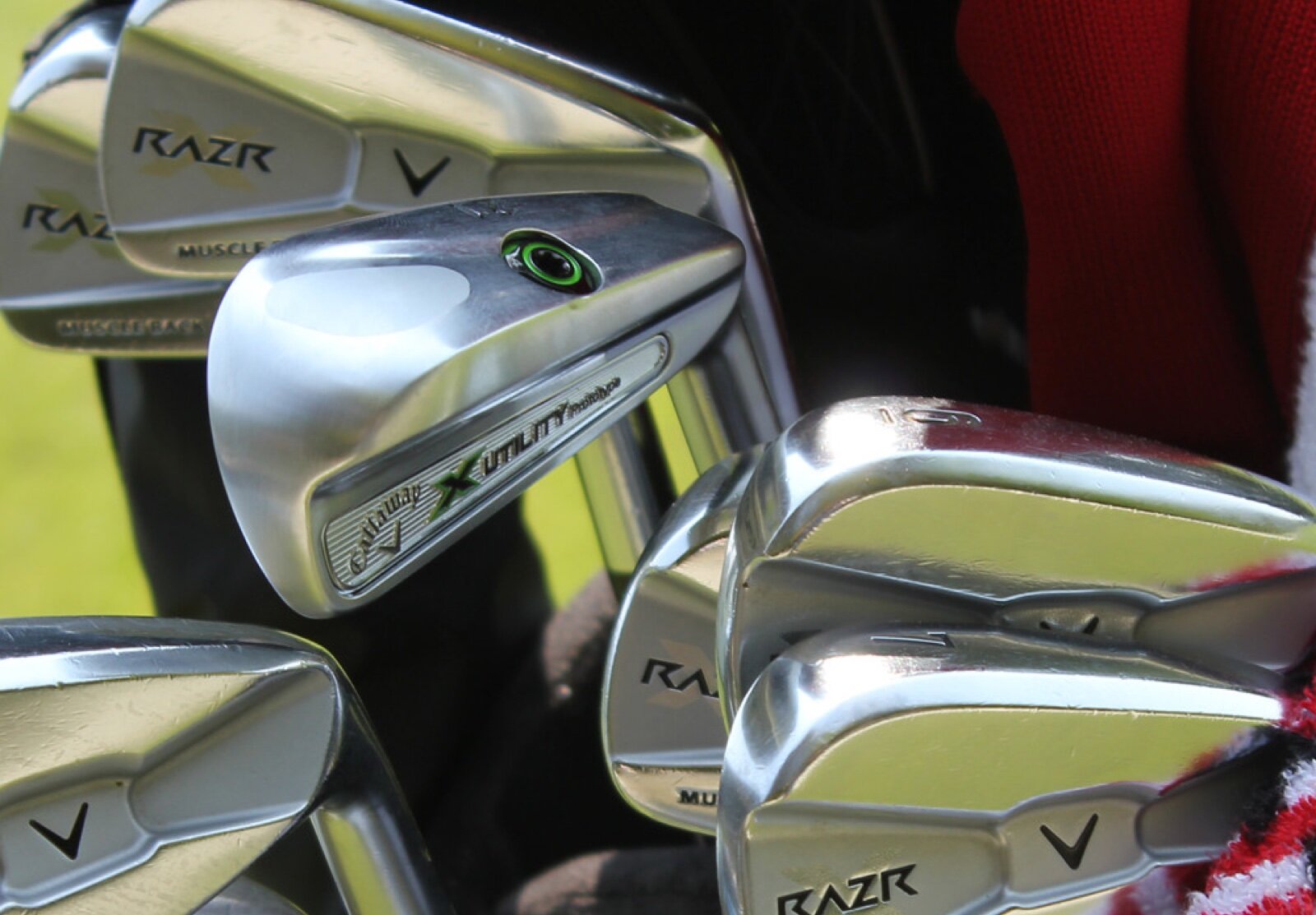
What makes a driving iron different from a normal long iron
A traditional long iron is a thin piece of steel with most of its weight just behind the hitting area, so a slight mis-hit loses distance and height. A driving iron moves weight low and to the edges. Most modern versions are hollow, like a small fairway wood dressed as an iron, with a thin face and a wider sole. That design launches the ball higher and keeps more ball speed on off-centre strikes than a blade 2-iron of the same loft, while keeping the lower, more penetrating flight that makes an iron easier to aim than a wood.
The trade-off is that it is still an iron. It needs a reasonably fast swing and a clean strike to get the ball in the air, and it is less forgiving than a hybrid from the rough or a tight lie.
Which loft replaces which club
Manufacturers label driving irons by number, but the loft is what matters. Typical lofts run like this:
| Loft | Usually sold as | Sits in the bag alongside |
|---|---|---|
| 16° | 1-iron | Between a 3 wood and a 5 wood |
| 18° | 2-iron | Similar loft to a 5 wood or a 2 hybrid |
| 20° | 3-iron | Similar loft to a 3 hybrid; a little lower than a 7 wood |
| 22 to 23° | 4-iron | Similar loft to a 4 hybrid |
As examples from current ranges, Titleist's U510 is sold in 16, 18, 20 and 22 degrees, labelled 1 to 4-iron, and Srixon's ZXi U in 18, 20 and 23 degrees. Remember that modern iron sets have stronger lofts than they used to: as our golf irons guide explains, many game-improvement 7-irons are now around 28 degrees, so a modern 4 or 5-iron may already be close to 22 degrees. Check the loft of your longest iron before you choose, or you can end up with two clubs that go the same distance.
Driving iron, hybrid or fairway wood?
All three cover the same gap between your longest iron and your driver or 3 wood. They do it differently:
- Driving iron: the lowest flight, the most roll and the easiest to shape and aim. Best for confident ball strikers and for windy, firm conditions.
- Hybrid: higher launch, softer landing and the most forgiving from the rough. Best for most club golfers. Our page on hybrid golf clubs sets out the loft swaps.
- Fairway wood: the most distance and height at a given loft, especially a 7 wood at about 21 degrees, but the longest shaft and the hardest to control from a tight lie.
A simple test: if your 4-iron is one of your more reliable clubs, a driving iron is worth trying. If you already avoid your long irons, choose a hybrid or a 7 wood instead.
Who should carry one
- Players who struggle to keep a 3 wood on the fairway. A driving iron off the tee gives up distance but brings the ball back into play on narrow holes.
- Golfers who hook their hybrids. Hybrids are built to launch and turn over easily, and some better players find they draw too much. An iron-style head tends to fly straighter for them.
- Anyone who plays in a lot of wind. The lower flight is less affected by a headwind and runs out further downwind.
- Not usually high handicappers or slower swingers. They will normally get more carry and more consistency from a hybrid or a 7 wood at the same loft.
How to hit a driving iron
- Ball position: a ball or two forward of the middle of your stance, further forward than a mid-iron but behind where you would play a fairway wood.
- Off the tee: tee it very low, with the ball just above the grass, so you can make your normal iron swing rather than trying to sweep it.
- From the fairway: hit it like a long iron, with a shallow, slightly descending strike. Trying to help the ball into the air is the commonest fault and produces thin shots.
- Swing at normal pace. The design does the launching. Swinging harder usually leads to a pull or a block.
Practise it on the range before taking it onto the course. Our driving range and practice area page has the details for Lullingstone Park.
Where a driving iron earns its place at Lullingstone Park
The Castle Course scorecard shows why a long, low club is useful here. Two par 3s, the 9th at 188 yards and the 13th at 187 yards off the whites, call for a long iron or hybrid, and the 13th is exposed enough that the wind changes the club. The 12th, the hardest hole on the course at 440 yards, usually plays into the prevailing wind, which is exactly when a low ball flight helps on the second shot. And on tree-lined par 4s such as the 15th, a driving iron off the tee keeps the ball short of trouble while leaving a mid-iron in.
Before you buy, it is worth hitting a driving iron, a hybrid and a 7 wood side by side; see our page on golf club fitting for what a fitter checks. Remember the 14-club limit too: adding one means taking something out, as explained in how many clubs are in a golf bag. Ready to try it out? Check the green fees and book a round from the Lullingstone Park homepage.
Frequently Asked Questions
What is a driving iron used for?
Long shots that need to stay low and finish where they land: tee shots on tight or windy holes, long par 3s and long second shots from the fairway. It is a long iron with a hollow or wide-soled head, so it is easier to launch than a traditional 1, 2 or 3-iron.
What loft is a driving iron?
Usually between 16 and 23 degrees. Titleist's U510, for example, comes in 16, 18, 20 and 22 degrees, sold as the 1 to 4-iron, and Srixon's ZXi U in 18, 20 and 23 degrees. Check the loft of your own longest iron before choosing, because modern iron lofts vary a lot between sets.
Is a driving iron easier to hit than a hybrid?
For most golfers, no. A hybrid has a lower, deeper centre of gravity and launches higher, which makes it more forgiving for slower swings and for shots from the rough. A driving iron flies lower and suits players who already strike their long irons well and want control in the wind.
Can a high handicapper use a driving iron?
They can, but most will score better with a hybrid or a 7 wood at the same loft. If you are unsure, hit both on a launch monitor at a fitting and compare carry distance and how far offline the shots finish.
Does a driving iron replace my 3 wood?
Not usually. A 16 or 18 degree driving iron flies lower and shorter than a 15 degree 3 wood for most players. It is more often used instead of a hybrid or a 5 wood, or as the club for tee shots where a 3 wood brings trouble into play.
Should a driving iron have a graphite or steel shaft?
Either. Many come with a choice. Players who use a heavier steel shaft in their irons often prefer a matching steel shaft; others choose graphite for a little more speed and height. A fitting is the quickest way to find out.