Home › Golf Guides
Stewart Golf Trolley Review: Q Follow, VERTX and V10 Compared, and Whether the Premium Is Worth It
A Stewart golf trolley is the most expensive way to get your bag round a course without carrying it, and the British brand knows it: the current range starts at £1,199 and tops out at £2,399. For that you get a remote-controlled or hands-free "follow" trolley rather than one you steer by the handle. This review compares the four models Stewart sells in September 2026 using the company's own published prices and specifications, explains what follow mode actually does, and sets out who should pay the premium and who is better off with a conventional electric trolley.
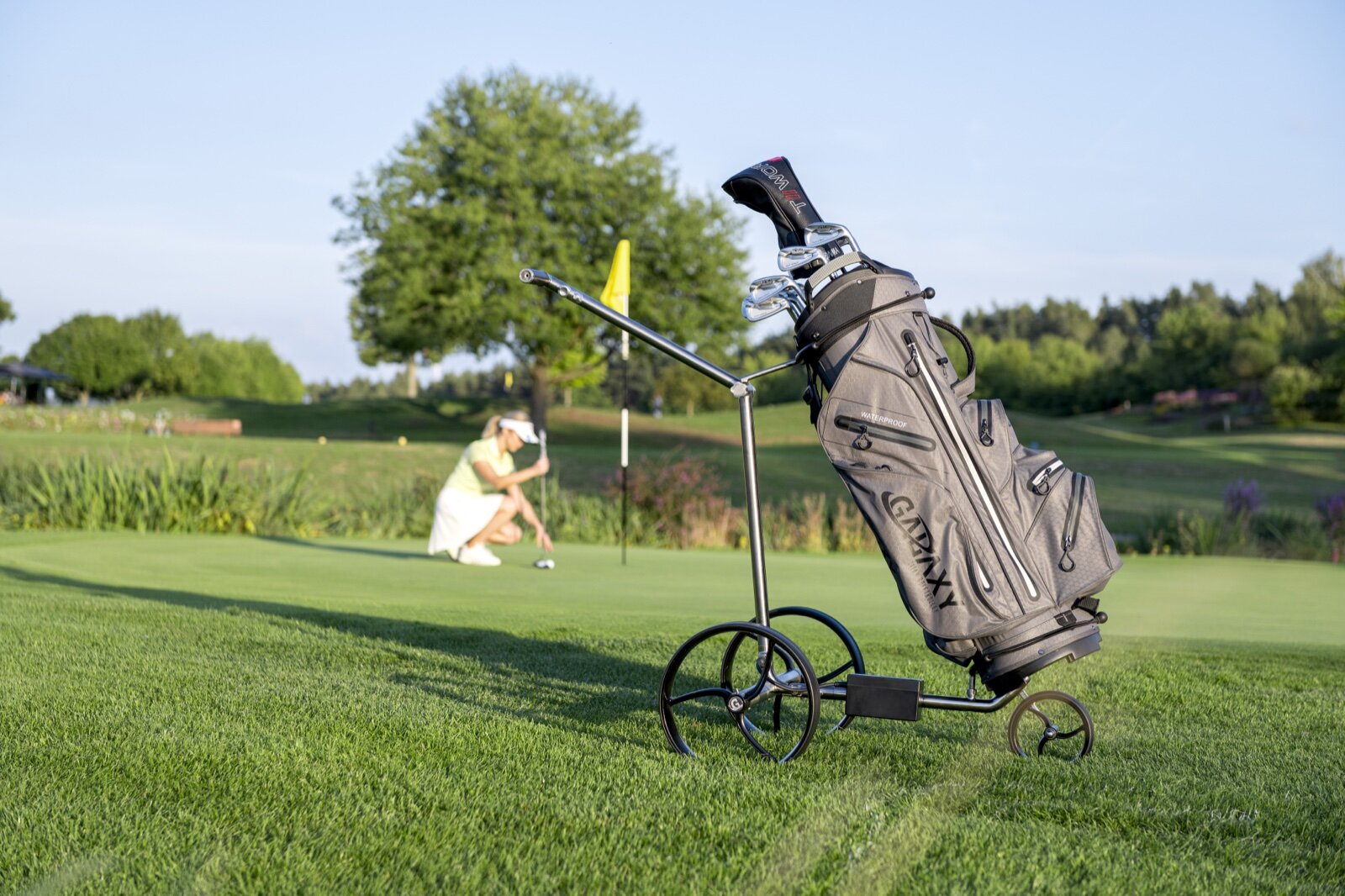

The current Stewart range at a glance
| Model | Price (black, base battery) | Control | Weight (without battery) | Remote range |
|---|---|---|---|---|
| V10 Remote | £1,199 | Remote handset | 14.6 kg (battery 3.2 kg) | 100 m |
| VERTX Remote | £1,399 (230 Wh), £1,599 (307 Wh) | Remote handset, terrain control | 14.6 kg (battery 2.5 to 3.0 kg) | 100 m |
| Q Follow | £1,799 (230 Wh), £1,999 (307 Wh) | Follow, remote or freewheel | 15.2 kg (battery 2.5 to 3.0 kg) | 75 m |
| Q Follow Carbon Range | £2,399 (307 Wh only) | As Q Follow | As Q Follow | 75 m |
Coloured finishes add £100 to £150 over black, and special editions such as The Open Q Follow (£2,149) and The Open VERTX Remote (£1,749) cost more again. Every new trolley comes with a two-year warranty, and Stewart sells a 12-month extension for £225. Approved refurbished trolleys are sold direct, from £949 for a V10 Remote and £1,099 for a VERTX.
Remote or follow: what you are actually paying for
A conventional electric trolley has a motor and a speed dial, and you walk beside it holding the handle. A Stewart has no handle to hold on the course.
- Remote models (V10 and VERTX) are driven with a handheld controller, like a radio-controlled car. You walk up the fairway and steer the trolley alongside you or send it on ahead to the green.
- Follow models (the Q range) track a small handset in your pocket and follow a few paces behind you, hands-free. You can switch to remote mode for tight spots such as bridges, steep banks and car parks, and a freewheel mode lets you push it if the battery or electronics fail.
The practical difference shows on busy days and on hills. Follow mode is the most relaxing way to walk a round because there is nothing to hold; remote mode gives more precise control where the ground drops away or the path is narrow. Stewart describes the Q Follow's system as its eighth generation of follow technology, with Bluetooth and a remote range of up to 75 metres.
The models in more detail
V10 Remote (£1,199)
The entry point, which Stewart calls "the classic remote experience, refined". It has a five-layer composite frame, a 100 m Bluetooth range and lithium batteries in 22Ah or 30Ah sizes. It folds flatter but longer than the Q and VERTX (320 × 660 × 820 mm, against 540 × 600 × 320 mm), so check your boot. It is the one to buy if you want remote control and do not play steep courses.
VERTX Remote (from £1,399)
The VERTX adds what Stewart calls Active Terrain Control: a processor that reads the gradient 1,000 times a second and adjusts power, together with regenerative braking. On paper it is the right Stewart for hilly parkland, where a trolley running away downhill or stalling on a climb is a real annoyance. It keeps the 100 m remote range and folds to the same compact cube as the Q Follow.
Q Follow (from £1,799)
The flagship, and the reason most people look at Stewart at all. Follow, remote and freewheel modes, a compact fold, a scorecard and pencil holder and quick-release wheels. At 15.2 kg without the battery it is not light, so if you lift it into a high boot on your own, try one first.
Q Follow Carbon Range (£2,399)
The same trolley with Cerakote carbon-effect finishes and the larger 307 Wh battery as standard. It is a cosmetic upgrade; the only functional difference over a standard Q Follow with the Max battery (£1,999) is the finish.
Base or Max battery?
Both the Q Follow and VERTX come with a 230 Wh Base or 307 Wh Max lithium battery, and the Max adds £200. Stewart says both are designed to last a full round on a full charge and markets the VERTX with a "45-hole battery". How far a battery really goes depends on the weight of your bag, the hills and the temperature. For 18 holes on a flat course the Base is enough; for 36 holes, or a hilly course in cold weather, the Max is the safer buy. Winter wheels (£99) help on soft ground.
Is a Stewart worth the premium?
Many mainstream electric trolleys cost less than half the price of a Q Follow, so the honest answer depends on how you walk the course.
Worth it if: you walk three or more rounds a week, you have a back, shoulder or hip problem that makes even steering a trolley tiring, you play a hilly course, or you simply want the most relaxed walk available. Owners tend to keep them for years, and Stewart's servicing, spares and refurbished trade support that.
Not worth it if: you play once a fortnight, mostly on flat courses, or you are happy holding a handle. A good conventional electric trolley does the carrying for a fraction of the cost, and a push trolley does it for less still. If you only want to try an electric trolley, hiring one for a round first is the cheapest experiment; our guide to buggy and trolley hire at Lullingstone Park explains how.
Things to check before you buy
- Boot space: compare the folded dimensions above with your car, especially for the longer V10.
- Your bag: cart bags sit best on trolleys; see our golf bags guide for the difference between cart and stand bags.
- Course rules: most courses allow trolleys year-round, but some restrict them near greens and tees or in very wet weather. Check with the pro shop.
- Distance devices: many golfers pair a remote trolley with a GPS or rangefinder; see GPS vs rangefinder.
Frequently Asked Questions
How much is a Stewart golf trolley?
In September 2026 Stewart's new trolleys cost from £1,199 for the V10 Remote, from £1,399 for the VERTX Remote, from £1,799 for the Q Follow and £2,399 for the Q Follow Carbon Range. Approved refurbished models start at £949.
What is the difference between the Stewart Q Follow and VERTX?
The Q Follow can follow you hands-free by tracking a handset in your pocket, and also works by remote. The VERTX is remote-only but adds Active Terrain Control and regenerative braking for hilly courses, and costs £400 less with the same battery.
How heavy is a Stewart Q Follow?
Stewart lists the Q Follow at 15.2 kg without the battery, and the battery at 2.5 to 3.0 kg. The VERTX and V10 are 14.6 kg without the battery.
Will a Stewart battery last 36 holes?
Stewart says its batteries are designed for a full round and markets the VERTX with a 45-hole battery. For 36 holes, hilly courses or cold weather, the larger 307 Wh Max battery is the safer choice.
Where are Stewart golf trolleys made?
Stewart Golf says its trolleys are designed, engineered and hand built in Great Britain.
What warranty does a Stewart trolley have?
Two years as standard on new trolleys, with a 12-month extension available for £225.
Sources
- Stewart Golf, Q Follow: prices, battery options, weight, folded size, remote range and warranty.
- Stewart Golf, VERTX Remote: prices, Active Terrain Control, weight and remote range.
- Stewart Golf, V10 Remote: price, weight, folded size, frame and warranty.
- Stewart Golf, Q Follow Carbon Range: price and battery.