How to Lower Your Golf Handicap: A Simple Practice Plan for the Season
What the handicap maths actually rewards, and how to spend ninety minutes a week to get it.
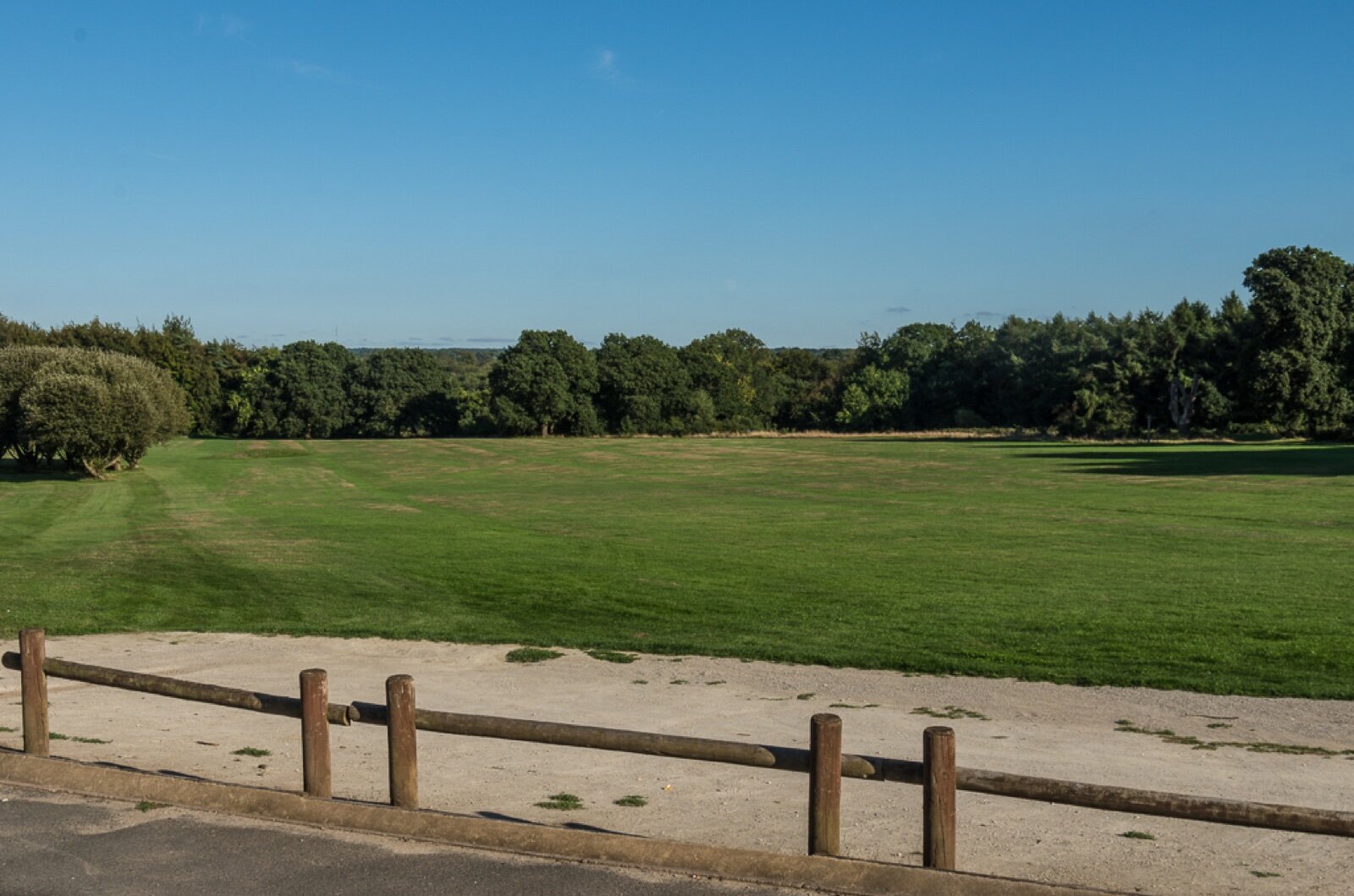
Lullingstone Park golf course. Photo: Lullingstone Park golf course by Ian Capper (CC BY-SA 2.0), via Geograph and Wikimedia Commons.
Most golfers who want to know how to lower your golf handicap start by trying to hit the ball further. It is almost always the wrong place to begin, and the reason is in the handicap system itself. Your Handicap Index is the average of the best 8 score differentials from your last 20 rounds, so the number responds to how often you play close to your best, not to how good your best ever was. That single fact should reshape how you practise.
First, understand what you are trying to move
Under the World Handicap System, every acceptable score you post is converted into a score differential, and your Index is the average of the best 8 of your most recent 20. The other twelve sit in the record doing nothing. Each new score pushes the oldest out.
Two things follow. A single brilliant round moves the number by about one eighth of how much better it was, so nobody drops three shots in an afternoon. And the fastest route down is to raise the floor: turn the rounds that were nearly good into rounds that count, by removing the disasters rather than adding brilliance.
Find out where the shots actually go
Before changing anything, track four numbers for five rounds. Write them on the card.
- Penalty shots and lost balls. Out of bounds, water, unplayable, provisional. Count every one.
- Three putts. Just the count.
- Duffed or thinned shots inside 50 yards. The chips that go nowhere or through the green.
- Holes where you took a second shot to get out of trouble. Bunkers, trees, deep rough.
Almost every mid-handicap card has five to ten strokes sitting in those four lines. That is where the practice goes, in that order of size, and it is very rarely the driver.
The ninety-minute week
Two sessions, not one. Forty-five minutes each, or one hour and one half hour if that suits your week better.
Session one: the scoring end
Fifteen minutes putting, fifteen minutes chipping and pitching, fifteen minutes bunker. Putting is two drills only: a circle of balls at three feet until you hole ten in a row, then long putts from thirty to forty feet aiming to finish inside a club length. The first drill removes the short misses that follow a bad first putt; the second removes three putts outright.
For chipping, hit to a real target, one ball at a time, changing club and lie every shot. Hitting twenty balls from the same spot with the same wedge teaches you nothing you will use on the course. Our guides to chipping and pitching basics and getting out of a bunker cover the techniques.
Session two: one fault, and the tee shot
Half the session on a single swing fault, chosen from your tracking, not from a video you liked. Half on the tee shot, but with a scoring goal rather than a distance one: pick a target width you can actually hit, and count fairways rather than yards. If your slice is the source of the penalty shots, fixing the slice is worth more than any putting drill.
One PGA lesson at the start of the season is the highest-value hour in this whole plan, because it stops you spending three months grooving the wrong fault. See our page on what a first lesson involves and the practice facilities here at Lullingstone Park.
On the course: three decisions that cost nothing
- Take the club that reaches the front of the green. Most amateur approach shots finish short. Choosing the club for your average strike rather than your best one removes a whole category of short-side chip.
- Play back to the fairway. One shot spent getting out of trouble is cheaper than two spent trying to be a hero from it, and the recovery attempt is where the eights come from.
- Aim at the middle of the green. Flags near edges are traps. The middle turns a possible six into a likely four.
None of these need a single practice ball, and between them they usually account for more strokes than any swing change made in a season.
Post the scores
Practice only shows up in the Index if the scores go in. In Great Britain and Ireland a general play score has to be registered before you tee off to be acceptable, so the good round you decide afterwards to submit will not count. Register beforehand and post everything, including the bad ones, because the bad ones sit outside the counting 8 and do you no harm.
Worth knowing for when you travel: since the 2024 update in GB and Ireland, your Course Handicap is your Handicap Index multiplied by the Slope Rating, divided by 113, plus the Course Rating minus Par, rounded to a whole number. That is why the same Index gives you a different number of shots on different courses. Our guide to how the UK handicap system works goes through it in full.
A realistic target
Two shots off an Index in a season, from ninety minutes a week and twenty posted rounds, is a good outcome and a very achievable one for a mid handicapper. Four is possible if the tracking shows a large concentration of penalty shots, because those are the cheapest strokes in golf to remove. Anyone promising more than that is selling something.
To get started, book a slot on the range or a tee time from the Lullingstone Park Golf Course homepage.
Frequently asked questions
How is a golf handicap calculated?
Under the World Handicap System your Handicap Index is the average of the best 8 score differentials from your most recent 20 scores. The other 12 are ignored. As each new score goes in, the oldest drops out, so the index reflects your recent best form rather than your average round.
How much does one good round lower your handicap?
Less than most people expect. Because the index averages 8 differentials, a new score that is 8 shots better than the worst of your counting 8 lowers the index by about one stroke. A score 2 better moves it by roughly a quarter of a stroke. That is why steady improvement beats one exceptional round.
What is the difference between a Handicap Index and a Course Handicap?
The Index is portable and belongs to you. The Course Handicap is the number of strokes you get on the specific set of tees you are playing. Since the 2024 update in GB and Ireland the calculation is Handicap Index multiplied by Slope Rating, divided by 113, plus Course Rating minus Par, rounded to a whole number.
How often should I practise to lower my handicap?
Two short focused sessions a week beat one long unfocused one. Ninety minutes a week, split between putting, short game and one specific full-swing fault, will move the number faster than three hours of hitting drivers. The limiting factor for most club golfers is not distance.
Do practice rounds count towards my handicap?
Only if you register them. In Great Britain and Ireland a general play score has to be registered before you tee off if it is to count, so a good round you decided afterwards to submit does not qualify. Check the procedure with the pro shop before you play.
What is the highest handicap you can have?
The World Handicap System runs up to a Handicap Index of 54.0, which is deliberately high so that beginners and higher-scoring golfers have a usable handicap from the start. On any given hole your score for handicap purposes is capped at net double bogey.
Sources
- England Golf, Guidance on the WHS Rules of Handicapping as applied within GB&I, including the best 8 of 20 calculation and the Course Handicap formula: englandgolf.org
- World Handicap System, 2024 Course Handicap calculation: whs.com
Handicap rules checked on 24 August 2026. Handicapping procedures are set by your national association and your club; check general play registration with the pro shop.