Pitch and Putt at Lullingstone Park: Short Game Practice for All Ages
The cheapest hour in golf, and the one that takes the most shots off a score
If you have searched for pitch and putt near me from anywhere in north west Kent or the south east London suburbs, Lullingstone Park is one of the few places within easy reach that has one on the same site as a full golf complex. It sits alongside the Championship Course, the nine hole Valley Course and a 20-bay covered driving range, at Parkgate Road, Chelsfield, Kent BR6 7PX.
That combination matters more than it sounds. A standalone pitch and putt is a nice hour out. A pitch and putt attached to a proper course is a training ground, because everything you learn on it transfers directly to the shots that decide your score on the big course a few hundred yards away.
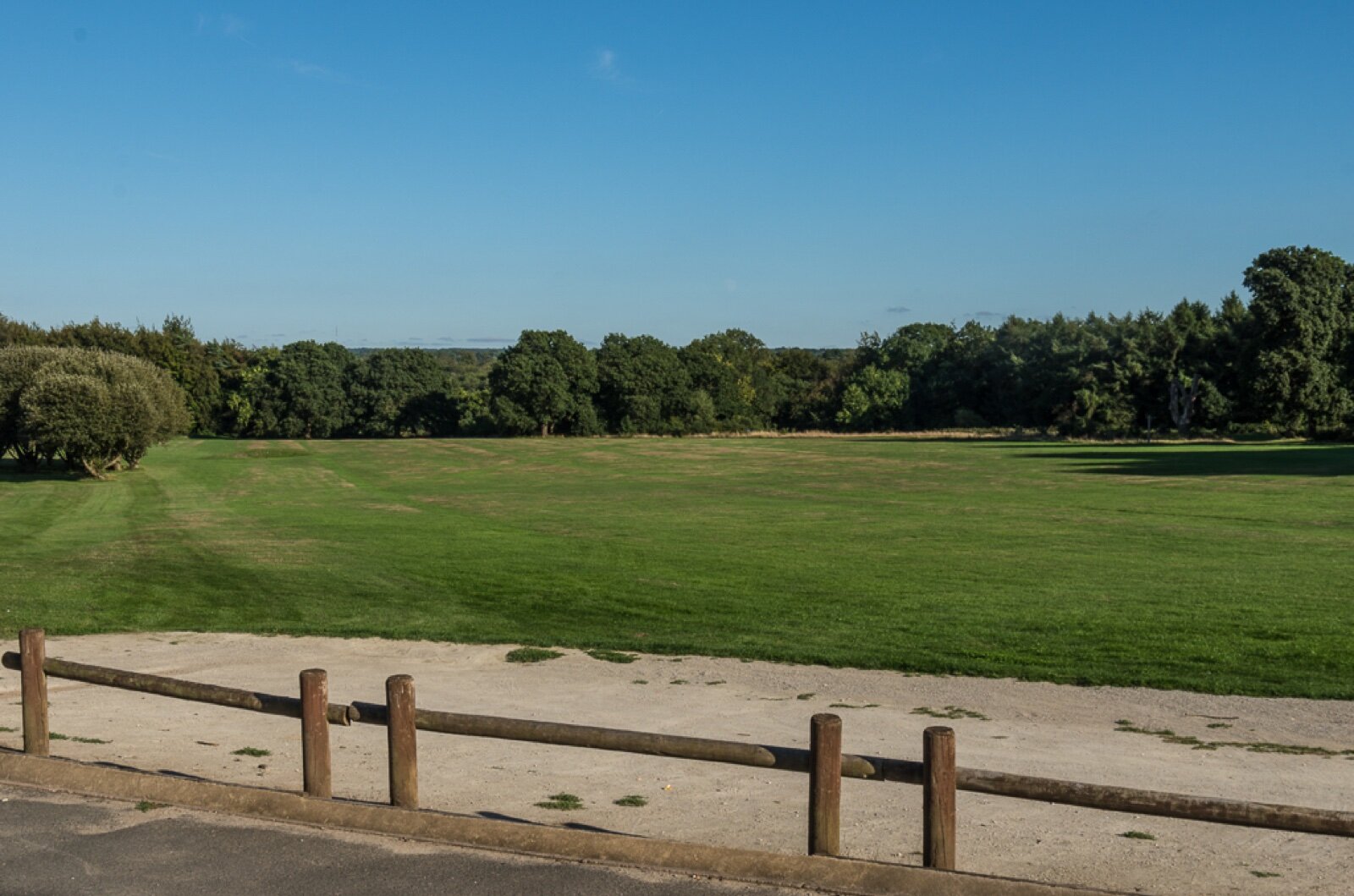

What pitch and putt actually is
Pitch and putt is golf reduced to its last two shots. Every hole is short enough to reach from the tee with one lofted club, so the round is a sequence of pitches followed by putts. There are no drivers, no fairway woods and no long walks between shots.
It is worth separating it from the two things people confuse it with. A par 3 course is longer, with holes that need short and mid irons rather than a wedge, so it is a step up rather than the same thing. Adventure golf and crazy golf are not golf at all in any technical sense, because the ball never leaves the ground. Pitch and putt is the real game, played over real turf, with real greens, at a length that a beginner can manage and an experienced player can score on.
The Lullingstone Park set-up
Lullingstone Park is a public parkland complex spread over the Darent Valley countryside, and it is unusual in offering four distinct ways to hit a golf ball on one visit:
- The Championship Course, 18 holes, par 72, 6,713 yards.
- The Valley Course, 9 holes, par 33, 2,381 yards.
- A 20-bay driving range, covered, so it plays in any weather.
- The pitch and putt course, the shortest and the least intimidating of the four.
The pitch and putt is the one to start on, and it is also the one most regular golfers ignore for years before working out what it is for. Visit Kent's listing for the complex describes the pitch and putt as running from April to October, so treat it as a spring and summer facility and ring the pro shop before travelling in the shoulder months.
Why the short game is where the shots are
Ask a mid-handicap golfer where they lose strokes and most will say off the tee. Watch them for a round and you will usually see something different. The tee shot that goes 30 yards off line costs one shot. The chip that comes up 20 feet short followed by three putts costs three.
Shots from inside 50 yards, plus putts from inside six feet, make up a large share of any amateur's score, and they are the cheapest part of the game to improve. They need no clubhead speed, no strength and no swing rebuild. They need repetition against a target with a consequence attached, which is exactly what a pitch and putt gives you and a driving range mat cannot.
The range teaches you to hit a ball. The pitch and putt teaches you to get it in the hole. Those are different skills, and only one of them appears on your card.
What to take, and what it costs
A wedge and a putter will play the whole course. A sand wedge and a pitching wedge give you two trajectories to choose from, which is useful once you are past the first visit, but nothing more is needed. Take a couple of spare balls, because short holes are usually guarded by exactly the sort of trouble that swallows them.
Pitch and putt is charged separately from the main course and is not listed on the published green fee table. For context, that table sets full rounds at £22.00 midweek and £31.75 at weekends and bank holidays for 18 holes, and £13.00 and £15.00 respectively for nine holes. Pitch and putt costs a good deal less than any of those. Ask at the pro shop on arrival or ring ahead, and check the green fees page for the current position on the longer courses.
Three games to play on it
Turning up and going round is fine. Turning up with a game to play is better, because it gives every shot a score and a target, which is what makes practice stick.
Up and down. Deliberately miss every green from the tee, then try to get down in two from wherever the ball finishes. Count how many times out of nine you succeed. That number, tracked over a few visits, is the single most useful short game statistic an amateur can keep.
One club. Play the whole round with a sand wedge and a putter only, and vary the length of the swing rather than changing club. Most club golfers have never learned to hit a wedge three different distances, which is why they leave so many shots short.
Worst ball. Hit two balls from every tee, then play the worse of the two. It is brutal, it removes luck entirely, and it teaches you very quickly which parts of your short game are actually reliable.
Taking children and complete beginners
For a first exposure to golf, a pitch and putt beats every alternative. A child can reach the green from the tee, which no other format on the site allows. A round takes well under an hour, which matches the attention span of most under-tens. There is no group behind waiting on a championship tee, so the pressure that puts beginners off simply is not there.
The dress code is relaxed compared with the main course, so trainers and ordinary clothes are fine. The one rule that has to be taught before the first swing is the standing rule: nobody is anywhere near a person swinging a club, ever, and clubs are carried rather than swung between holes. Everything else, including where to stand, when to walk and how to repair a pitch mark, can be picked up as you go.
If it goes well, the natural next step is the Valley Course rather than the Championship Course. Nine holes at 2,381 yards is short enough to be achievable and long enough to feel like a proper round.
Turning practice into a handicap
If pitch and putt turns into a habit and you want a number to measure progress against, you do not have to join a club to get one. England Golf runs iGolf for independent golfers, which gives an official Handicap Index under the World Handicap System along with public liability insurance. You submit scorecards totalling 54 holes, in any mix of nine and 18 hole rounds, to get your first index. The maximum index is 54.0, so there is no standard you have to reach before you start.
Rounds on the Valley Course count towards that total. Pitch and putt rounds do not, but the shots you learn on the pitch and putt are the ones that will bring the number down.
Frequently Asked Questions
What is the difference between pitch and putt and a par 3 course?
Length. Pitch and putt holes are short enough to reach with one lofted club, usually somewhere between about 30 and 90 yards, so every hole is a pitch and then a putt. A par 3 course stretches the same idea out to full short-iron and mid-iron distances, so you are often hitting a 7 iron rather than a wedge. Pitch and putt is the friendlier of the two for a first go and the more useful of the two for short game practice.
Do I need a full set of golf clubs for pitch and putt?
No. A wedge and a putter will play every hole. That is one of the reasons it works so well as an introduction, because nobody has to buy a set before they find out whether they enjoy the game. If you already own clubs, take a sand wedge, a pitching wedge and a putter and leave the rest in the car.
Is pitch and putt suitable for children?
It is the best starting point at Lullingstone Park. The holes are short enough that a child can reach the green, a round takes well under an hour, and there is no pressure from a group waiting behind on a championship tee. Children do need to be supervised and to understand the one rule that matters, which is that nobody swings a club while another person is anywhere near them.
Is there a dress code for pitch and putt?
It is far more relaxed than on the main course. Trainers and normal casual clothing are fine on a pitch and putt, whereas the Championship Course expects proper golf attire and golf shoes. If you plan to go on to the Valley Course or the Championship Course afterwards, check the dress code before you travel.
Is pitch and putt open all year?
The pitch and putt is the most weather-dependent thing on the site, and Visit Kent's listing for the course describes it as a summer facility running from April to October. The 20-bay driving range is covered and plays through the winter. Ring the pro shop on the day if the ground has been wet, because a short course on soft ground is often the first thing to close.
How much does pitch and putt cost at Lullingstone Park?
The pitch and putt is not listed on the published green fee table, which covers full rounds at £22 midweek and £31.75 at weekends for 18 holes, and £13 and £15 for nine. Pitch and putt is charged separately and costs a fraction of those figures, so ask at the pro shop when you arrive or ring ahead.
Planning a visit
Lullingstone Park is at Parkgate Road, Chelsfield, Kent BR6 7PX, in more than 500 acres of Darent Valley parkland, and it is a public course, so nobody needs to be a member to play. A sensible first visit is an hour on the pitch and putt followed by a bucket on the driving range, which between them cost less than a single round on most private courses in the county.
The Valley Course page covers the nine hole option when you are ready for it, the green fees page has current prices and contact details for booking, and the Lullingstone Park homepage has everything else you need to plan the trip.