Lullingstone Roman Villa: What to See and Visitor Tips
One of Britain's best-preserved Roman villas, a short drive from the golf course in the Darent Valley
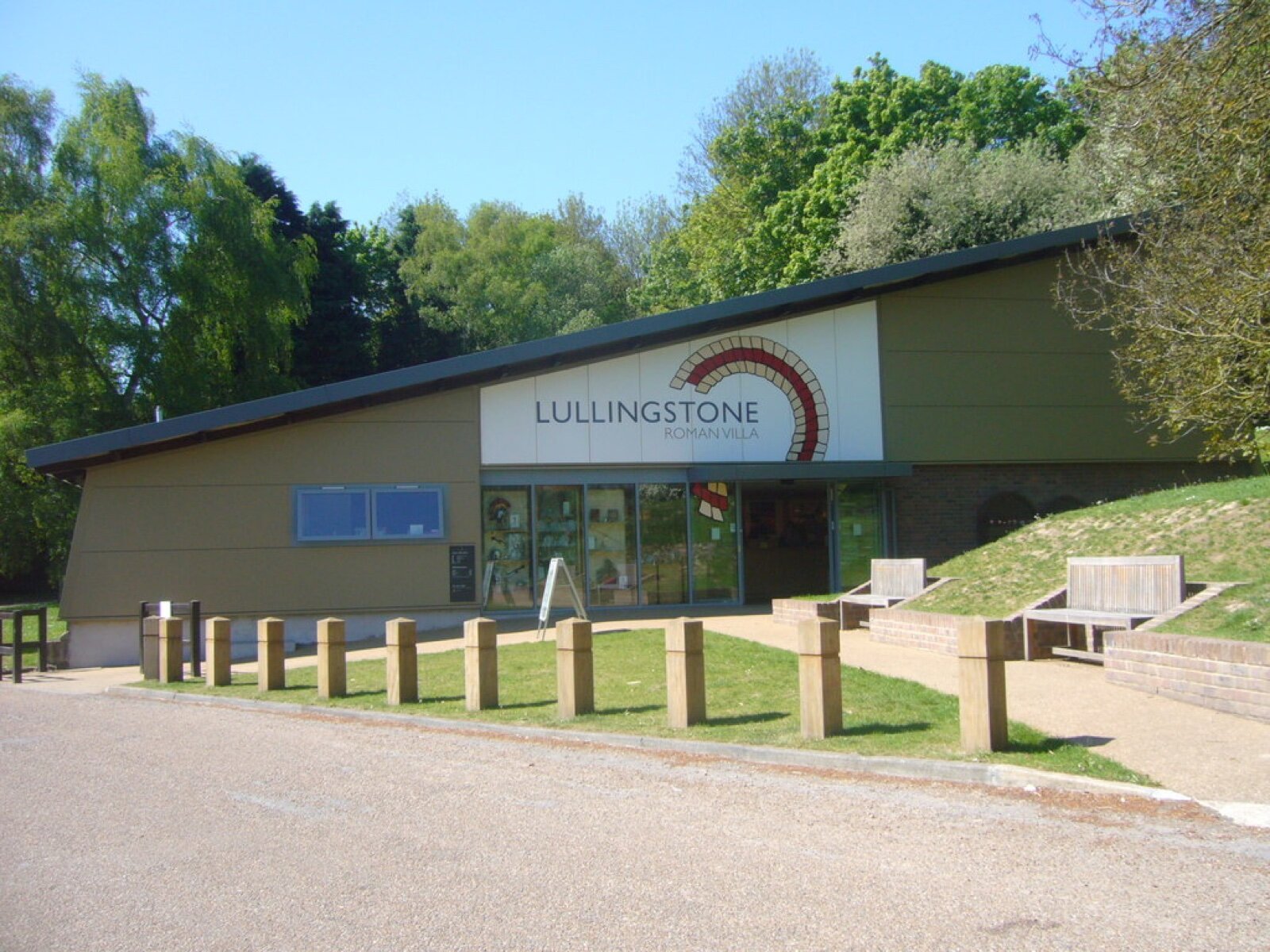
Lullingstone Roman Villa near Eynsford. Photo: Sean Davis, CC BY-SA 2.0, via Geograph.
Lullingstone Roman Villa is one of the finest Roman villa remains in Britain, and it sits just a few minutes from the first tee at Lullingstone Park in the Darent Valley. If you are coming to play golf or walk the country park, it is well worth building in a visit. The excavated house is sheltered under a modern building with raised walkways, so you look down on mosaic floors, a bath suite and a rare early Christian room, all laid out much as the archaeologists found them.
A Roman country house in the Darent Valley
The villa was a working country estate on the banks of the River Darent, built and rebuilt between roughly the late first century AD and the early fifth century, when Roman Britain came to an end. Over those 300-odd years it grew from a modest house into a comfortable villa with heated rooms, mosaics and its own bath complex, before being abandoned and eventually buried and forgotten. What survives gives an unusually complete picture of how a well-off Romano-British family actually lived.
The mosaics
The star attractions are the fourth-century mosaic floors in the dining room. One panel shows Europa being carried off by Jupiter in the form of a bull, framed by a Latin couplet that nods to Virgil's Aeneid. Another shows the hero Bellerophon on the winged horse Pegasus, spearing the monstrous Chimera. They are among the best-preserved mosaics you can see in situ anywhere in the country, and the raised viewing platform lets you take them in from above.
The early Christian room
Lullingstone holds one of the most important pieces of evidence for Christianity in Roman Britain. In the fourth century part of the house was turned into a Christian chapel, its walls painted with figures at prayer and with the chi-rho monogram, an early symbol of Christ. The original wall paintings are now in the British Museum, with reconstructions shown at the villa, but the significance remains: this is one of the earliest known house-churches in the country.
Rediscovery and excavation
The villa lay hidden until the twentieth century. A major excavation led by Lieutenant-Colonel Geoffrey Meates ran from 1949 into the early 1960s and uncovered the house, the mosaics and the painted plaster. The cover building that protects the site today grew out of that work, and the finds it produced reshaped what historians knew about villa life in the South East.
Planning your visit
The villa is at Lullingstone Lane, Eynsford DA4 0JA, and is cared for by English Heritage, so there is an admission charge and opening days are limited out of season. Allow an hour or so to see everything, and check the English Heritage Lullingstone Roman Villa page for current times and prices before you set off.
Make a day of it
The villa combines perfectly with the rest of the valley. Play a round first with our guide to green fees and tee booking at Lullingstone Park, then stretch your legs on the walks in Lullingstone Country Park or read about the wider Lullingstone Country Park. For everything else on the course, start at the Lullingstone Park Golf homepage.
Frequently asked questions
Where is Lullingstone Roman Villa?
The villa is at Lullingstone Lane, Eynsford, Kent DA4 0JA, in the Darent Valley just off the A225. It sits about a ten-minute drive from Lullingstone Park Golf Course, so it pairs well with a round of golf or a walk in the country park.
Who looks after Lullingstone Roman Villa?
It is managed by English Heritage. The excavated remains are protected inside a modern cover building with raised walkways, and there is an admission charge. Check the English Heritage website for current opening times and prices, as it does not open every day out of season.
What is Lullingstone Roman Villa famous for?
It is one of the best-preserved Roman villas in Britain, known for its mosaic floors, including scenes of Europa and the bull and of Bellerophon killing the Chimera, and for a rare early Christian house-church with painted wall plaster, some of the earliest evidence of Christianity in Roman Britain.
How long do you need to visit?
Allow around an hour to an hour and a half to see the villa, read the displays and take in the mosaics and audio guide. Combined with the neighbouring country park or the golf course, it makes an easy half-day out in the Darent Valley.
Is Lullingstone Roman Villa worth visiting?
Yes, especially for anyone interested in Roman Britain or visiting the area to play golf or walk. The completeness of the mosaics and the story of the Christian room make it one of the most rewarding Roman sites in the South East, and it is compact enough to enjoy without a long visit.