Home › Golf Guides
How to Stop Shanking the Golf Ball: What a Shank Is, Five Causes and Four Drills That Fix It
If you want to know how to stop shanking, start with what is actually happening: the ball is hitting the hosel, the round neck where the shaft meets the clubhead, instead of the face. Because the hosel is round, the ball shoots off almost sideways, to the right for a right-handed golfer. A shank is not a mystery or a curse. It is a strike-location problem, and once you know which of a handful of faults is pushing the hosel into the ball, it can be fixed in a single range session.
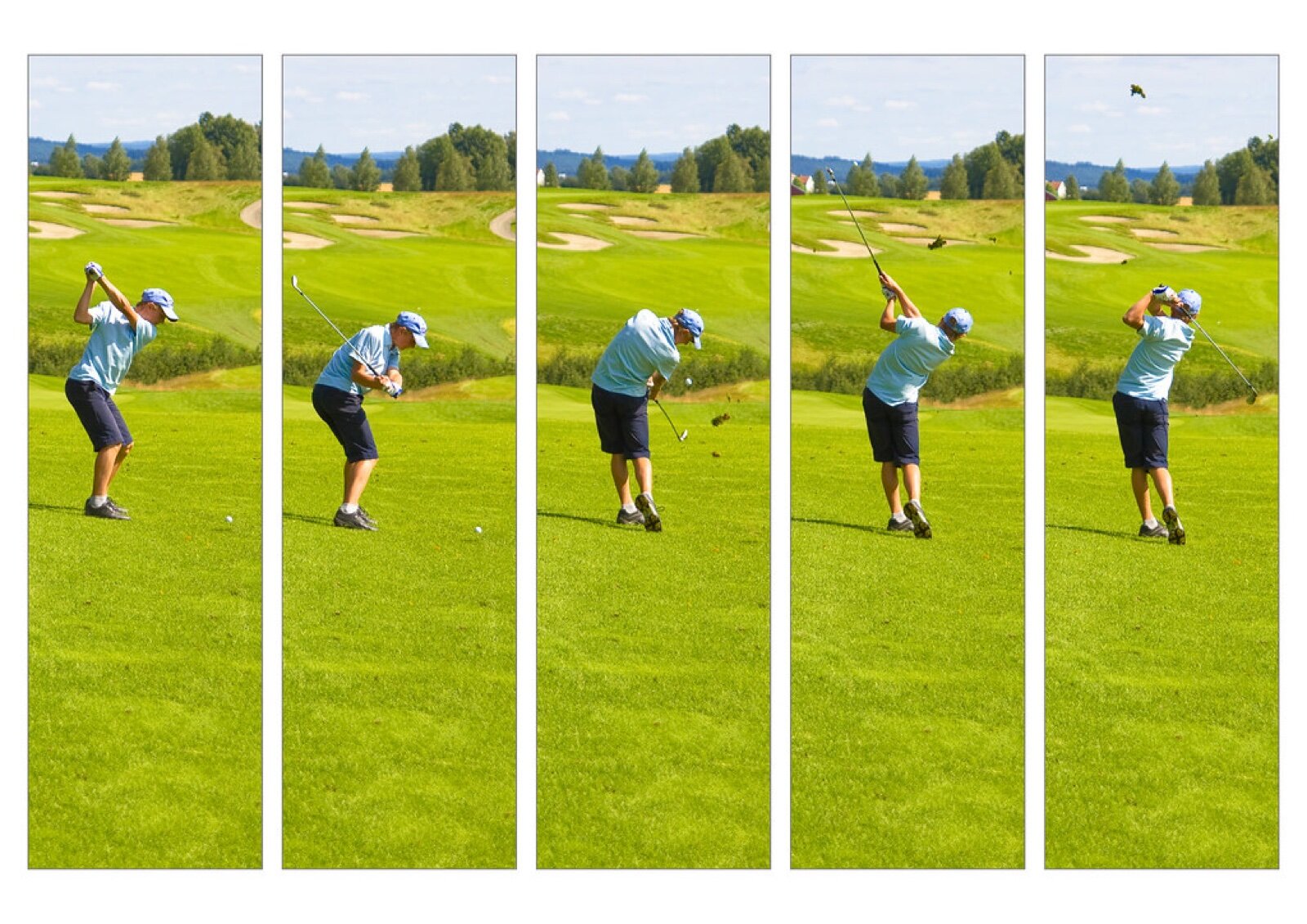
What it is: the ball strikes the hosel, not the face, and flies sharply right (left for left-handers)
Root cause: the clubhead arrives further from your body at impact than it was at address
Quick check: spray the face with foot powder or use impact tape to see where you are striking
Best drill: the two-ball drill, hitting the inside ball without touching the outside one
On the course: stand a touch further from the ball and keep your weight in the middle of your feet
What a shank is, and why it feels so sudden
A shank (also called a socket or a hosel rocket) happens when the ball meets the hosel. On an iron the sweet spot is only a couple of centimetres from the heel, so a strike that drifts a little towards the heel can very quickly reach the hosel. That is why shanks seem to arrive out of nowhere and then come in clusters: the fault that caused one is still there on the next swing, and the anxiety it creates usually makes it worse.
Shanks are more common with short irons and wedges, where the swing is more upright and the ball is closer to your feet, and in short pitches and chips where tension creeps in. They are rare with a driver.
Five common causes of a shank
Every cause comes back to one thing: at impact, the clubhead is further away from you than it was when you set up. Here is what usually pushes it out.
1. Your weight moves onto your toes
The most common cause. If your weight drifts towards your toes during the downswing, your body moves closer to the ball and the hosel goes where the middle of the face should be. Feel your weight in the middle of your feet, over the laces, at address and through the swing.
2. Standing too close to the ball
If you crowd the ball at address there is no room for the club to return, and any extension of the arms in the downswing sends the hosel into it. Your hands should hang roughly under your shoulders, with about a hand's width between the butt of the club and your thighs.
3. An out-to-in swing path with the arms pushing away
When the downswing starts with the shoulders and arms throwing the club outwards, the clubhead travels outside where it started and across the ball. The face is usually open too, adding a slice to the mix. Our guide to fixing a slice covers the same path problem from the other end.
4. Too far from the inside with an open face
Good players shank too, often from the opposite fault: the club drops too far behind them, the body stops turning, the hands race ahead and the face stays open. The heel leads and the hosel catches the ball.
5. Early extension
If your hips move towards the ball in the downswing instead of rotating, your posture rises and your body crowds the space the club needs. You lose the angle you set at address, and the arms are forced outwards to find room.
Find out where you are striking first
Before trying a fix, confirm the problem. Spray the clubface with foot powder spray, or stick on impact tape, and hit five balls. If the marks are all on the heel, or on the hosel itself, you know you are dealing with strike location rather than a face-angle issue. Repeat the test after each drill below and watch the marks move back to the centre.
Four drills that fix a shank
1. The two-ball drill
Set up to a ball as normal, then place a second ball (or a tee or a headcover) just outside it, about a ball's width further from you, in line with the heel. Hit the inside ball without touching the outside one. If you shank, you will hit the outside ball first, which gives instant feedback. Start with half swings with a 9-iron or wedge, then build up.
2. Heels-down balance drill
Hit half shots with your weight deliberately set into your heels, enough that you could wiggle your toes throughout. This exaggerates the opposite of the toe-drift and teaches you to stay back on your feet. Hold your finish for three seconds; if you topple forwards, your weight is still moving towards the ball.
3. Toe-strike practice
Address the ball off the toe of the club, then try to strike it there. Most golfers who are shanking will find they hit the centre of the face. It retrains the image of where the club returns and breaks the fear of the hosel.
4. Bum-to-the-wall drill for early extension
Stand with your backside lightly touching a wall, or an alignment stick pushed into the ground behind you, and make slow practice swings. Keep contact through the downswing; if your hips leave the wall before impact you are extending early. An alignment stick is the easiest way to do this on the range.
What to do if the shanks start on the course
You cannot rebuild a swing between holes, so use a holding pattern until you can get to the range:
- stand slightly further from the ball, by about a centimetre, and address it a fraction towards the toe;
- keep your weight in the middle of your feet and feel it stay there;
- make a smoother three-quarter swing and hold the finish;
- take a club or two more and play away from trouble on the right.
Above all, slow the tempo down. Tension speeds up the arms and throws the club outwards, which is the shank's best friend.
When to get help
If the shanks keep coming back after a few sessions on the drills, book a lesson. A professional can see in two or three swings which cause applies to you, which is far quicker than guessing. The PGA lists qualified professionals, and our guide to your first golf lesson explains what to expect. For the wider basics of iron play, read how to hit irons, and practise the drills on the practice area before your next round.
Frequently Asked Questions
What causes a shank in golf?
The ball hits the hosel because the clubhead arrives further from your body at impact than at address. The usual reasons are weight moving onto the toes, standing too close, an outward arm throw, an open face from the inside, or early extension.
How do I stop shanking my irons?
Check where you are striking with foot powder spray, then use the two-ball drill: hit the inside ball without touching a second ball placed just outside it. Keep your weight in the middle of your feet.
Why do I suddenly start shanking?
Strike location drifts gradually towards the heel until it reaches the hosel, which is close to the sweet spot on an iron. The anxiety after one shank then adds tension, which makes the next one more likely.
Is a shank the same as a slice?
No. A slice curves right because of an open face and out-to-in path. A shank shoots right almost immediately because the ball hit the hosel, not the face.
Can you shank a driver?
It is rare, because the driver face is long and the ball is further from your feet. Shanks are most common with short irons, wedges and short pitches.
More tips and visitor information on the Lullingstone Park Golf Course homepage.