Home › Golf Guides
How to Hit a Hybrid: Ball Position, the Swing That Works From Fairway and Rough, and Fixes for Hooks and Tops
Learning how to hit a hybrid is easier than most golfers expect, because the club is built to forgive. A hybrid has a head like a small fairway wood and the length and lie of an iron, so the best results come from swinging it much like an iron: a normal set-up, a slightly descending blow and a full turn through. Golfers who try to sweep it like a 3-wood or scoop it into the air are the ones who struggle. Here is the set-up, the swing, how to use one from the rough and around the green, and the fixes for the common mishits.
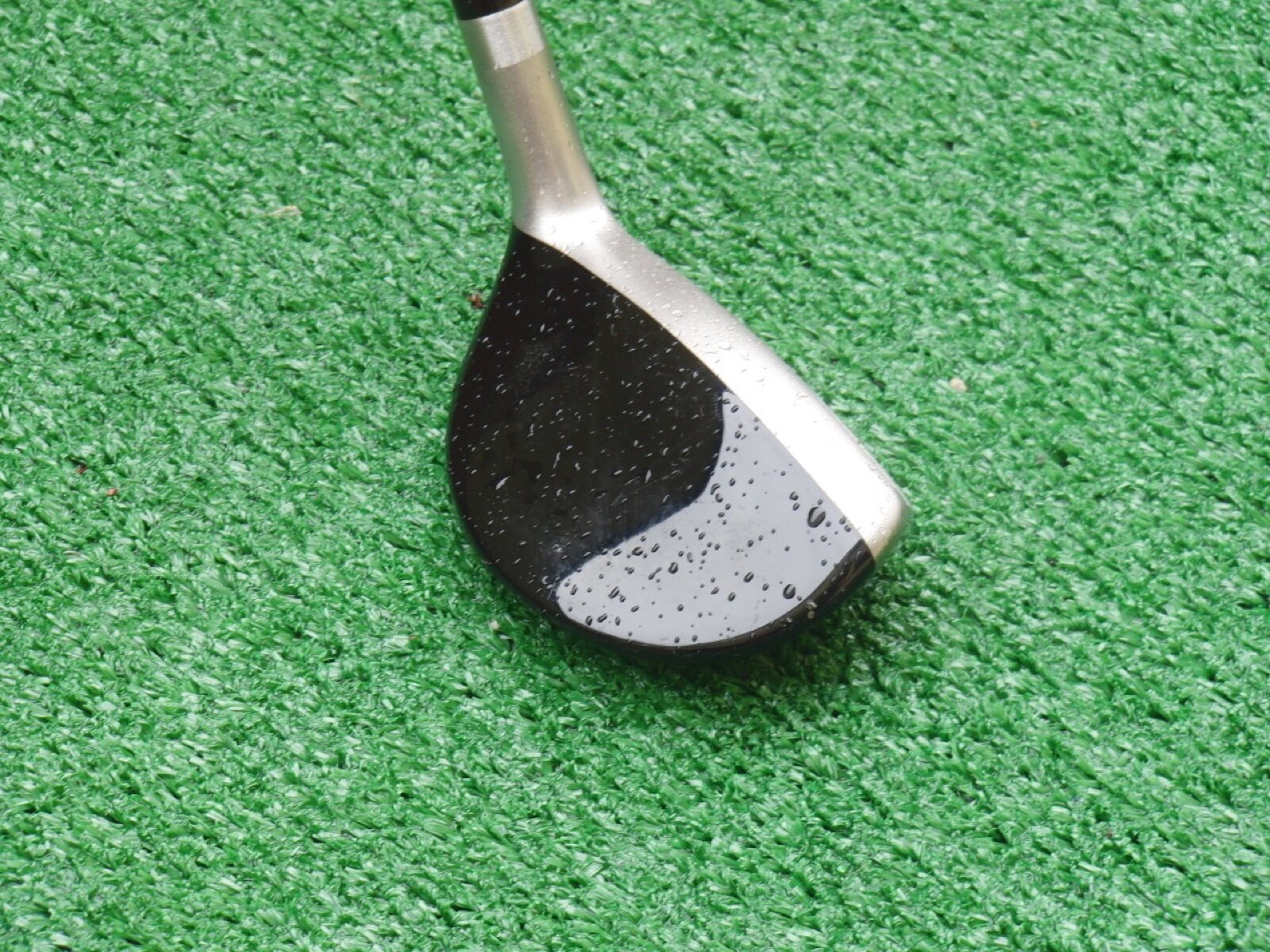

The idea: swing it like an iron, not like a fairway wood.
Ball position: a ball or two forward of centre, about where you play a 5-iron or slightly further forward.
Strike: slightly descending, brushing the turf with a shallow divot or none.
From the tee: tee it very low, or not at all on a good lie.
Best uses: long approach shots, the light rough, par-3 tee shots and bump-and-runs.
Why a hybrid is easier than a long iron
A hybrid replaces a long iron of similar loft. The head is wider from front to back, which moves the centre of gravity lower and further back, so the ball launches higher with less effort and off-centre hits lose less distance. The rounded sole slides through grass rather than digging into it, which helps from the rough and on tight lies. That is why so many club golfers carry a hybrid in place of their 3-iron and 4-iron, and why our hybrid golf clubs guide recommends them for most handicaps.
Because the shaft is shorter than a fairway wood's and the lie is more upright, you stand closer to the ball than with a 5-wood. That is the main reason an iron-style swing suits it.
The set-up
- Grip. Your normal grip, holding the club an inch or so down from the end if it feels long. Our guide to how to grip a golf club covers the basics.
- Stance width. About shoulder width, the same as for a mid iron.
- Ball position. A ball or two forward of centre. Too far forward and you will top it or catch it thin; too far back and the face tends to close and the ball flies low left for a right-hander.
- Weight. Even between the feet, or a fraction more on the lead side.
- Hands. Level with the ball or a touch ahead, not pushed far forward as with a short iron.
- Distance from the ball. Let your arms hang naturally; the sole should sit flat on the ground, with neither the toe nor the heel up.
The swing
Make a normal, full iron swing. Turn your shoulders away, keep a steady tempo and turn through to a balanced finish facing the target. The key is to let the club strike down very slightly, so the ball is hit first and then the turf, with only a shallow mark or none at all. The loft and the low centre of gravity will get the ball up, so there is no need to help it.
Two feels help many golfers. First, think "brush the grass just after the ball", not "lift the ball". Second, swing at about 80% effort: hybrids reward a smooth swing and punish a lunge. If you already play irons well, our guide to how to hit irons describes the same motion; if you like the sweeping fairway wood swing, compare with how to hit a fairway wood.
Hybrid shots worth learning
From the fairway
The standard shot. Play the ball a little forward of centre and swing as above. For most club golfers a hybrid is easier to hit onto a long par-4 green than any iron of the same distance.
From the light rough
This is where hybrids earn their place. The rounded sole cuts through grass that would grab the hosel of a long iron. Move the ball back slightly, about to the middle of your stance, grip a little firmer and make a slightly steeper swing so you reach the ball before the grass. Expect less backspin, so allow for more roll. From deep rough, take a shorter iron or a wedge instead.
From the tee
On a par 3 or a tight par 4, a hybrid is often more reliable than a driver or fairway wood. Tee the ball so it barely sits above the grass, or simply find a good lie. A high tee invites a skied shot.
Around the green
A hybrid makes a very good bump-and-run club from the fringe or short grass a few yards off the green. Grip down near the shaft, stand close with the ball in the middle of your stance and use a putting stroke. The ball pops onto the green and rolls like a putt, which is often more reliable than a chip for nervous chippers. The short game page has more on choosing the club around the green.
Fixing the common hybrid mishits
| Shot | What happens | Usual cause | Fix |
|---|---|---|---|
| Topped | Ball scuttles along the ground | Trying to lift the ball or sweep it, rising up through impact | Hit down slightly; keep your chest over the ball until after impact |
| Hook or pull | Ball curves sharply left (right-hander) | Ball too far back, hands too active, or a hybrid with a closed face or upright lie | Move the ball forward a touch, swing smoothly, check the lie on a fitting |
| Fat | Club hits the ground first, shot comes up short | Weight hanging back, trying to help the ball up | Shift weight to the lead side through impact; check ball position is not too far forward |
| Thin | Low, hard shot off the bottom of the face | Standing up through impact, ball too far forward | Stay in posture; move the ball back half a ball |
| Skied | Ball balloons high and short off the tee | Teed too high, steep chop | Tee it barely above the grass; make a full turn |
Many hybrid hooks are partly equipment: some hybrids are built with a slightly closed face to help golfers who slice. If you hook every hybrid but not your irons, a club fitting to check the lie angle and face is worth it.
Which hybrid replaces which iron?
Lofts vary by manufacturer, so compare loft, not the number on the sole. As a rough guide, a hybrid of about 19 to 21 degrees replaces a 3-iron, one of about 22 to 24 degrees replaces a 4-iron, and one of about 25 to 27 degrees replaces a 5-iron. Check the gap to your longest iron and your shortest fairway wood: you want even distance gaps, not two clubs that go the same distance. Our guides to the 7-wood and the driving iron cover the alternatives.
Practising at Lullingstone Park
Lullingstone Park has a driving range where you can work on these shots. Hit ten balls focusing only on ball position, then ten focusing on brushing the mat just after the ball, then play a few "on-course" shots, picking a target and changing clubs each time. On the course, the longer holes of the 18-hole Championship Course give plenty of chances to use a hybrid into the green. If you want help, our golf lessons guide explains what a coach can fix in one session.
Frequently Asked Questions
Do you hit down on a hybrid?
Slightly. A hybrid works best with an iron-style swing that strikes the ball first and then brushes the turf, leaving a shallow divot or none. Trying to sweep or lift it often leads to topped or thin shots.
Where should the ball be for a hybrid?
A ball or two forward of centre, about where you play a 5-iron or a little further forward. Too far back tends to cause hooks and low shots; too far forward causes tops and thin strikes.
Should you tee up a hybrid?
On a par 3 or a tight hole, yes, but tee it very low so the ball barely sits above the grass. A high tee leads to skied shots.
Why do I hook my hybrid?
Often because the ball is too far back, the hands are too active through impact, or the club has a closed face or an upright lie. If you hook hybrids but not irons, have the lie angle checked at a fitting.
Is a hybrid easier to hit than a long iron?
For most club golfers, yes. The wider head puts the centre of gravity lower and further back, so the ball launches higher and off-centre hits lose less distance, and the rounded sole glides through rough.
More tips and visitor information on the Lullingstone Park Golf Course homepage.