How to Get Out of a Bunker Every Time
Open the face, pick a spot two inches behind the ball, and finish the swing. Plus the Rule 12 traps that cost two shots
Nothing costs a mid-handicap golfer more shots per year than sand. Learning how to get out of a bunker is not really a swing lesson, it is a change of intention: in a greenside bunker you are not trying to hit the ball at all. You are trying to hit the sand under it and let the sand throw the ball out. Once that clicks, the shot stops being a lottery.
This guide covers the greenside splash shot, the very different fairway bunker shot, what to do with a plugged lie, and the parts of Rule 12 that quietly cost players two strokes a round. It is written for the deep, well-lipped bunkers you meet on a parkland course like Lullingstone Park.
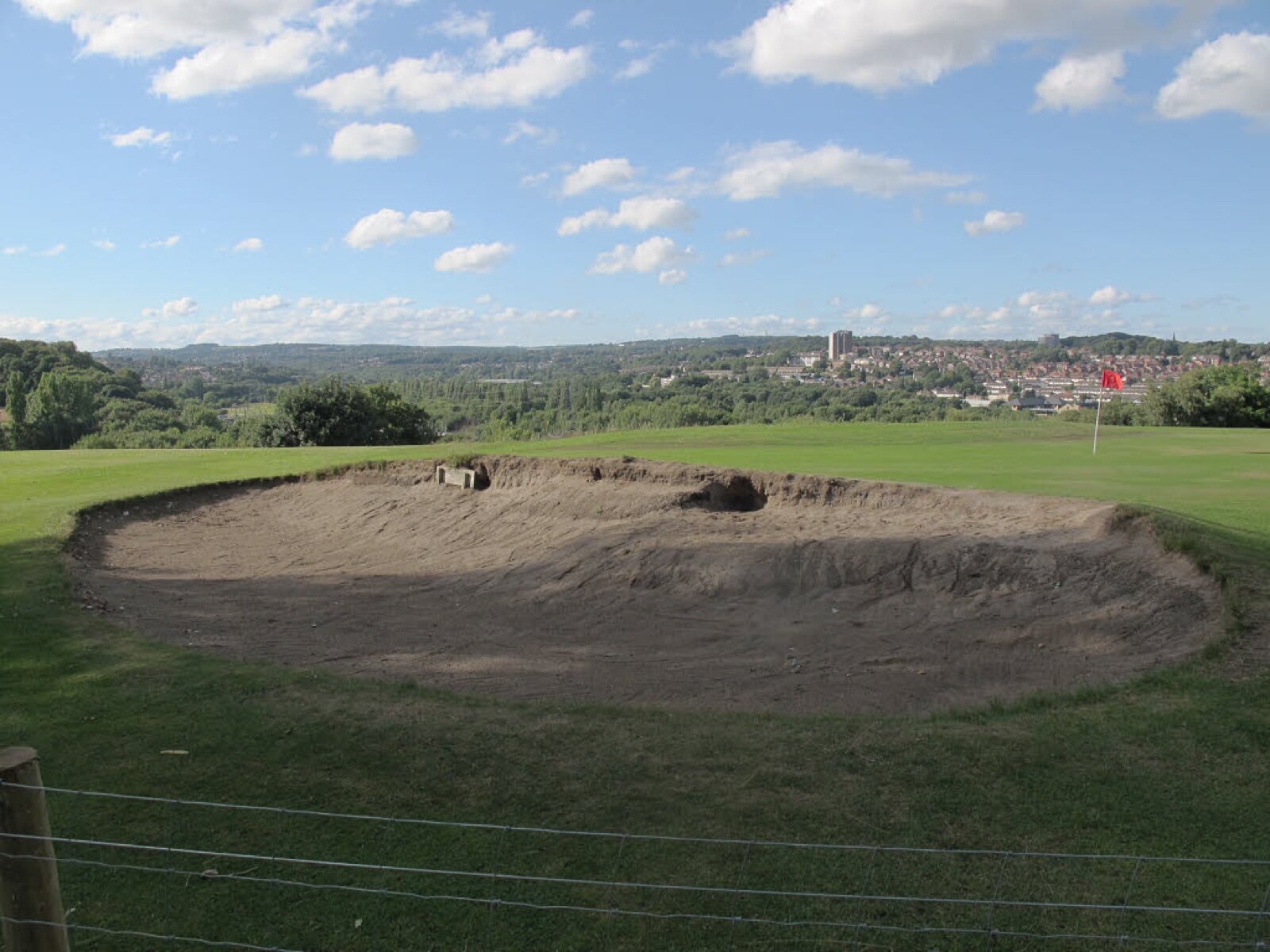
The one idea that fixes most bunker shots
A sand wedge has a rounded sole with a trailing edge that sits lower than the leading edge. That angle is called bounce, and it is what stops the club digging a trench. When the face is open, bounce is at its most effective: the club skids through the sand rather than burying, throwing up a shallow cushion of sand that carries the ball out.
Golfers who cannot escape are usually doing one of two things. They square the face and take a steep, digging swing, so the club stops dead in the sand and the ball dribbles up the face. Or they try to help the ball up, hang back, and catch it thin, sending it over the green. The cure for both is the same: open the face, hit the sand a specific distance behind the ball, and keep the clubhead moving through to a full finish.
The greenside setup, in order
Order matters here, and it is the step most people get wrong.
- Open the clubface first, then take your grip. If you grip the club and then twist your hands to open the face, your hands will quietly return it to square during the swing. Rotate the clubhead open while the club is still lying in your left hand, then close your fingers round it.
- Aim the face at the target, aim your body left of it. With the face open, the club will start the ball right of where your body points, so an open stance restores the balance.
- Dig your feet in. Two reasons: it gives you a stable base in loose sand, and it tells you how firm or fluffy the sand is under the surface. Digging in also lowers you slightly, which naturally makes you take more sand.
- Ball forward, weight left, hands level with or slightly behind the ball. Roughly opposite your front heel. Leaning the shaft forward is what de-lofts the club and kills the bounce.
- Choke down about an inch to compensate for having sunk into the sand.
The swing: pick a spot in the sand and hit it
Stop looking at the ball. Pick a mark in the sand roughly two inches behind it, and make that mark your target. On a standard greenside shot from about 10 to 15 yards, a full, unhurried swing that enters two inches behind the ball and exits in front of it is the whole shot.
Two things must happen after impact. The clubhead has to keep accelerating, because sand slows it dramatically and a decelerating club leaves the ball in the bunker. And you must finish: hands high, chest turned to the target, club still moving. If you can hold a balanced finish, you almost certainly did not quit on it.
Expect the club to make a thump rather than a click. If you hear a click you have caught the ball first, and that ball is now somewhere behind the green.
Controlling distance
Because you never touch the ball, distance in a greenside bunker is controlled by two levers, and neither of them is hitting harder or softer:
- How much sand you take. Entering one inch behind the ball takes less sand and sends it further. Entering three inches behind takes a thick divot of sand and the ball comes out shorter and softer. Keep the swing length the same and change only the entry point.
- How open the face is. A wide open face flies the ball higher and shorter. A face closer to square carries further with more run.
For a long bunker shot of 25 or 30 yards, most amateurs are better off using a gap wedge or a pitching wedge with the same technique than trying to swing a sand wedge harder. Same entry point, same full finish, less loft.
Fairway bunkers are the opposite shot
Everything above applies to a greenside bunker. From a fairway bunker with 120 yards to go, you want to strike the ball first and take almost no sand at all.
- Check the lip before you choose a club. The lip decides the shot, not the yardage. If the ball will not clear it, play sideways or backwards and accept it.
- Take one more club than the distance needs and swing at about 80 per cent. You are buying a shallower, more controlled strike.
- Grip down half an inch and dig your feet in only slightly. Both reduce the chance of hitting sand first.
- Keep the lower body quiet. Feet planted, minimal weight shift, turn the chest. Sliding the hips in loose sand is how you catch it fat.
- Ball slightly back of centre and think of clipping it off the top of the sand.
Plugged lies and the fried egg
A ball that has buried itself, sitting in its own small crater, needs the opposite of the splash shot. Square the face or close it slightly, put the ball back in your stance, and swing down steeply into the sand just behind the ball. You are deliberately using the leading edge to dig the ball out.
Accept in advance that it will come out low and run a long way, and that you cannot control it. Aim at the widest part of the green, not the flag. If the ball is plugged under a steep face with no realistic escape, taking unplayable relief is not a failure of nerve, it is arithmetic.
The rules of the bunker, and where people lose shots
Rule 12 of the Rules of Golf covers bunkers, and it changed in 2019 in a way plenty of club golfers still do not know. Before a stroke at a ball in a bunker, you may now remove loose impediments such as leaves, twigs and stones, and movable obstructions such as a rake or a bottle, including any reasonable touching or movement of sand that happens while you do so.
What you must not do before the stroke is narrower than most people assume. Under Rule 12.2b you must not deliberately touch the sand with a hand, club, rake or anything else to test its condition, and you must not touch the sand with a club in the area right in front of or right behind the ball, in a practice swing, or in your backswing. The penalty is the general penalty: two strokes in stroke play, loss of hole in match play.
Almost everything else is fine. The Rules expressly allow you to dig in with your feet, smooth the bunker to care for the course, put your clubs or bag down in the sand, lean on a club to stay balanced, and even strike the sand in frustration, provided none of it improves the conditions affecting your stroke. The full text is on the R&A's Rule 12 page.
If the ball really is unplayable, Rule 19.3 gives you a choice worth knowing. The normal options cost one penalty stroke but keep you in the bunker. There is also an extra option, back-on-the-line relief outside the bunker, which costs two penalty strokes. On a hole where a third attempt from the sand is a real possibility, two strokes and a clean lie on grass is often the cheaper outcome.
A ten-minute practice drill
Sand is the easiest part of the game to practise, because you get instant feedback from the divot you leave behind.
- The line drill. Draw a line in the sand with your finger, no ball. Set up with the line where the ball would be, and make ten swings, trying to enter two inches behind the line every time. Look at where your divots actually start.
- Dollar bill drill. Same idea with a shape roughly the size of a bank note drawn in the sand. Try to remove the whole shape as one shallow slab. If you are taking a deep, narrow trench, the face is not open enough.
- Then add balls. Ten shots, and count how many finish on the green rather than close to the pin. Getting out every time is the skill that saves the score.
If you are working on the short game generally, this pairs with our guides to chipping and pitching basics and reading a green. Beginners still working out what to carry should read which clubs a beginner actually needs, and you can book a practice session or a round from the Lullingstone Park Golf homepage.
Rake it properly on the way out
Enter and leave the bunker at the low side nearest your ball, not by scrambling down the steep face, which breaks the edge down over time. Rake your footprints and your divot, pushing sand back towards the middle rather than dragging it to the edges, and leave the rake where your club's local policy says. None of this is fussiness: the player behind you deserves the same lie you would want, and a bunker that is raked badly all summer becomes a bunker with no sand at the front and a bank of it at the back. Our note on golf etiquette and pace of play covers the rest.
Frequently asked questions
How do you get out of a bunker every time?
Open the clubface before you take your grip, aim your body slightly left, dig your feet in, put the ball forward in your stance, and swing at a spot in the sand about two inches behind the ball rather than at the ball itself. Keep the clubhead accelerating and finish with your chest facing the target. Consistency comes from the entry point and the finish, not from swinging harder.
How far behind the ball should you hit in a bunker?
About two inches for a standard greenside shot. Closer to one inch takes less sand and the ball flies further; three inches takes a thicker cushion of sand and the ball comes out shorter and softer. Change the entry point rather than the length or speed of the swing, because that is what makes distance repeatable.
Can you touch the sand in a bunker?
Sometimes. Under Rule 12.2b you must not touch the sand to test its condition, or touch it with a club right in front of or behind the ball, in a practice swing, or in the backswing. But you may dig in with your feet, smooth the sand to care for the course, set clubs down in the bunker, lean on a club for balance, and since 2019 remove loose impediments such as leaves and stones.
What is the penalty for grounding your club in a bunker?
The general penalty: two strokes in stroke play, or loss of hole in match play. It applies to touching the sand with the club in the area right in front of or right behind the ball before your stroke, and to touching sand in a practice swing or during the backswing.
Which club should I use from a bunker?
A sand wedge, usually 54 to 56 degrees, for greenside shots up to about 20 yards, because its bounce is designed for exactly this. For longer bunker shots of 25 to 30 yards, use the same technique with a gap or pitching wedge instead of trying to hit the sand wedge harder. From a fairway bunker, pick the club by the height of the lip first and the yardage second.
What do you do with a plugged ball in a bunker?
Square or slightly close the face, move the ball back in your stance, and swing steeply down into the sand just behind it so the leading edge digs the ball out. It will come out low and run, so aim for the fattest part of the green rather than the flag. If it is plugged under a steep face with no way out, taking unplayable relief under Rule 19.3 is often the cheaper option.
Sources
- R&A, Rules of Golf, Rule 12 (Bunkers): randa.org
- R&A, Rules of Golf, Rule 19 (Unplayable Ball): randa.org
Rules checked on 23 August 2026.