Golf Lessons for Beginners: What to Expect from Your First PGA Session
Half an hour, three things checked before you swing, and one change to take away. What a first lesson really involves, and what it costs
Golf lessons for beginners go wrong in a predictable way: someone books an hour, spends it being told six things, and leaves with a worse swing than they arrived with. Thirty minutes is the right length for a first session. A beginner can hold one change in their head, not six, and the whole point of a first lesson is to leave with one thing to practise and a clear idea of what good looks like.
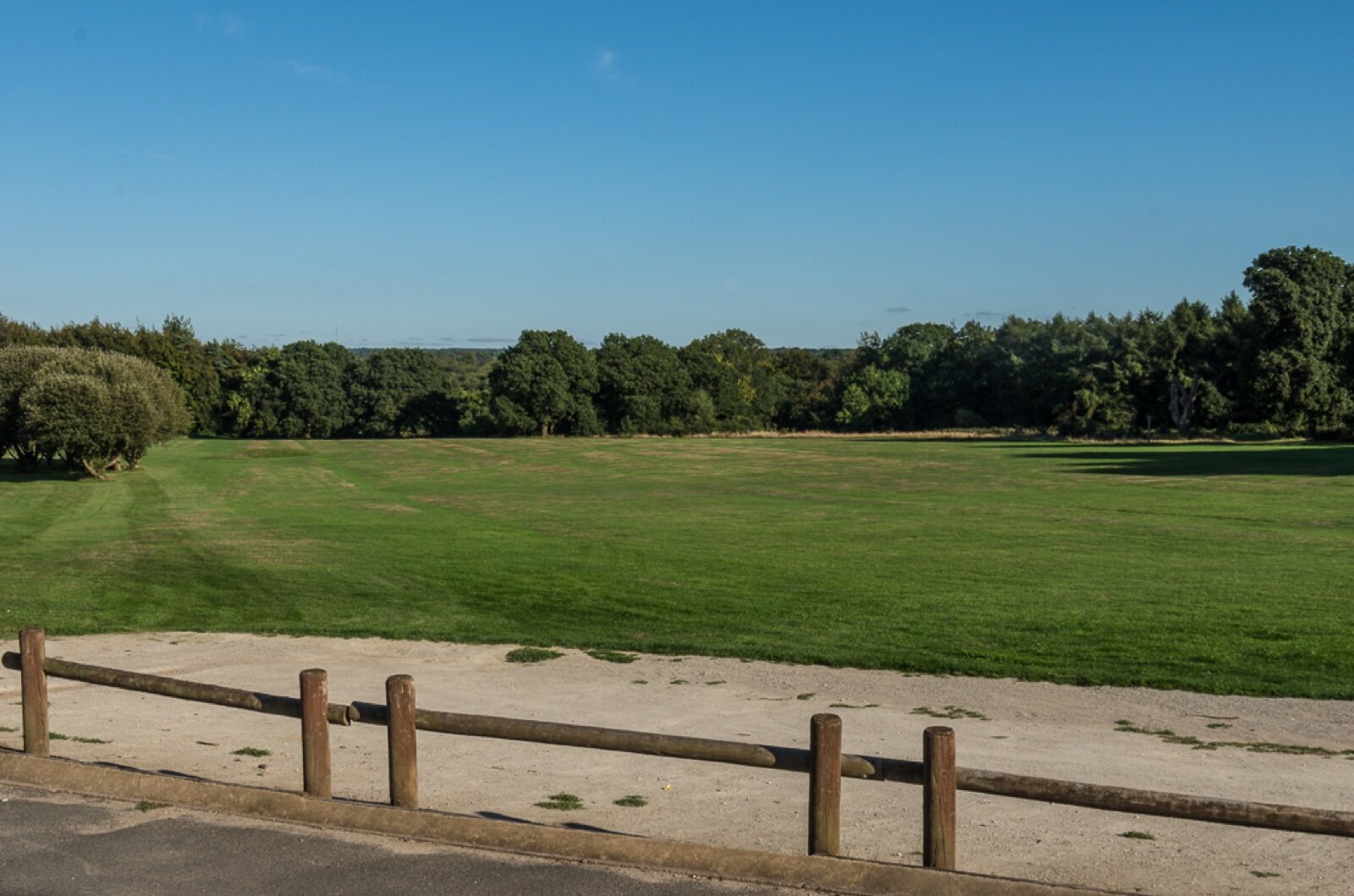
Lullingstone Park golf course in the Darent Valley. Photo: Lullingstone Park golf course by Ian Capper (CC BY-SA 2.0), via Geograph.
What a coach looks at before you swing
Almost nobody's first lesson starts with the swing. It starts with three static things, because they determine most of what happens afterwards and they are the only parts of golf you can fix without moving.
Grip. How the hands sit on the club decides where the clubface points at impact, which decides which way the ball curves. Most beginners hold the club in the palms rather than the fingers, and the face arrives open. Ten minutes on grip removes a slice that would otherwise take months of swing changes.
Posture. Bent from the hips, not the waist, with the arms hanging. Stand too upright and the club has nowhere to go but around your body. Slump and you will hit the ground before the ball.
Alignment. The single most common fault in beginner golf, and the one that produces the most confusing results. If the feet, hips and shoulders point 20 yards right of target, a perfectly struck shot goes 20 yards right of target, and the player then invents a compensation to bring it back. Coaches use alignment sticks on the ground for exactly this reason.
Then you hit some balls, usually with a 7-iron off a tee or a mat, while the coach watches without saying much. Resist the urge to apologise for every shot. Bad shots are the diagnostic information; a first lesson where you happen to strike it well is less useful than one where your normal miss shows up.
Why 30 minutes beats an hour
Two reasons. The first is attention. Motor learning research is consistent on the point that new movement patterns are learned in short, focused bouts with rest, not in long grinding blocks, and anyone who has watched a beginner's 45th ball can see it happening.
The second is hands. A player who has never swung a club regularly will get sore forearms and blisters inside half an hour, and a tired grip is a changing grip, so the second half of the lesson is spent coaching a swing you will not have tomorrow.
Book 30 minutes. Then book range time for the following week, on your own, to work on the one thing you were given. The lesson is where you find out what to practise; the practice is where the improvement happens. Our guide to the practice facilities covers the 20-bay covered range and short-game area at Lullingstone Park.
What lessons cost, and what a PGA badge means
Coaching prices vary by region and by the coach, so treat these as bands rather than a price list, and ask your local pro shop for its own rates. An introductory 30-minute session is commonly £25 to £40. A full hour with a PGA professional typically runs from about £30 to £90, with the top of that range reflecting London clubs and sessions using launch monitors or video. Group sessions are usually £12 to £30 a head. Blocks of five or six lessons are almost always cheaper per session than booking them one at a time.
Look for the letters PGA next to the coach's name and understand what sits behind them. Becoming a PGA Professional in Great Britain and Ireland means completing a three-year training programme leading to a Foundation Degree in Professional Golf Studies awarded by the University of Birmingham, delivered largely by distance learning with residential blocks at the PGA National Training Academy at The Belfry. Before membership is granted a candidate also has to pass the PGA Coaching Assessment, hold two external coaching qualifications, a first aid certificate, safeguarding training and an up-to-date DBS disclosure, and to have played in a minimum of 21 PGA-recognised tournaments.
That is a meaningful bar, and it is why the qualification is worth asking about. Golf coaching is not a regulated profession in the UK, and anyone may advertise lessons.
Group course or one to one?
For an outright beginner, a group beginner course is often the better first purchase. It is cheaper, it is far less exposing than standing alone in front of a professional on your first day, and it produces something a private lesson cannot: three or four other people at your exact standard who will play nine holes with you.
Move to one-to-one lessons when you have a specific, repeatable miss. That is the moment a coach's eye is worth the money, because the fix is personal to your swing and no group instruction will find it. Plenty of golfers alternate: a private lesson to set a direction, then a few weeks of practice, then another.
What to bring, and what to do next
You do not need clubs. Most coaches lend them for a first lesson, and a fitting is better done after a few months when your swing has settled into a shape worth measuring. What you do need is flat shoes with some grip, clothes you can turn in, and a glove if you have one. Confirm the club situation when you book.
Afterwards, write down the one thing. Coaches say a great deal in half an hour and beginners remember roughly none of it by Thursday. A note on your phone, in your own words, is worth more than the whole lesson without it.
Then get the practice cheap. Range balls and a short-game area cost a fraction of a lesson, and chipping and putting is where the beginner scoring gains actually live: see chipping and pitching basics and how to read a green. When you are ready for the course, the nine-hole Valley Course is the natural first outing, and our green fees and tee booking guide explains how to get on it. What you actually need in the bag is covered in what golf clubs a beginner needs, and more guides are on the Lullingstone Park homepage.
Sources
- The PGA, becoming a PGA Professional and the training programme: pga.info
- University of Birmingham, Professional Golf Studies FdSc: birmingham.ac.uk
Lesson prices are indicative UK ranges gathered from published coaching rates in August 2026, not a quote. Ask your local professional for current prices.
Frequently asked questions
How long should a first golf lesson be?
Thirty minutes. A beginner's capacity to absorb swing information runs out long before an hour does, and the second half of a long first lesson is usually spent repeating the first half while tired. Book 30 minutes, go away and practise one thing, then come back.
What happens in a first golf lesson?
Very little swinging, at first. A good coach starts with grip, posture and alignment, because those three decide most of what the club does before you have moved it. Expect some hitting from a tee or a mat with a mid-iron, one or two changes at most, and a note of what to work on.
How much do golf lessons cost in the UK?
Prices vary by region and by the coach's experience, but as a rough guide an introductory 30-minute session is commonly £25 to £40, a full hour with a PGA professional £30 to £90, and a group session £12 to £30 a head. Blocks of five or six lessons are usually discounted. Ask your local pro shop for its own rates.
What is a PGA professional, and does it matter?
It matters. A PGA Professional in Great Britain and Ireland has completed a three-year training programme leading to a Foundation Degree in Professional Golf Studies awarded by the University of Birmingham, plus a coaching assessment, two external coaching qualifications, a first aid certificate, safeguarding training and a DBS check, and has played in at least 21 PGA-recognised tournaments.
Do I need my own clubs for a first lesson?
No. Most coaches keep clubs to lend for beginner sessions, and it is better to be fitted after a few lessons than before, once your swing has a shape. Wear flat shoes with grip and clothes you can turn in. Confirm when you book.
Are group lessons or individual lessons better for beginners?
Group lessons are cheaper, less exposing and good for learning the basics and meeting people to play with. Individual lessons fix your specific fault faster. A common route is a beginner group course first, then one-to-one sessions once you know what your miss is.
Can I take golf lessons at Lullingstone Park?
Yes. PGA-qualified professionals are based at the centre and offer tuition for all levels plus club fitting, and there is a 20-bay covered floodlit driving range and a short-game area to practise on afterwards. The centre is at Parkgate Road, Chelsfield, Kent BR6 7PX.