Home › Golf Guides
Golf Caddy Guide: What a Caddie Does, What the Rules Allow and When to Use One
A golf caddy, or caddie in the spelling the Rules of Golf use, carries your clubs and is the one person on the course who is allowed to give you advice during a round. That freedom comes with limits: the Rules set out what a caddie can always do, what they can do only when you ask each time, and what they can never do for you, and every penalty a caddie earns lands on your card. This page explains the role, the rules in plain English, when hiring or taking a caddie is worth it, and how to caddie well for a friend.

The rule: Rule 10.3 of the Rules of Golf, written by The R&A and the USGA.
One at a time: you may have only one caddie at any one time, though two or more players can share one.
Advice: your caddie is the only person (other than a partner in team formats) you may ask for advice during a round.
Never allowed: a caddie cannot decide to take relief, drop a ball for you or concede a hole.
Your problem: if your caddie breaks a rule, you take the penalty.
What a golf caddy does
At its simplest the job is to get your clubs round the course: carrying the bag, pulling a trolley or driving a cart. A good caddie does much more than that. They keep the clubs and grips clean and dry, read yardages and the wind, help you pick a club and a target, read putts, rake bunkers and repair pitch marks, and keep you calm when the round starts to go wrong. Professional tour caddies also walk the course before the event, chart the greens and keep notes on every shot.
Caddie and caddy are both accepted spellings in British English. The Rules of Golf use caddie throughout, and the word is usually traced to the French cadet, a younger son or junior.
What the Rules let a caddie do
Rule 10.3b sorts a caddie's actions into three groups. This summary is taken from the current Rules text on The R&A's website.
Always allowed
- Carry, transport and handle your clubs and other equipment, including driving a cart or pulling a trolley.
- Search for your ball.
- Give you information, advice and other help before you play a stroke.
- Smooth bunkers and take other actions to care for the course.
- Remove sand and loose soil and repair damage on the putting green.
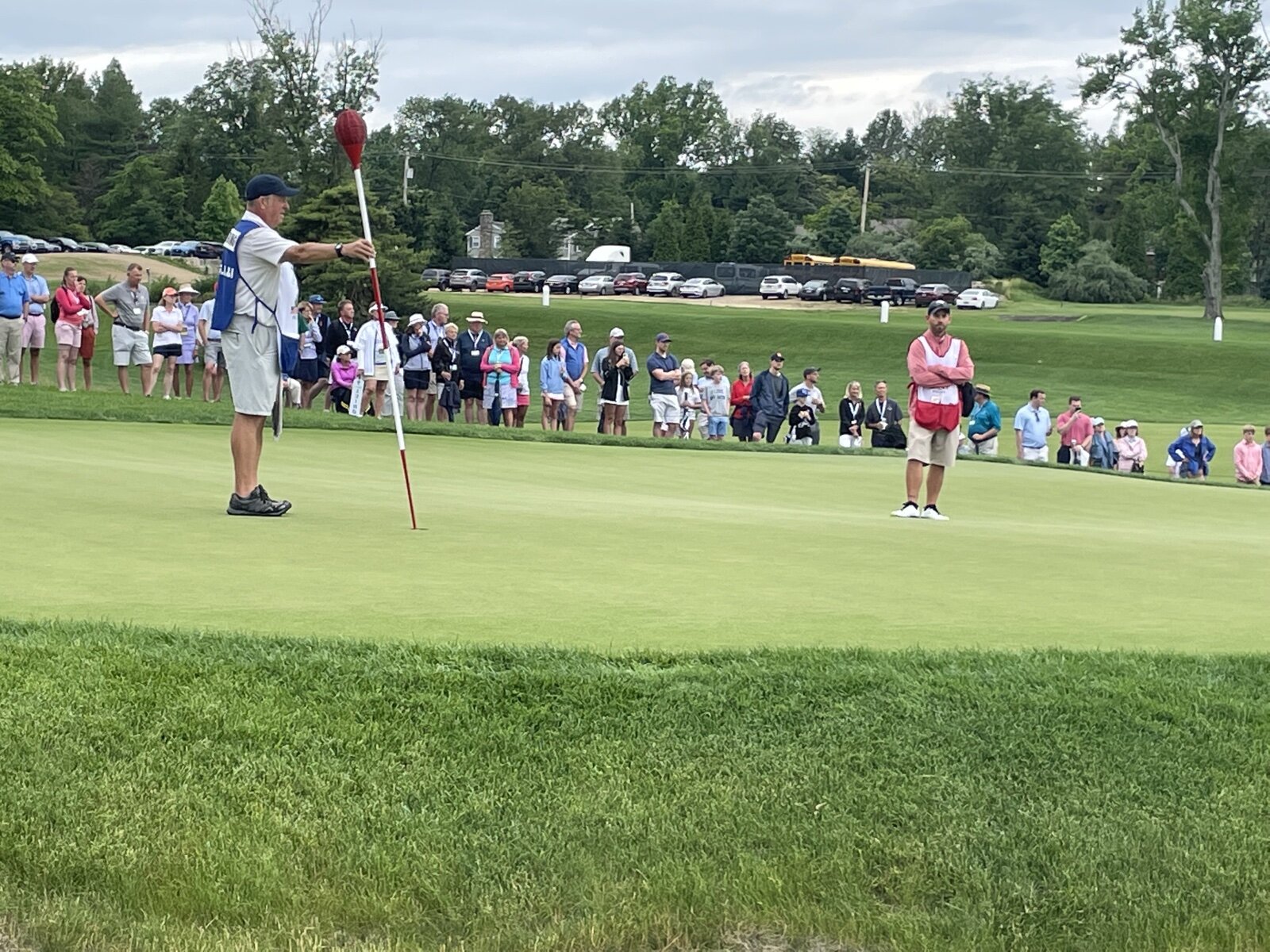
- Remove or attend the flagstick.
- Mark, lift and replace your ball on the putting green, and clean it.
- Lift your ball once it is reasonable to conclude you are going to take relief.
- Remove loose impediments, such as leaves and twigs, and movable obstructions.
Allowed only with your say-so each time
Some actions need your specific authorisation, given for that occasion rather than once for the whole round. A caddie may restore conditions that were made worse after your ball came to rest, and may lift your ball anywhere other than the putting green when a Rule requires it to be replaced, but only if you have asked them to.
Never allowed
- Concede a stroke, a hole or the match, or agree the match score with your opponent.
- Replace a ball, unless the caddie was the one who lifted or moved it.
- Drop or place a ball when you take relief.
- Decide to take relief, such as declaring a ball unplayable. The caddie may advise it, but the decision is yours.
Lining you up: the restricted area
A caddie may help with your line before you play, but there are limits once you get over the ball. Under Rule 10.2b, from the moment you begin taking your stance (at least one foot in position) until you play, your caddie must not deliberately stand on or close to the line behind your ball to help you aim. They also must not set an object down to show you a line, and while the stroke is being made they must not stand where you are playing towards or point out a spot. Standing close to the hole to attend the flagstick is fine.
Penalties: why it is your responsibility
Rule 10.3c makes you responsible for your caddie's actions during the round and while play is stopped, but not before or after it. If your caddie does something that would be a breach if you did it, you get the penalty. Whatever your caddie knows is also treated as known to you. Having two caddies helping you at once costs the general penalty, two strokes in stroke play or loss of the hole in match play, for each hole where it happened.
The person carrying your umbrella or a bag of sandwiches is not your caddie unless you name them as one or they handle your clubs. That matters because you may not ask friends walking along with you for advice. A committee can also bring in a Local Rule that bans caddies, requires them or limits who can caddie, which is common in junior events, so check the competition conditions.
When is a caddie worth having?
Most golfers in England never use one. At public pay and play courses such as Lullingstone Park you carry your own bag, use a trolley or hire a buggy; our page on buggy and trolley hire covers the options here. A caddie is worth considering when:
- You are playing a famous course for the first time. Many of the best-known links courses in Scotland and Ireland have caddie services. A local caddie knows where the hidden bunkers are, which way the putts break and how the wind plays, which can save several shots and makes the day far more enjoyable. Fees and tipping customs are set by each club, so check its own website when you book.
- You are walking a long or hilly course and want to save your legs.
- You are playing a big competition. A friend on the bag who knows your game can keep you to your plan, as long as you both know the rules above.
- A junior wants to learn the game. Caddying for a parent or a club member is a traditional way into golf and teaches etiquette, course care and how good players plan a hole.
How to caddie for a friend
- Agree the job first. Ask whether they want advice or just a bag carrier. Many players want help with yardages and lines but would rather choose their own clubs.
- Stand still and stay quiet. Keep out of their eyeline and away from the line behind them once they take their stance.
- Look after the course. Rake the bunker, replace or fill divots and repair pitch marks. A pitch mark repairer and a towel are the two things worth carrying.
- Watch every shot. Mark where each ball finishes against a tree or bush, which speeds up searches and helps pace of play.
- On the green, you may mark, lift, clean and replace their ball and attend the flagstick, but never drop a ball for them or decide on relief.
- Stay positive. After a bad shot, talk about the next one.
Practise the decisions without a caddie
A caddie's real value is in the thinking: club selection, where to miss, and when to play safe. You can build that yourself. Learn your carry distance with each club (our guide to how many clubs to carry helps you fill the gaps), use a GPS or rangefinder for yardages, and read up on the basic rules so you know your relief options without having to ask. When you are ready to put it into practice, book a round at Lullingstone Park through our green fees and tee booking page.
Sources: The R&A, Rules of Golf, Rule 10: Preparing for and Making a Stroke; Advice and Help; Caddies.
Frequently Asked Questions
What does a golf caddy do?
A caddie carries or transports your clubs, helps find your ball, gives advice on yardages, club choice and putting lines, rakes bunkers, attends the flagstick and can mark, lift, clean and replace your ball on the green.
Can a caddie drop the ball for a player?
No. Under Rule 10.3b a caddie must not drop or place a ball when you take relief, and must not decide to take relief for you, although they may advise you to.
Can I have two caddies?
Not at the same time. You may change caddies during a round, but having more than one helping you at once costs the general penalty for each hole where it happened.
Who gets the penalty if my caddie breaks a rule?
You do. Rule 10.3c makes the player responsible for the caddie's actions during the round and while play is stopped, but not before or after the round.
Can my caddie stand behind me to line me up?
Only before you take your stance. Once you have at least one foot in position, your caddie must not deliberately stand on or near the line behind your ball to help you aim.
Is it caddy or caddie?
Both spellings are accepted in British English. The Rules of Golf use caddie.