Home › Golf Guides
Golf Alignment Sticks: Seven Drills, and When the Rules Stop You Using Them
Golf alignment sticks are the cheapest training aid that genuinely changes how you hit the ball. Two thin rods on the ground show where you are really aiming, where the ball sits in your stance and which way the club is swinging, all things that are almost impossible to judge by eye. This page gives seven drills, from basic aim to swing plane and putting, explains what the Rules of Golf say about using them on the course, and sets out a 20-minute practice session to make the changes stick.
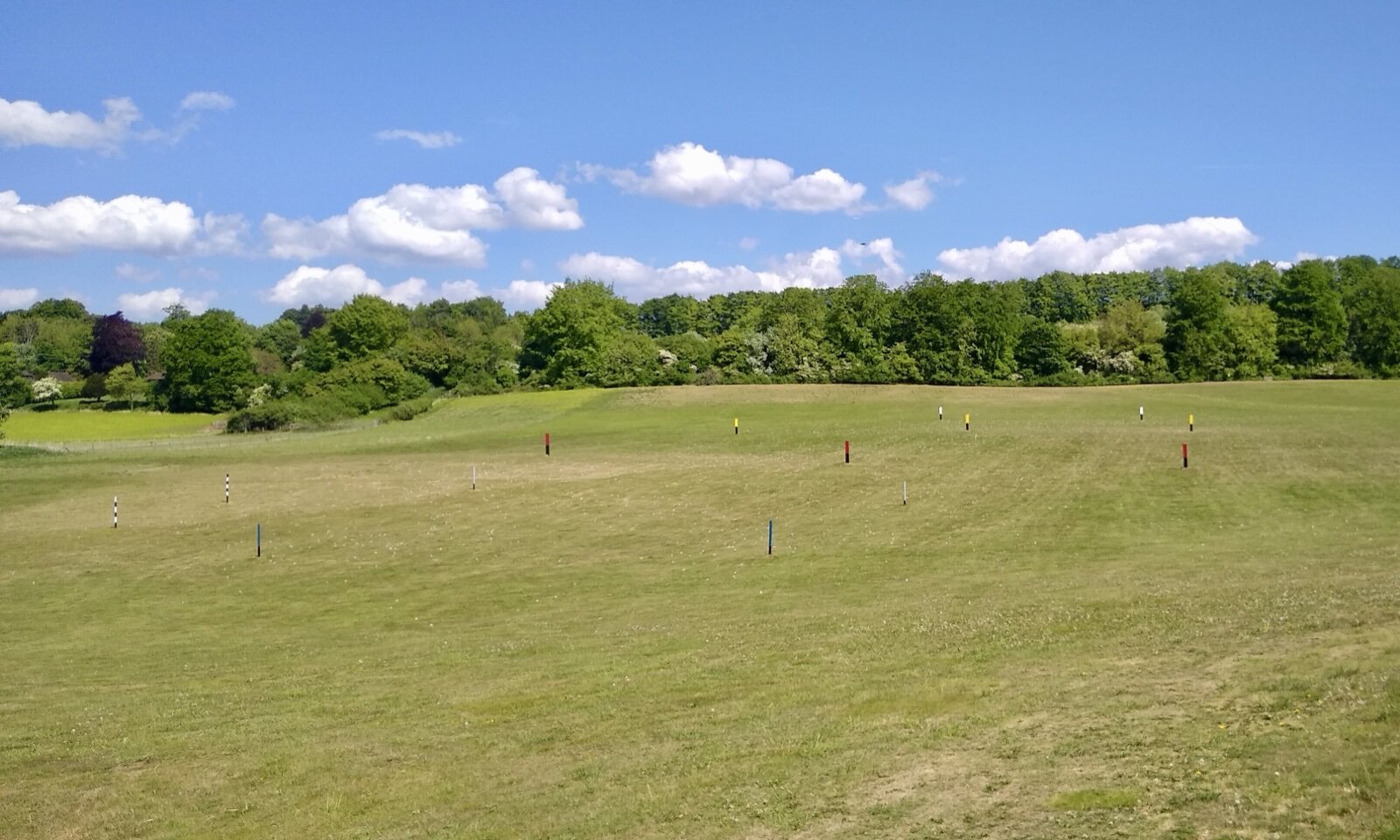

What they are: thin rods, usually fibreglass and around 120cm long, that you lay on the ground or push into it as a guide.
Best use: checking aim, ball position and swing path on the range and the practice green.
On the course: setting one down to help you aim or take your stance breaks Rule 10.2b(3), a two-stroke penalty in stroke play.
How many: two covers almost every drill; a third helps with swing plane and putting gates.
Why alignment matters more than most golfers think
Most club golfers aim right of where they think they are aiming (left, for left-handers). It is hard to judge from the side, because you look at the target with your head turned, and the eye is a poor judge of parallel lines. The usual result is a swing that compensates: a golfer aimed right pulls the club across the ball to get it back on line, and that out-to-in path is a common cause of the slice. Fix the aim and part of the swing fault often goes with it. Our page on fixing a slice goes into the path side of that.
An alignment stick gives you a straight, fixed line on the ground to check against. Used properly, it trains your eye so that you set up square when the stick is not there.
Seven drills with golf alignment sticks
1. The railway track (aim and stance)
Pick a target. Lay one stick on the ground pointing at it, just outside the ball. Lay a second stick parallel, closer to your toes. The outer stick shows the club face line, the inner one your feet. Set up with your toes along the inner stick, then check that your knees, hips and shoulders match it. Stand behind the ball between shots and look down the sticks: they should point at the target and slightly left of it respectively, not both at the flag.
2. Ball position
Lay one stick along your toe line and push the second into the ground, or lay it on the ground, at right angles, pointing at the ball. This shows exactly where the ball sits in your stance. A common guide is the centre of the stance for short irons, moving forward with longer clubs until the ball is opposite the inside of the lead heel with a driver. Hit a few balls with each club and note where your best strikes came from.
3. Swing path gate
Push two sticks into the ground just outside the ball and just behind it, angled slightly so they form a gate the club must pass between, or lay one stick on the ground pointing slightly right of target (for a right-hander) as a path line. Swinging along it encourages an in-to-out path that helps turn a slice into a straight shot or a draw. Start with half swings and a short iron.
4. Swing plane guide
Push a stick into the ground behind the ball, along the line of the club shaft at address and angled at the same slope. On the backswing and through-swing, the club should move along a similar plane without hitting the stick. If it hits the stick going back, the club is too far inside; if it goes well above it, it is too steep. Have someone watch from behind if you can.
5. Hip and shoulder turn
Hold a stick across the front of your hips, or across your chest with your arms crossed, and make a slow backswing turn without a club. The stick shows how far you turn and whether you tilt or sway. Then push one stick into the ground just outside your lead hip: on the through-swing your hip should move towards it and turn, not slide past it.
6. Chipping lean
Slide a stick down the grip of your wedge so that it sticks up alongside your lead side. Make small chipping strokes. If the stick touches your side through impact, your hands are leading and the shaft is leaning forward, which is what you want. If it swings away from your body, your wrists are flicking at the ball. Our chipping and pitching basics page covers the set-up behind it.
7. Putting gate and line
On a flat practice green, lay a stick on the ground pointing at the hole from about two metres, and putt along it, with the putter head moving parallel to the stick. Then lay two sticks either side of the ball, just wider than your putter head, as a gate. Making the stroke without touching either stick trains a square, centred strike. For reading slopes, see how to read a green.
Alignment sticks and the Rules of Golf
You can carry alignment sticks in your bag during a round, but using them is a different matter. Rule 10.2b(3) says a player must not set an object down to help with aiming or taking a stance for the stroke. That includes laying a stick, or a club, on the ground along your toe line before a shot. The penalty is the general penalty: two strokes in stroke play, or loss of the hole in match play. You cannot avoid it by picking the object up before you play.
| Situation | Allowed? |
|---|---|
| On the range or practice ground | Yes, any drill |
| Carrying sticks in your bag during a round | Yes |
| Laying a stick down to aim before a shot on the course | No: general penalty |
| Laying a club along your feet to check aim before a shot | No: same rule, same penalty |
The point of practice with the sticks is to build an aim you trust without them. On the course, use an intermediate target instead: pick a mark on the ground a metre or so ahead of the ball on your target line, set the club face to it, then set your feet parallel. Our golf rules for beginners covers the other rules that catch new players.
Choosing alignment sticks
- Material. Most are fibreglass: light, flexible enough not to snap if you clip one, and easy to push into soft ground. Cheaper plastic rods break more easily.
- Colour. Bright colours are easier to see at your feet and from behind. Two different colours help tell the club line from the foot line.
- Clips and covers. Some sets come with a clip to join two sticks at right angles, or a tube that keeps them together in the bag. Useful, but not essential.
- Range mats. On a mat you cannot push a stick into the ground, so plane and gate drills are harder. A grass practice area gives you every drill.
A 20-minute practice session
- 5 minutes: railway track set-up with a mid iron, checking aim behind every ball.
- 5 minutes: swing path gate with half swings, building to full swings.
- 5 minutes: ball position check with a hybrid or fairway wood and the driver.
- 5 minutes: remove the sticks and hit balls to the same target, using an intermediate mark as you would on the course.
That last step matters most. If your shots go astray without the sticks, put them back for a few balls and try again. For a longer plan, see our practice plan to lower your handicap, and our page on the practice area at Lullingstone Park.
Frequently Asked Questions
What are golf alignment sticks used for?
They give you a straight line on the ground to check your aim, ball position and swing path in practice. They can also be pushed into the ground as a guide for swing plane, hip turn and chipping drills.
Are alignment sticks legal during a round?
You can carry them, but you cannot use them to aim. Rule 10.2b(3) bans setting an object down to help with aiming or taking a stance. The penalty is two strokes in stroke play, or loss of the hole in match play.
How many alignment sticks do I need?
Two covers almost every drill: one for the target line and one for your feet or ball position. A third is useful for swing plane drills and putting gates.
Can I lay a club on the ground to check my aim?
Only in practice. Laying a club along your feet before a shot on the course breaks the same rule as an alignment stick and carries the same general penalty.
How long are golf alignment sticks?
Most are around 120cm, or 48 inches, long. That is long enough to show a clear line past the ball and your feet, and to push into soft ground for plane and gate drills.
Sources: The R&A, Rules of Golf, Rule 10.2b(3) (checked 15 October 2026). Questions about the practice facilities? Call the pro shop on 01959 533793. Back to the Lullingstone Park Golf Course homepage.