18-Hole Championship vs 9-Hole Valley: Which Lullingstone Park Course Should You Play?
A head-to-head guide for visitors deciding which of the two courses to book
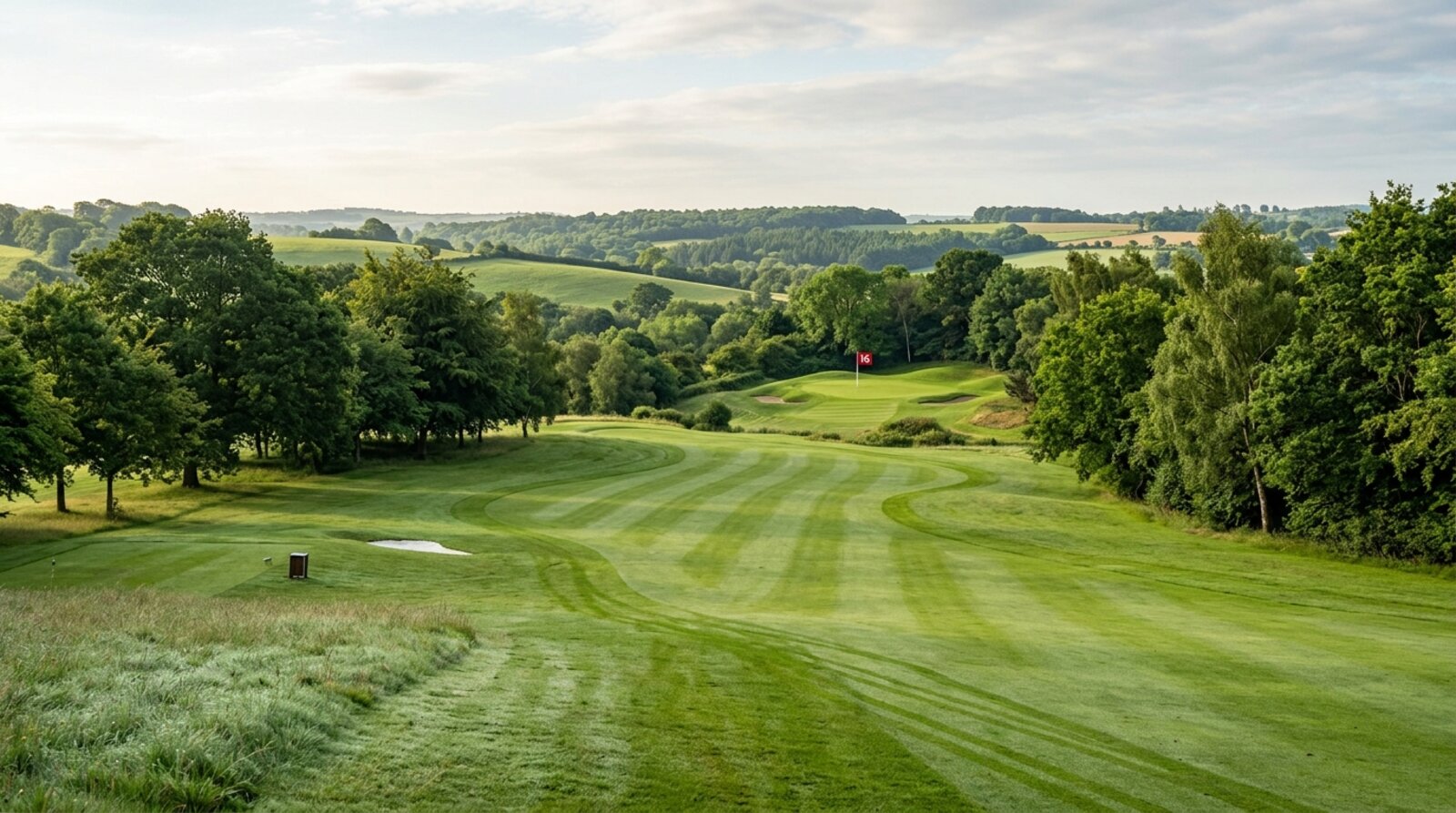
Lullingstone Park is a public pay-and-play course in the Darenth Valley near Chelsfield, set across more than 500 acres of Kent countryside about half an hour from central London via the M25 and A20. You do not need to be a member to play, and you have a real choice when you book: the full 18-hole Championship course, or the shorter 9-hole Valley course. This guide is the straight comparison most visitors want before they pick a slot. It covers how the two courses differ on difficulty, time and cost, and gives you a clear answer on which one to play for your group, your schedule and your budget.
The two courses at a glance
The simplest way to understand the choice is that one course is the full test and the other is the friendlier, quicker round. They share the same parkland setting, the same pro shop and the same value for money you expect from a public facility close to London.
- The 18-hole Championship course is a par 72 parkland layout of roughly 6,700 yards. It is the proper round: elevated tees, mature trees, well-placed bunkers and a few genuinely demanding holes.
- The 9-hole Valley course is much shorter, around 2,500 yards. It plays in roughly half the time, costs less, and is gentler underfoot and on the scorecard.
For the full layout of each, see the 18-hole Championship course page and the 9-hole Valley course page. The venue is operated by Everyone Golf, which lists current details and any seasonal offers.
Difficulty: how hard is each round?
The Championship course is the bigger challenge, and not only because of its length. It runs through varied ground with elevated tees, downhill drives and tree-lined fairways that ask you to think about position as well as power. A couple of holes stand out: the 7th, Skylarks, is a long par 5 and the second-hardest hole on the card, and the 12th, Castle Prospect, carries the toughest stroke index of all. The course keeps its teeth into the closing stretch, so the round asks something of you right to the last green. None of this means the layout is unfair, but a high-handicapper or a newer golfer will work hard for their score.
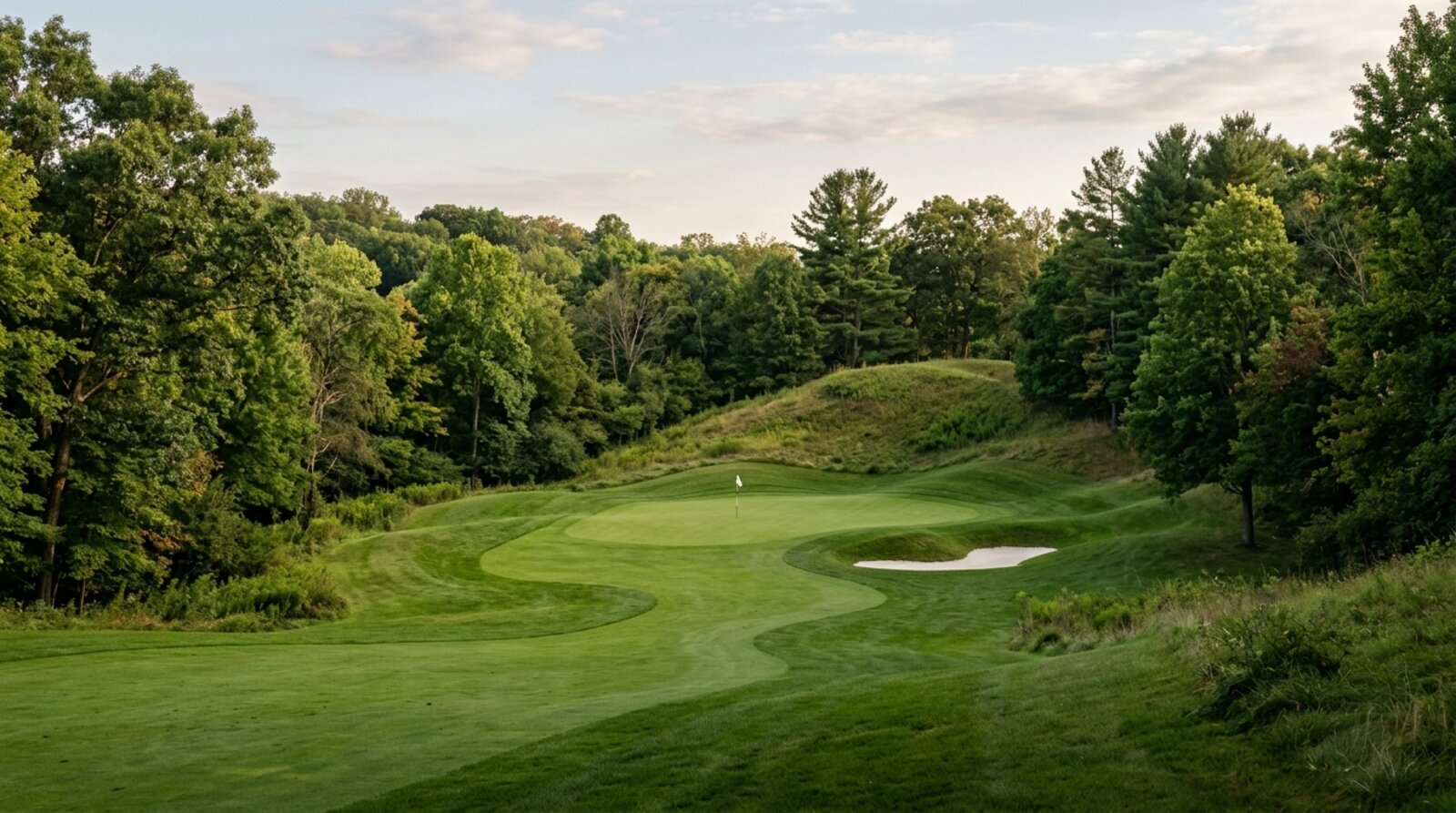
The Valley course is more forgiving. It is shorter, the holes are less punishing, and the mood is closer to a relaxed round than an examination. It still has character, with the odd plateau green and undulating countryside to read, so it is not a flat practice loop. Experienced golfers often describe it as less of a stand-alone 9-hole track and more like half of a proper 18, which is exactly why it works for both a quick competitive nine and a gentle introduction.
Time: how long will you be out there?
Time is often the deciding factor, and the gap is large. A full 18-hole round on the Championship course typically takes around four hours in a normal pairing or fourball, more on a busy weekend, less on a quiet midweek morning. The 9-hole Valley course is roughly half that, so it fits into a free morning, an after-work evening or a stop on the way somewhere else.
- Have most of the day free? The 18-hole Championship course gives you the complete round and is worth the time.
- Got a couple of hours? The 9-hole Valley course is built for exactly that window.
- Playing late in the day? When the light is going, a twilight nine on the Valley course is the sensible call rather than a rushed eighteen.
Cost: which course is better value?
The 9-hole Valley course is the cheaper round, which is the other half of why it suits a tight schedule or a tight budget. As a pay-and-play course, Lullingstone sets its green fees by day, time and season rather than publishing one fixed figure that stays put all year, so the price you pay also depends on whether you play midweek or at the weekend, and at peak or twilight. The headline, though, is steady: 9 holes on the Valley course costs less than 18 on the Championship course.
Because the rates move, the one number that matters is the current green fee, so check it on the Green Fees page or by phone before you commit. If price is your main concern, our guide to the cheapest times to play shows how to stack the day, the time and the course choice to bring the cost down further.
Which course suits beginners, groups and quick rounds?
Most of the time the question answers itself once you know who is playing and how long you have. A few common cases:
- Beginners and juniors: start on the Valley course. It is shorter, less intimidating and quicker, so a new golfer enjoys the round instead of grinding through eighteen demanding holes.
- Mixed-ability groups: the Valley course usually keeps everyone happier, because nobody feels held back and the round finishes before patience runs out. Stronger players can add the driving range or pitch and putt to round out the visit.
- Quick rounds and twilight: the Valley course wins on time every time. It is the natural pick for an after-work nine or a round when the light is fading.
- Serious golfers and full days: the Championship course is the one you came for. The length, the variety and the tougher holes make it the proper test and the more memorable round.
- Societies and group days: for a full event the Championship course gives the better experience, but ask the pro shop about group rates and tee blocks either way.
First time at Lullingstone? Start simple
If this is your first visit and you are not sure which to pick, there is no wrong answer, but the Valley course is the easier first outing. It lets you get a feel for the place, the pro shop and the pace without committing four hours or the higher fee, and you can always come back for the full Championship round once you know you like it. For everything else a newcomer needs, including parking, facilities and what to expect on arrival, read the first-time visitor guide, and for the wider picture on rates and reservations see the green fees, tee booking and visitor guide.
How to book either course
Once you have decided, booking is straightforward. Weekend mornings are the busiest and need the most notice, while quiet midweek slots are easier to get on shorter warning. The cleanest way to secure the round you want, on the course you want, is to ring the pro shop on 01959 533793 and say whether you want 18 holes on the Championship course or 9 on the Valley course, how many of you there are, and roughly when you want to play. For the step-by-step, see our guide on how to book a tee time.
A quick verdict before you book
Pick the 18-hole Championship course when you have the time, you want the full parkland test, and you are reasonably confident in your game. Pick the 9-hole Valley course when you are short on time, on a tighter budget, bringing a beginner or a mixed group, or playing late in the day. Both are good rounds in the same lovely setting, so the choice is really about your day rather than the quality of the golf. Check the current green fee on the Green Fees page or call the pro shop on 01959 533793, and find directions and visitor details on the Lullingstone Park Golf Course homepage.
Frequently asked questions
Should a beginner play the 18-hole or 9-hole course at Lullingstone Park?
Most beginners get more out of the 9-hole Valley course. It is shorter and gentler, it plays in roughly half the time, it costs less than the 18-hole round, and it keeps a newer golfer from feeling rushed or out of their depth on a full championship layout. Once you are comfortable, the 18-hole Championship course is the natural next step.
How long does it take to play each course?
As a rough guide, allow around four hours for a full 18-hole round on the Championship course in a normal pairing or fourball, and roughly half that for the 9-hole Valley course. Pace depends on how busy the course is and the size of your group, so a quiet midweek morning will play faster than a busy weekend.
Which course is cheaper to play?
The 9-hole Valley course is cheaper than the 18-hole Championship round, so it is the lower-cost way to get out on the grass at Lullingstone Park. Green fees change by day, time and season, so check the current price on the Green Fees page or ring the pro shop on 01959 533793 before you book.
What are the par and length of the two courses?
The 18-hole Championship course is a par 72 parkland layout of roughly 6,700 yards. The 9-hole Valley course is much shorter, around 2,500 yards. The Championship course is the bigger test of length and shot-making, while the Valley course is a friendlier, quicker round.
Which course is better for a group of mixed abilities?
For a group where some players are strong and others are new to the game, the 9-hole Valley course usually keeps everyone happier. It is less demanding, it finishes sooner, and nobody feels held back over a long round. Stronger players in the group can always add the driving range or pitch and putt to make a fuller visit of it.
Can I play 9 holes on the Championship course instead of the Valley course?
Options for a shorter round on the Championship course depend on the day and how busy the tee is, so the cleanest way to play just 9 holes is the Valley course, which is built for it. If you specifically want a short loop on the Championship layout, ask the pro shop on 01959 533793 what is possible on the day you want to visit.